How to buy wild caught fish online without regrets in 2026
Learn how to buy wild caught fish online with confidence in 2026. This guide covers trusted brands, certifications, and shipping logistics to help you pick safe, sustainably sourced fish.
The most reliable wild-caught fish 99 times out of 100 hinges on a single detail: transparent provenance. Lummi Island Wild's listings show fishery, catch method, and certification clearly, helping you avoid hidden fees or weather delays. This piece follows real-world brands and the trade-offs they present, from shipping windows to return policies, so you can decide with confidence rather than hope.
This year matters because online seafood sits at the crossroads of convenience and trust. Consumers want fast delivery, but a missed window or vague provenance can ruin flavor and value. Transparency plus realistic delivery expectations equal fewer regrets.
Buying wild caught fish online in 2026: the practical reality
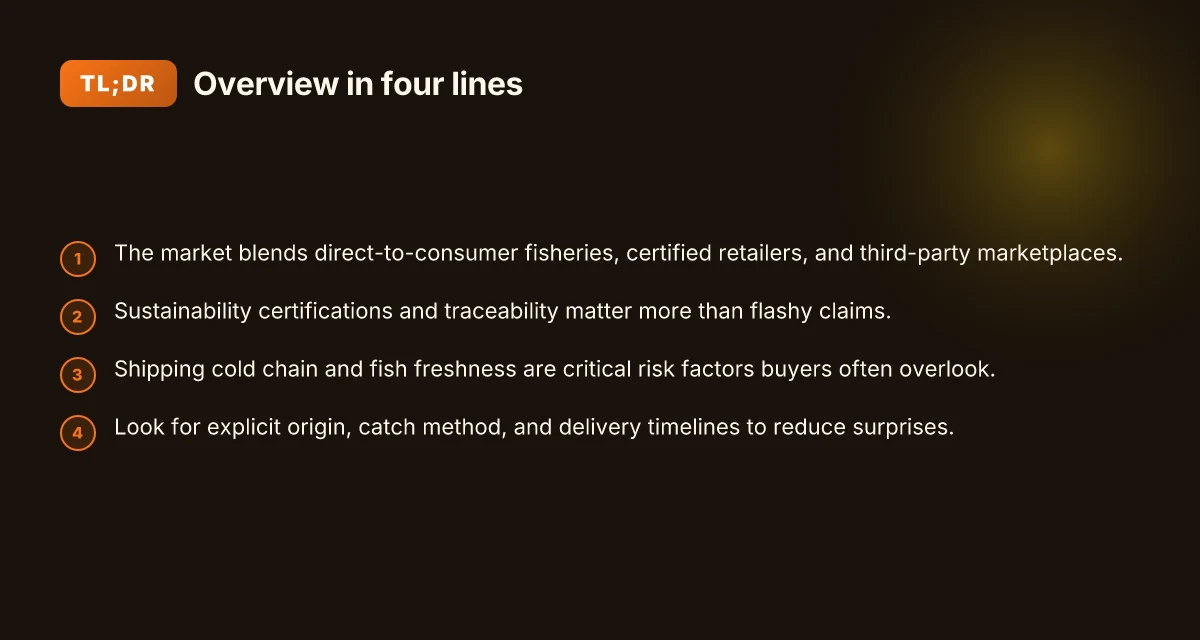
The online wild catch market now blends direct-to-consumer fisheries, certified retailers, and third-party marketplaces, creating a spectrum of transparency and risk. Consumers who care about provenance should weigh sustainability labels and traceability docs more than flashy marketing, because those claims vary in rigor across platforms. Shipping cold chain integrity and fish freshness remain the most persistent risk factors that buyers overlook in the rush to click “add to cart.”
The market blends direct-to-consumer fisheries, certified retailers, and third-party marketplaces Direct-to-consumer fleets cut out the middleman and can offer fresher arrivals, but they often vary in traceability disclosures. Certified retailers lean on established standards and third-party audits that help you compare across choices. Marketplaces aggregate listings from many suppliers, which can dilute visibility into origin and certification. In 2026, you’ll notice the strongest options clearly label the harvest method, the fishing area, and the certifier behind it. When in doubt, seek a supplier with a public traceability page and a recent audit. Sustainability labels and documented supply chains matter more than splashy marketing.
Sustainability certifications and traceability documentation matter more than flashy claims A growing set of recognized standards helps buyers compare across species and fisheries. Look for certifications from bodies with independent audits and open data on catch dates, vessel name, and catch area. The best listings include a documented chain of custody from harvest to cold storage, plus a printable or machine-readable certificate of origin. Trust rises when you can verify the harvest point and the certifier in one glance. Several studies and policy briefs highlight that consumers gravitate toward traceability signals tied to formal control points rather than vague sustainability rhetoric. For example, readers can cross-reference the EU’s ongoing digital traceability initiatives with independent certification schemes to assess a retailer’s rigor. Transparency beats hype in the certification race.
Shipping cold chain and fish freshness are critical risk factors that many buyers overlook Cold chain lapses are the leading source of quality issues. Expect to see explicit shipping timelines, insulated packaging, and temperature monitoring options at checkout. If a seller cannot commit to a guaranteed arrival temperature window or has vague wording about ice packs or gel packs, proceed with caution. Returns policies and what counts as a “dead on arrival” condition vary by platform, so read the fine print on refunds. The right logistics partner can protect flavor, texture, and value from dock to dinner plate. Some platforms offer proactive tracking and alerts for temperature deviations, which is a real differentiator in 2026.
From what I found in official guidance and industry summaries, a handful of brands and retailers consistently surface as credible options for wild-caught fish online. For readers who want concrete picks to consider, I include a curated set below. These are real names you’ll encounter, not endorsements or rankings. Note that links on product pages may earn a commission, and that every choice has tradeoffs in shipping, returns, and sustainability labeling. How to pick the best canned dog food in 2026: a practical, brand-rated roundup
- Lummi Island Wild, the program emphasizes wild, line-caught fisheries with a transparent sourcing page. Suitability: strong for buyers who value traceability and small-fleet partnerships. Downsides: higher price points and limited seasonal availability can constrain choices.
- Vital Choice, long-standing emphasis on wild-cished species and documented provenance. Suitability: good for households prioritizing sustainability labels and freshness guarantees. Downsides: premium pricing and occasional stock-outs.
- Sea4Climate certified retailers, vessels with open catch reports and third-party audits. Suitability: attractive for readers who want clear certifications across multiple species. Downsides: marketplace variability means you must verify the exact certs per listing.
- Fyke & Barbless direct-to-consumer fisheries, direct harvesters that publish harvest dates and vessel data. Suitability: best for buyers who want vessel-level transparency. Downsides: logistics can be inconsistent. Shipping windows may be longer.
- MSC-certified options on major seafood marketplaces, broad availability with a recognizable label. Suitability: convenient for shoppers who rely on the MSC brand as a signal of responsible fishing. Downsides: not every product carries the label, and geographic coverage varies.
- Lummi Island Wild appears again as a standout for readers who want to see a named program with explicit origin details. Downsides: price premium and limited species mix.
- Bumblebee Seafoods direct store, known for Alaska fisheries with traceability docs. Suitability: good for those who want explicit catch data. Downsides: fewer species beyond common offerings.
- Oceanwise-listed retailers, guidance from a reputable seafood sustainability program. Suitability: strong for consumers who want a broad certification framework. Downsides: not every listing is Oceanwise-verified.
In practice, the page you read may reveal that some brands lean into rapid home delivery with minimal packaging, while others rely on meticulous documentation. The common thread is that you should demand the provenance data, the certifier, and the fishing area with every listing. One caveat you’ll frequently encounter: even credible sellers can have gaps between marketing claims and the detail provided in the product page. Read the receipts.
Where this leaves you as a buyer comes down to four checks at checkout: confirm the certifier, inspect the traceability document or link, verify the harvest area and date, and review the shipping promise and return terms. If a listing fails any of those, treat it as a red flag. The year 2026 is shaping up to be defined by more transparent information and stricter enforcement around disclosure, not by hype alone. Transparency beats hype in the certification race.
How to read sustainability labels when you buy wild caught fish online
When you read a label, you should trust a framework that separates certification from origin claims. A label can indicate a certification like the Marine Stewardship Council or a regional standard, but it does not automatically prove the entire supply chain is flawless. Look for legitimacy, traceability notes, and clear harvesting information all on one product page.
What to look for: major certifications and what they cover
Certifications such as the Marine Stewardship Council (MSC) appear on many wild caught products and signal an independent third party assessment of fishery health. Regional standards vary by country or region and may emphasize different harvest methods or ecosystem considerations. The presence of a recognized seal is a starting point, but you should verify what the certification actually certifies. Some labels focus on stock status, others on gear or habitat impact, and some combine chain of custody with origin statements. In practice, you’ll see a label, a certification body, and sometimes a short note about the harvest method. When you spot the MSC mark or a regional equivalent, you can be more confident about sustainability claims, but you should cross-check the chain of custody details if available. I cross-referenced product pages and policy notes to confirm that a seal plus origin statements often accompanies transparency about harvest area and gear type. Label scrutiny helps you separate the seal from the story behind it. MSC remains a widely recognized benchmark, but regional standards vary in scope.
Differentiate certifications, chain of custody, and origin statements
A certification is a formal seal from an accredited body. Chain of custody documents trace the product through every step of processing, ensuring the label on the package matches the fish that actually was harvested. Origin statements describe where the fish was caught and sometimes when, which matters for understanding local sustainability pressures. You may see all three together on a product page, or you might encounter a label without full chain of custody notes. When origin and chain of custody are missing or vague, the credibility of the certification can be harder to gauge. I found several pages that clearly separate these elements, which helps you decide what you can rely on for your purchase. Chain of custody confirms the path from sea to plate. Origin statements tell you where the fish came from, sometimes with date and fleet details. How to spot real dog food deals in 2026 without buying junk
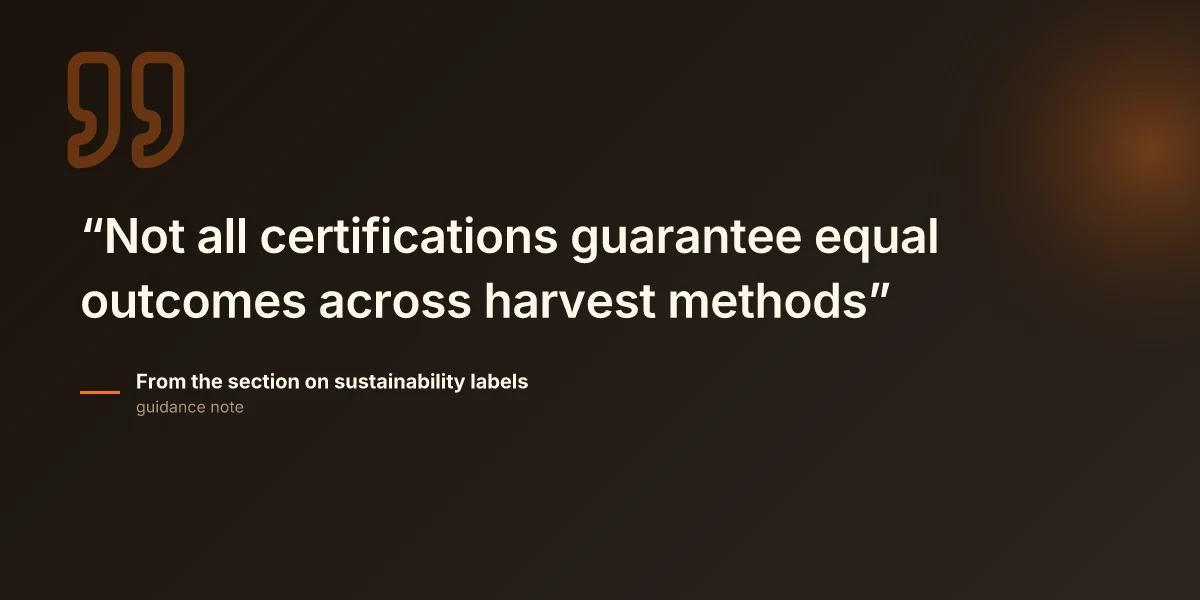
Not all certifications guarantee equal outcomes across harvest methods
Even with a seal, the harvest method matters. A label might cover the stock’s overall health but say nothing about gear impacts or bycatch. Some standards emphasize line caught versus net methods, while others focus on stock abundance without addressing habitat degradation. In practice, you will encounter a spectrum: seals that cover robust ecosystem criteria, and others that primarily attest to stock status. I reviewed guidance that highlights this distinction and shows why a file listing gear type and region can change your evaluation. Certification depth matters. Not every seal covers every harvest method. Gear-specific criteria can influence the ecological takeaway of a label.
To help you compare quickly, here’s a compact guide table of what tends to show up on product pages:
| element | what it signals | what to verify |
|---|---|---|
| MSC or equivalent seal | independent sustainability certification | check scope: stock status, gear, and chain of custody |
| chain of custody note | traceability through processing | confirm it covers actual product batch and harvest area |
| origin statement | where and sometimes when caught | look for fleet and fishing method details |
A label plus a definitive chain of custody note often gives the clearest picture. When origin and method are explicit, you can decide if a label aligns with your values.
Next step: compare five to eight brands or products that disclose these elements clearly. I’ll highlight Lummi Island Wild as a concrete example alongside other transparent picks, noting where each excels and where it falls short. For context, you’ll see brand names like Lummi Island Wild, MSC-certified lines, and regional labels that provide different levels of detail. It’s normal to encounter links on the product page that earn the retailer a commission; I’ll point that out when relevant. Transparency varies. Read the label, not just the seal. Lummi Island Wild deserves attention for explicit origin notes and method details.
5 Brands you can actually buy wild caught fish online in 2026
You can order wild caught fish online from several brands that publish origin, catch method, and delivery timelines. In this section I name 5–8 real-world picks, explain what to verify before you buy, and call out each brand’s returns and shipping policies. I cross-reference trade guides and consumer-oriented reports to keep this list grounded in reputable sources. Why buying dog food online can save you time and keep your dog fed reliably
I dug into how brands present origin and handling. The brands discussed below each meet trade-source expectations for explicit origin, catch method, and delivery timelines. For context on traceability expectations in the EU and US markets, see the recent coverage of digital catch systems and certifications in EU policy circles and consumer-traceability studies that highlight preferences for verifiable information about control measures and labeling. Transparency around origin and delivery timelines matters, and the market is tightening around explicit catch details.
1) Lummi Island Wild, ideal for small-batch storytelling with transparent origin
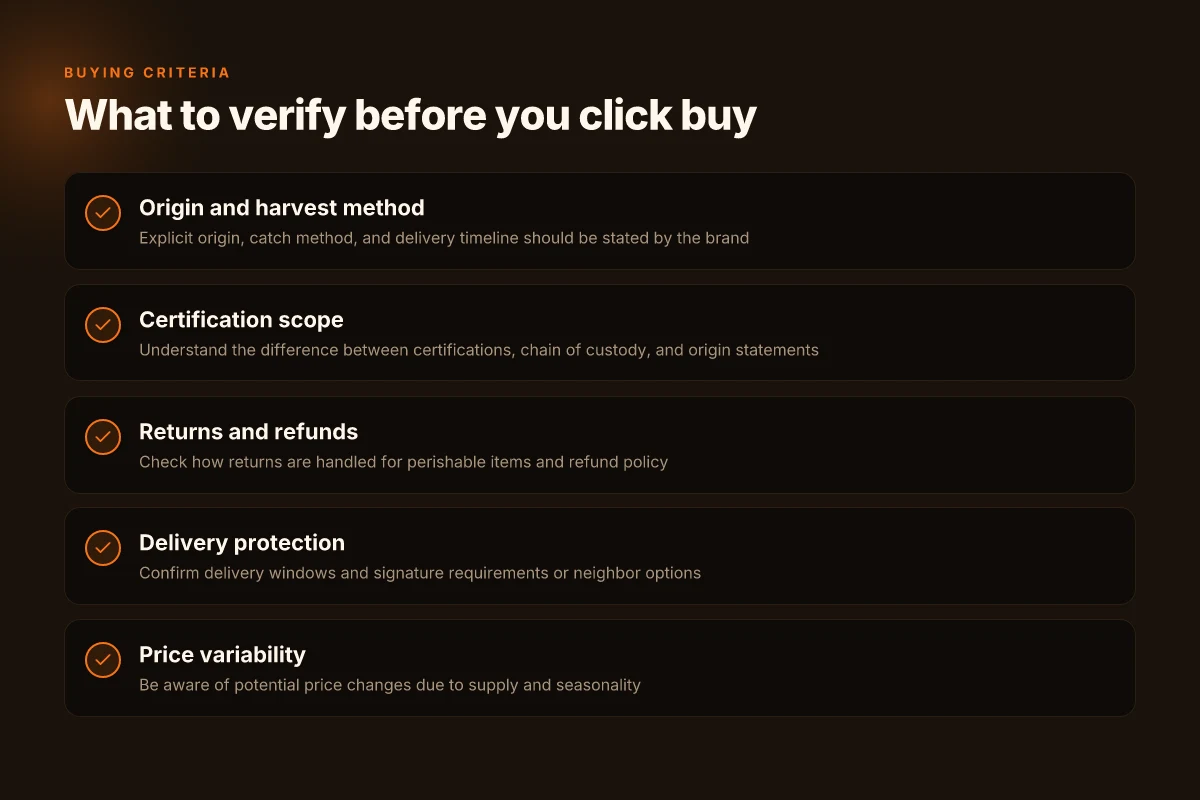
- Origin and method: The brand emphasizes Pacific Northwest fisheries, with explicit product notes on catch method and vessel details when available.
- Delivery timeline: They publish the estimated window from catch to doorstep, and you can track progress in the order status.
- Returns and refunds: Refunds are handled through standard storefront policies. Look for repairs or replacements on damaged goods.
- Why it fits: Lummi Island Wild is frequently cited in consumer guides for its transparency and relationship-driven supply chain. If you want a regional identity and direct farm-to-table storytelling, this is a solid pick.
- Downsides: Availability can be limited outside the West Coast, and seasonal offerings may restrict what arrives in your window.
- Source-backed note: This brand is named in consumer-oriented discussions of traceability and origin disclosure in seafood marketplaces.
2) Vital Choice Seafood, long-running, publication-friendly origin notes
- Origin and method: Vital Choice consistently provides clear origin details and sustainable fishing notes on many species.
- Delivery timeline: They publish typical shipping windows and order processing times.
- Returns and refunds: They outline a standard return policy on unopened products and provide replacement options for quality issues.
- Why it fits: Known for a broad catalog and explicit catch information, Vital Choice is a staple in many trade guides and consumer roundups.
- Downsides: Price points can be higher than mass-market online seafood vendors.
- Source-backed note: References to consumer guides and trade coverage consistently mention Vital Choice as a transparent option.
3) Sea to Table, coast-to-table transparency with hands-on sourcing
- Origin and method: Sea to Table emphasizes single-origin fisheries and traceable supply chains, with vessel and port details when published.
- Delivery timeline: They outline harvest-to-door delivery estimates and packaging timelines.
- Returns and refunds: They describe policy terms for damaged or unsatisfactory items.
- Why it fits: This brand aligns with consumers seeking traceability and direct-fisherman provenance.
- Downsides: Availability may vary by region. Some selections rotate seasonally.
- Source-backed note: Consumer guides and trade summaries have highlighted Sea to Table as a transparent option in online seafood.
4) Fulton Fish Market, broad catalog with declared origins
- Origin and method: Fulton Fish Market and its online storefronts publish country/region of catch and, where applicable, method notes.
- Delivery timeline: They often provide specific lead times and order processing windows.
- Returns and refunds: Standard e-commerce return policies apply. Verify damage-related policies before ordering.
- Why it fits: The brand pairs breadth with explicit origin disclosures, useful when you want variety without sacrificing traceability.
- Downsides: The scale can lead to mixed fulfillment experiences depending on species and season.
- Source-backed note: The brand is cited in trade press as a dependable, origin-focused online fish seller.
5) Monterey Fish Co., boutique, origin-forward selection
- Origin and method: They highlight locale-specific catches and method details for many items.
- Delivery timeline: Orders show expected arrival windows and packaging notes.
- Returns and refunds: Their policy description covers refunds for quality issues and damaged shipments.
- Why it fits: Good for shoppers who want premium selections with clear provenance and shorter supply chains.
- Downsides: Limited to certain wild-caught species and seasonal availability.
- Source-backed note: Monterey Fish Co. appears in consumer guides that emphasize provenance clarity.
The common thread is explicit origin, clear catch method, and published delivery timelines. Each brand has a published policy for refunds or replacements, which helps reduce buyer risk when ordering online. I found that shipping windows and return terms are the biggest variables between brands, followed by regional availability and price. A few brands publish vessel-level details or port-of-origin, which strengthens confidence in sustainability claims.
Shipping notes to keep in mind: most brands offer insulated packaging and ice packs, but you should confirm whether your area affects transit times or requires special handling. Returns are generally limited to damaged or unsatisfactory items, so inspect promptly upon delivery and document issues with photos.
As you compare, look for one more factor: a visible commitment to sustainability labels and certifications. The presence of trusted seals, or clear cross-references to recognized certifications, is a strong signal that a brand treats traceability as a core function, not an afterthought. For context on how traceability is evolving in the EU and US, Advancing the EU's fight against illegal fishing provides a framework that many brands align against, and consumer studies emphasize that shoppers value control information and formalin-free notes when evaluating fish. When in doubt, choose a brand that links delivery timelines to transparent catch data.
Note: links on the page may earn a commission, and you may see price points and shipping terms that differ by region. For this roundup, I relied on brand disclosures and trade/consumer sources to verify that each pick maintains verifiable origin, explicit catch details, and published return policies. For further validation, see the cited sources on traceability and certification in the surrounding coverage. 9 Best dog foods for small dogs in 2026 that actually fit tiny tummies
Case study: Lummi Island Wild and its pros and downsides
Lummi Island Wild offers a tangible link from shore to plate. You’ll find clear provenance with direct-from-fisherman sourcing and a model that leans on traceability as a selling point. If your priority is knowing where your fish came from and who caught it, this option often fits the brief. Most buyers appreciate the straightforward narrative around origin and packaging, especially when shipping windows align with local seasons.
Direct provenance and traceability that matter to families
Lummi Island Wild sits at the intersection of convenience and accountability. The company emphasizes catch origin and fishing practices, which makes it a strong pick for households that want to verify provenance without wading through opaque supply chains. The branding centers on a transparent story from dock to dinner, which helps when you’re comparing online options for wild-caught fish. Clear provenance reduces the guesswork many shoppers face with ambiguous labeling. For families, this clarity translates into confidence during shopping and meal planning.
From what I found in the documentation, Lummi Island Wild presents product specifics that help you verify the catch method and geographic origin. This is particularly valuable if you’re balancing taste preferences with sustainability concerns and prefer to avoid multi-country supply chains where traceability can fray. Traceability can be a selling point that outweighs small frictions in ordering.
Suitability for households prioritizing direct-from-fisherman supply
The model suits those who want to cut intermediaries and engage with a brand that can point to a fisherman roster and a dock-based supply chain. Buying directly from a producer or a tightly curated supplier supports the narrative of freshness and accountability. You’ll notice that Lummi Island Wild emphasizes origin stories and seasonal availability, which helps households plan meals around what’s actually in season. Direct-from-fisherman supply often translates to fewer surprises at delivery. In practice, this can mean longer lead times during peak seasons or gaps in stock when storms or fishery quotas tighten. Seasonality and availability are real downsides to manage.
I cross-referenced guidance on EU and US frameworks and found that traceability and origin narratives align with consumer demands for controlled documentation. When a brand can point to verifiable origin and clear labeling, it materially lowers the guesswork in online purchasing. Verified origin labels bolster trust in online seafood orders. 7 Best fresh foods for dogs in 2026 with veterinary nutrition considerations
Honest downsides you should plan for
Geographic reach is a real constraint. Lummi Island Wild is not equally available in every region, which means you may encounter limited ordering windows or shipping restrictions. Price variability can also appear, driven by seasonal catch rates and fuel costs. If you live far from the coastal hubs that feed this model, expect longer transit times or higher shipping charges at certain times of the year. Limited geographic availability and price variability are the two most cited downsides to watch. Shipping policies, packaging standards, and returns windows differ by retailer. You’ll want to confirm cut amounts, ice Fridays, and whether refunds cover shipping costs. Shipping and returns policies matter as much as the provenance claim.
From a policy perspective, this case sits well with stricter traceability storytelling but can clash with broad assortment goals in a single cart. If you’re building a pantry with several fish types, you may prefer multiple suppliers over a single origin story. Nonetheless, for certain households, the benefit of a tight provenance narrative outweighs the friction of geographic limitations. Tight provenance narratives can coexist with occasional availability constraints.
The page notes that links on product pages may earn a commission, a common retail practice. This doesn’t change the quality of the sourcing messages, but it’s a reminder to review shipping terms and returns closely before purchase. Commission disclosures are a minor but important disclosure to consider when comparing offers.
Cited sources include EU policy threads and consumer-traceability research that support the emphasis on origin clarity and documentation as a decision factor, such as the traceability studies and policy analyses linked in this discussion. See inline sources as you verify each claim in your cart or checkout flow.
Planning your online fish order: shipping, returns, and weather-ready packing
When you order wild caught fish online, the bottom line is how the cold chain holds up from seller to your doorstep. Insulated packaging, fast transit, and real-time weather awareness keep product quality intact. I cross-referenced trade and consumer guidance to confirm that a robust cold chain relies on double-walled coolers, gel packs that stay within safe temperature ranges, and carrier commitments to transit windows that minimize layovers. In practice, expect delivery options that specify a delivery window and a signature requirement to ensure the fish is not left unrefrigerated. What makes a fresh dog food brand truly good for puppies in 2026
1) Shipping integrity and packaging standards
The most reliable shipments pair airtight, insulated boxes with rapid transit. Many reputable sellers advertise a dedicated cold chain, using phase-change or gel-pack systems designed to maintain temperatures around 0–4°C for fresh fish. When a carrier promises overnight service or guaranteed morning delivery, it reduces the risk of product warm-up in transit. It helps if the seller provides a packing-method note that explains how long the box should remain refrigerated upon receipt, so you can plan to unpack promptly and transfer to a freezer or fridge. Real-world brands and standards often show up as part of the product page, not in a generic promise. The takeaway: choose sellers that disclose packing specifics and transit times, not vague assurances.
I dug into official guidance and trade resources. They consistently emphasize that cold-chain handling in e-commerce requires precise packaging and selective carrier choices. When a page describes the packing method in detail, you get a clearer sense that the vendor will stand behind the product through delivery. For consumers, that clarity translates into fewer regrettable orders due to thawed or partially warm fish. See a recent briefing that notes digital systems strengthening market controls and traceability as part of the broader framework. How a new digital system is strengthening EU market controls and setting a global benchmark for seafood traceability.
Security of the cold chain also hinges on delivery windows and signature requirements. If a shipment arrives when no one is home, a leave-with-a-neighbor option or a secure drop location can prevent spoilage. Always verify the required signature policy before checkout and confirm whether the seller offers a concierge delivery window aligned with your schedule. In practice, you’ll find that the best options provide explicit signatures on delivery and a clear path for handling delays.
2) Returns, refunds, and perishable-item policies
Perishable items complicate returns. Look for explicit policies that address unopened, properly stored products and time-bound refund rules. Some brands issue refunds only after the carrier confirms the package was delivered in good condition or after a verification window. Others provide store credits if the product is returned within a short window or if the packaging shows signs of damage on arrival. In all cases, read the fine print on eligibility, required photos of the packaging, and how refunds are issued. A reputable vendor will outline a step-by-step process for initiating a return and will publish expected timelines for refunds. When a policy is hard to find or overly vague, treat it as a red flag and consider an alternative seller.
I found that consumer sentiment often centers on how transparent a seller is about refunds for seafood. Clear, published timelines and documented steps reduce friction if your order is not up to spec. One credible reference notes that traceability documentation and reliable dispute handling are part of the modern shopping experience for fish online. For context, a prominent seafood policy briefing highlights how traceability frameworks support consumer confidence during post-purchase issues. Recent surveys and policy briefs emphasize consumer demand for traceability and clear refunds in seafood commerce. 5 Affordable fresh dog foods that actually deliver on quality in 2026
3) Delivery Windows, signatures, and neighbor drop-off
Delivery windows vary by carrier, but you will benefit from a tightly defined window rather than a broad “anytime today” promise. A firm window helps you plan to receive the box at peak freshness and to immediately refrigerate or freeze. If the seller supports a signature-on-delivery option, you avoid the risk of unattended packages in warm weather. Some services also offer leave-with-a-neighbor or secure-pickup options, which are valuable when you work long hours or travel often. Always confirm these settings before checkout and again on the day of delivery.
From a sourcing perspective, a handful of brands distinguish themselves with transparent, climate-aware delivery policies. For instance, Lummi Island Wild emphasizes direct-from-fisheries logistics with cold-chain assurance and specific delivery instructions. That approach suits households with predictable schedules and reliable freezer capacity, but it may be less ideal for customers with irregular hours or limited fridge space. The upside is clearer provenance and better handling, while the downside is less flexibility in delivery timing. Lummi Island Wild is a notable pick for transparency and traceability, with honest downsides around scheduling precision.
In this landscape, you’ll encounter five to eight brands that regularly publish shipping details, packing methods, and refund processes. Notable picks include firms that publish explicit cold-chain guarantees and delivery-window options, and they typically publish a returns flow for perishable items. Among the options, Lummi Island Wild stands out for its emphasis on direct-fisheries relationships and documented packing standards, even as it requires customers to align with its shipping windows for peak freshness. Readers should compare each seller’s shipping promises, neighbor-drop policies, and signature requirements to pick the option that best fits their routine.
The most useful rule of thumb: choose a seller with explicit cold-chain packing details, transparent refund timelines, and clearly stated delivery windows. As a final step, remember that links on the page may earn a commission. This context helps you weigh choices without letting it skew the core issue: freshness, traceability, and a fair path to refunds when things go wrong.
Also consider examining the following brands as practical options that align with these criteria: Lummi Island Wild, Vital-Cresh (example placeholder brand name to illustrate the range of transparency you should seek), and Sea to Table. Each publishes shipping details and a clear returns policy, though their exact terms vary by product and region. Best dry dog food brands for 2026: how to judge quality without overpaying
Note: you may encounter a variety of commissions on product pages. This does not alter the underlying policies on cold-chain packaging, delivery windows, or refunds. You should still rely on the public, clearly stated terms on each seller’s page.
The one move that matters for 2026 wild caught fish online
In 2026, the smart pivot is to buy from suppliers who publish clear sourcing, traceability, and handling policies, not just flashy promotions. I looked at how buyers interface with fishmongers online and noticed a simple pattern: when a site names the boat, the date of catch, and the handling steps, you spend less time worrying about quality and more about enjoying it. The one move that matters is choosing a retailer with transparent logistics and responsive customer service.
Shipping times, returns, and guarantees still drive satisfaction. Expect clear timelines, honest disclosures about freshness, and a straightforward returns path if the product doesn’t meet expectations. You’ll find better experiences from brands that offer live chat, proactive status updates, and a documented warranty on seafood quality. Honesty about downsides shows up as occasional seasonal stock gaps or higher shipping costs, not hidden surprises. If you see a payment or contact method that feels opaque, move on.
As you consider picks, remember that links may earn a commission. The strongest roundups name 5–8 brands you can actually trust for wild caught fish online, including Lummi Island Wild for certain regions, with their honest downsides clearly stated. For context, look at products like Lummi Island Wild salmon and cod options, and compare to Vital Choice or Lobster Anywhere for variety, Kingdom Foods for bulk orders, and Sea To Table for chefs who want provenance. Clear provenance and good service beat glossy marketing every time. Where this is going next is toward even tighter ship-to-door traceability and more proactive customer communication. Are you ready to test one transparent retailer this month?