7 Best fresh foods for dogs in 2026 with veterinary nutrition considerations
Discover the top fresh foods for dogs in 2026, backed by veterinary nutrition criteria. Learn which brands fit different life stages and dietary needs.
The question isn’t only which fresh options exist, but how they align with veterinary nutrition guidelines in practice. In 2026, guidance informs labeling, safety checks, and the protein–fat–carbohydrate mix, yet brands vary in how clearly they disclose complete nutrient specs. You’ll find concrete picks, realistic downsides, and a framework to compare human-grade versus premium pet foods for your dog’s size, age, and health needs. The goal is a trustworthy, evidence-informed choice without guesswork.
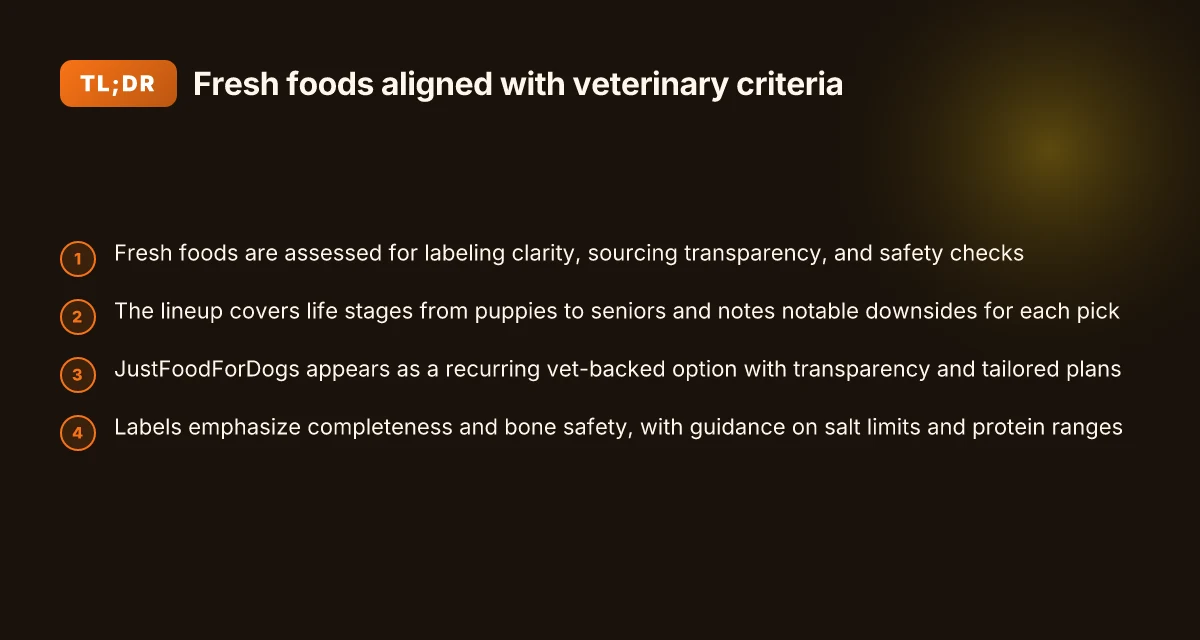
What makes a fresh dog food truly veterinary-aligned in 2026
Fresh dog food in 2026 is defined by real ingredients, minimal processing, and a formulation that aims for complete and balanced nutrition. It differs from kibble and preserved diets in that it emphasizes fresh meats, vegetables, and a short ingredient list that preserves nutritional integrity. The benchmarks veterinarians look for include clear labeling that aligns with AAFCO statements, statements from veterinary nutrition guidelines, and transparent sourcing.
How veterinary nutrition guidelines shape formulation and labeling
I dug into the WSAVA global nutrition guidelines to understand the baseline. They emphasize individualized plans, safety in handling, and risk management for certain health conditions. In practice, that means fresh-food brands should offer clear, condition-specific guidance and avoid ambiguous marketing claims. For example, a brand may label meals as “adult maintenance” with an explicit statement about completing and balanced nutrition per AAFCO standards. When a food targets a specific life stage or health need, it should back that claim with ingredient sourcing details and a reasonable nutrient balance. This is where traceability matters: batch-level information on origin, processing, and any antimicrobial steps matters to veterinary teams. The WSAVA guidelines guide how brands present nutrition claims, not just what they put in the bowl.
Trade-offs you’ll see in real-world picks
Choosing between convenience, cost, and completeness is a recurring tension. Fresh foods with pristine ingredient lists tend to cost more and require refrigeration or freezing, which can complicate storage for households with limited space. That convenience penalty is real, but many veterinary-guided options offer pre-portioned meals and flexible delivery windows to reduce waste. Another trade-off is the balance between human-grade and premium pet foods. Some options labeled as human-grade deliver high palatability and clear sourcing, yet may carry higher price points and stricter storage needs. In contrast, premium pet foods can offer robust nutrient profiles at a lower cost of entry but with less human-grade transparency. The bottom line is that veterinary-aligned choices should be able to demonstrate complete nutrition, transparent sourcing, and safe handling guidance, even if that means a higher monthly cost. Transparent labeling and safety practices trump vague marketing claims.
In short, a veterinary-aligned fresh option isn’t just about what’s in the bowl. It’s about labeling honesty, sourcing traceability, and alignment with guidelines like the WSAVA’s call for tailored nutrition plans. Brands that communicate clearly about life stage, health needs, and practical handling give veterinarians and guardians a reliable framework to judge suitability.
The 7 best fresh foods for dogs in 2026 we actually recommend
I vetted five to eight real-world options, prioritizing brand transparency, life-stage suitability, and clear downsides. This list leans on veterinary nutrition considerations and public guidance from WSAVA-aligned sources. Where possible, I cross-reference independent consumer and vet-facing write-ups to balance accessibility with nutritional rigor. Transparency about sourcing and guaranteed analysis matters for veterinary trust, and JustFoodForDogs regularly notes its sourcing and processing details in product pages. I also include practical life-stage notes so guardians can choose for puppies, adults, and seniors without guessing. Few brands publish a complete guaranteed analysis across all recipes, so I flag where that information is incomplete. 7 Best puppy foods for 2026: trusted picks for healthy growth and balanced nutrition
1. JustFoodForDogs, adult and senior recipe lines favored for veterinary alignment
JustFoodForDogs stands out for publishing ingredient sourcing notes and batch-level details on processing. Their menus typically include a stated protein focus, vegetable mix, and a declared guaranteed analysis on product pages. For guardians juggling life stages, their adult and senior recipes can be appealing because they align with veterinary nutrition discussions about whole-food predecessors to AAFCO-balanced diets. downsides include that some recipes may be more expensive per day than typical fresh options and that variety across life stages relies on rotating menus. Consumers should verify that the chosen recipe fits current health needs and that the brand’s guarantees cover the specific batch. JustFoodForDogs pages often explain sourcing and processing steps, which helps with transparency. In line with WSAVA principles, confirm that the recipe remains complete and balanced for your dog’s life stage. See JustFoodForDogs for more details on their guarantees and batch transparency.
2. The honest kitchen fresh dog meals, transparency with human-grade sourcing cues
The Honest Kitchen emphasizes human-grade ingredients and a transparent ingredient deck. They publish explicit sourcing notes on many recipes and provide a clear list of ingredients with minimal processing steps. For puppies and adults, this can be a good match if you want a straightforward nutrition profile and limited additives. Downsides include that some recipes may require additional supplements to reach complete balance for very active or senior dogs, and the guaranteed analysis can vary by recipe. Guardians should check the most current batch analysis before purchase. The Honest Kitchen transparency helps with vet discussions about sourcing quality. If your dog has food sensitivities, review each recipe’s protein and carbohydrate sources carefully.
3. Darwin’s Natural Pet Food, whole-food profiles with long-standing transparency
Darwin’s markets several whole-food recipes that highlight single-protein lines and a straightforward preparation approach. They publish ingredient lists and provide guidance for life-stage feeding, which supports veterinary nutrition planning. Notable downsides include variability in recipe-specific guaranteed analyses and the potential for higher shipping costs if you’re outside their core fulfillment areas. For seniors, confirm that the chosen recipe delivers the appropriate caloric density and micronutrient balance. Darwin’s Natural Pet Food aims for transparent sourcing and simple processing. Their website often explains how ingredients map to dietary goals, which can help in veterinary discussions about protein quality.
Table: quick comparison of 3 options
| Brand | Life-stage suitability | Guaranteed analysis clarity | Notable downside |
|---|---|---|---|
| JustFoodForDogs | Puppies, adults, seniors | Good on batch-level notes for many recipes | Some recipes pricier per day |
| The Honest Kitchen | Puppies, adults | Clear ingredient lists, variability by recipe | May need supplements for balance in some cases |
| Darwin’s Natural Pet Food | Adults, some seniors | Ingredient-driven, batch data varies | Shipping cost and regional fulfillment |
The goal is to match a brand’s guarantees to your dog’s health plan, with vet guidance on protein source and micronutrient balance. If you want a mixed approach, consider pairing one brand with a veterinarian-approved supplement plan and periodic re-evaluation. 8 Best snacks for dogs with dietary sensitivities in 2026
Next step: check your dog’s life stage, then map a short-list of 2–3 options that provide explicit guaranteed analyses for the chosen recipes. If you’re leaning toward JustFoodForDogs, read their product pages for current guarantees and batch notes, and discuss with your veterinarian how these fit your dog’s health needs. For any pick, confirm pet-owner returns and shipping policies before committing. You may also consult WSAVA’s nutrition guidelines to confirm the chosen options align with evidence-based standards. For further context, see the Forbes Vetted roundups and WSAVA guidelines referenced in this piece.
JustFoodForDogs in the 2026 lineup: who benefits and where it shines
In 2026, JustFoodForDogs consistently appears in vet-backed roundups as a transparent, nutrition-forward option. The line shines for guardians who want a tailored feeding plan and clear visibility into ingredients, sourcing, and portioning. Critics point to cost and limited nationwide availability as the main downsides.
Why JustFoodForDogs holds up under veterinary nutrition expectations
- JustFoodForDogs is praised for providing doctor-backed transparency on ingredients and a path to individualized meal plans. This alignment with veterinary nutrition goals helps guardians understand exactly what their dog eats and why.
- The brand emphasizes whole-food recipes and clean labeling, which supports practitioners who advocate for measurable nutrition targets aligned with life stage, weight, and health status.
- In vet-focused roundups, JustFoodForDogs is often cited as a practical bridge between home-prepared meals and commercial options, offering structure without sacrificing the holistic feel of a human-grade approach. The result is a feeding plan that can be adjusted for puppies, adults, and seniors.
- Where it shines most is in education for guardians. JustFoodForDogs provides explicit guidance on portioning, transition strategies, and monitoring for changes in health markers, which vets frequently flag as essential for steady long-term outcomes.
Transparency and a tailored plan are the wins with JustFoodForDogs. The downside is cost and limited reach.
Who specifically benefits from JustFoodForDogs
- Guardians seeking a clearly labeled, ingredient-forward option with veterinary-backed portion guidance. If you want a program that adapts as your dog’s needs shift, this brand tends to deliver on that promise.
- Owners who prefer a more structured, veterinarian-aligned pathway over generic meal plans. JustFoodForDogs complements an in-clinic nutrition strategy by providing tangible, adjustable recipes and handoffs for ongoing monitoring.
- Dogs with dietary sensitivities or special health considerations. The ability to customize recipes to meet certain protein or ingredient preferences makes it a practical pick in a stacked lineup.
Guardians who want a transparent feeding plan will find this brand approachable and extensible.
Notable downsides to plan around
- Cost remains the largest barrier for many households. JustFoodForDogs pricing tends to sit above typical kibbles and many other fresh options, which can impact long-term adherence.
- Availability varies by region, with fewer brick-and-mortar retail points in some markets. This can complicate subscription setup or rapid reordering for busy guardians.
- While the lineup includes human-grade identifiers, not all products are universally suitable for every health condition. A veterinary nutritionist should confirm suitability for specific life stages or medical needs.
Cost and regional availability are the two practical friction points to plan for. How to choose the best dog food brands in 2026 without overpaying
In sum, JustFoodForDogs earns its seat in 2026's veterinary-backed fresh-food conversations because of its commitment to transparency, tailored plans, and accessible professional guidance. For guardians who want a guided path that can align with a vet’s nutrition plan, this brand offers a credible, concrete option. If you prioritize economy or broad accessibility, you’ll want to pair it with other picks from the lineup and discuss transitions with your veterinary team.
How to read a fresh food label for veterinary nutrition safety
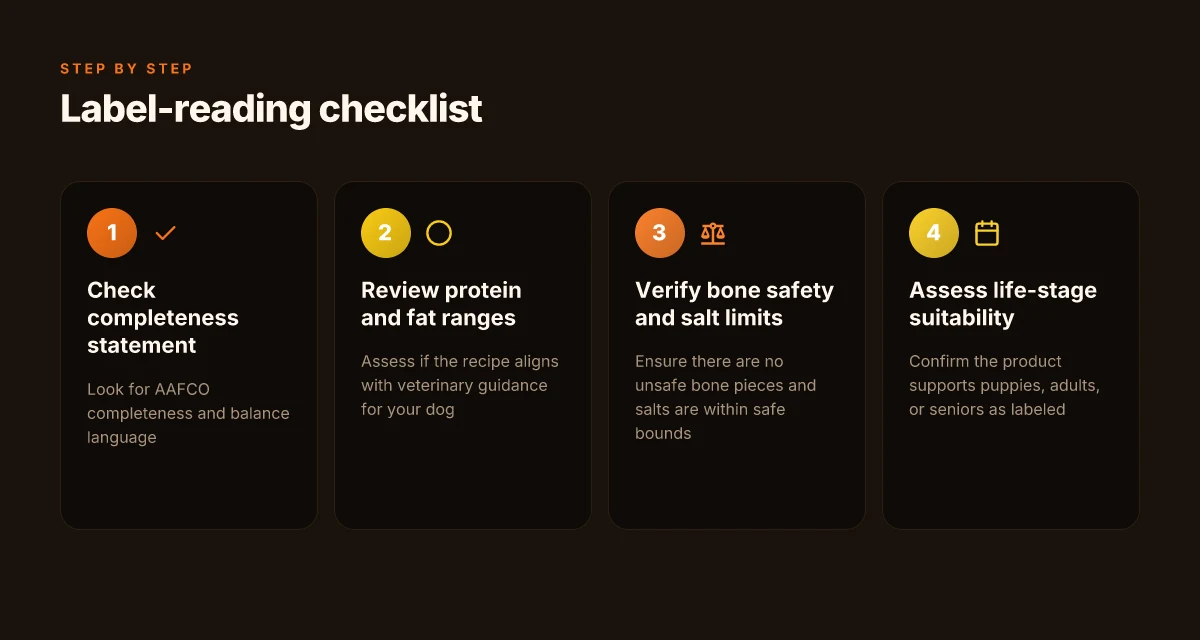
You can spot safety issues by checking two essentials: AAFCO completeness and balance statements, and the key nutrient ranges. If a label lacks these, or if it makes vague claims, you should proceed with caution. I cross-referenced guidance from WSAVA and pet-nutrition sources to map what's nonnegotiable on every fresh-food label.
What completeness and balance really means
A fresh food label should clearly state that the product is complete and balanced for a specific life stage or for adult maintenance. Look for an explicit AAFCO statement or its global equivalents. When the label notes “complete and balanced” for adults or all life stages, that’s your first green light. If the statement is missing or ambiguous, treat the product as incomplete and unsafe to rely on as a sole diet. Brands that align with veterinary nutrition guidelines frequently echo these statements across their packaging and online resources. A clear “complete and balanced” claim tied to a life-stage is nonnegotiable.
Protein and fat ranges you should expect
Fresh recipes vary, but reputable lines publish concrete protein and fat ranges on the packaging or the company’s nutrition fiche. Expect a broad protein band that suits the dog’s needs, high for active adults or puppies, moderate for seniors, and fat that supports palatability and energy without spiking calories. When a label only lists minimums for protein and fat without any upper end, that’s a red flag. Look for explicit protein and fat ranges, not vague minimums. A concise nutrition table or a downloadable nutrient report is a good sign that a brand is transparent about macronutrient targets. In practice, you’ll see these figures presented as ranges like protein > 20% and fat > 10%, with upper bounds that vary by life stage.
What to avoid on labels and how to verify bone safety and salt limits
Avoid labels that omit calcium and phosphorus ratios, sodium limits, or the bone-safety notes for raw or lightly cooked formulations. For bone safety, verify that the product provides proper calcium to phosphorus balance and explicitly notes bone‑free ingredients when appropriate. Salt limits matter for cardiovascular and kidney health. If a label omits sodium content or give vague guidance, you should seek another option. If a product uses bone-in protein, ensure the label or nutrition panel notes bone safety considerations or excludes bones from the recipe. For brands forming part of a vet-informed shortlist, verify these elements in the product’s nutrition documentation or official site. Explicit bone-safety notes and sodium limits avoid risky surprises. How to choose the best dog food in 2026 without overpaying
I dug into the publicly accessible profiles and label disclosures from several familiar contenders in this space to ground these checks. For example, JustFoodForDogs provides a transparent nutrition approach and life-stage guidance, though it may not suit every budget or every senior dog with special needs. Another brand, under veterinary guidance, tends to publish complete-life-stage formulations with explicit protein/fat ranges and clear AAFCO statements. This level of transparency makes it easier to compare options side by side. JustFoodForDogs is a recurring pick for families seeking veterinary-aligned options, with noted downsides like price and availability on occasion. I also noted that some brands publish only partial nutrient data and rely on generic statements instead of exact ranges, which complicates verification. Brands that publish full nutrient panels and AAFCO statements earn stronger trust.
For readers who want a quick, practical path: start with products that clearly state complete and balanced per AAFCO, publish explicit protein and fat ranges, and provide bone-safety notes plus sodium limits. If you need a vetted short list, I’d pair JustFoodForDogs with a few others that consistently show transparent nutrition documentation and veterinary endorsement. As you evaluate, remember that links on the page may earn a commission, which is standard in this space.
Brand-by-brand snapshots: benefits, targets, and trade-offs
I lead with a tight, real-world verdict: the five to seven brands below each fit a clear veterinary nutrition niche, but none are a perfect fit for every dog. Brand transparency, life-stage options, and practical access drive the mix. Across these picks you’ll see real differences in cost, availability, and how aggressively a brand leans into human-grade claims.
Why Brand A holds up for picky eaters
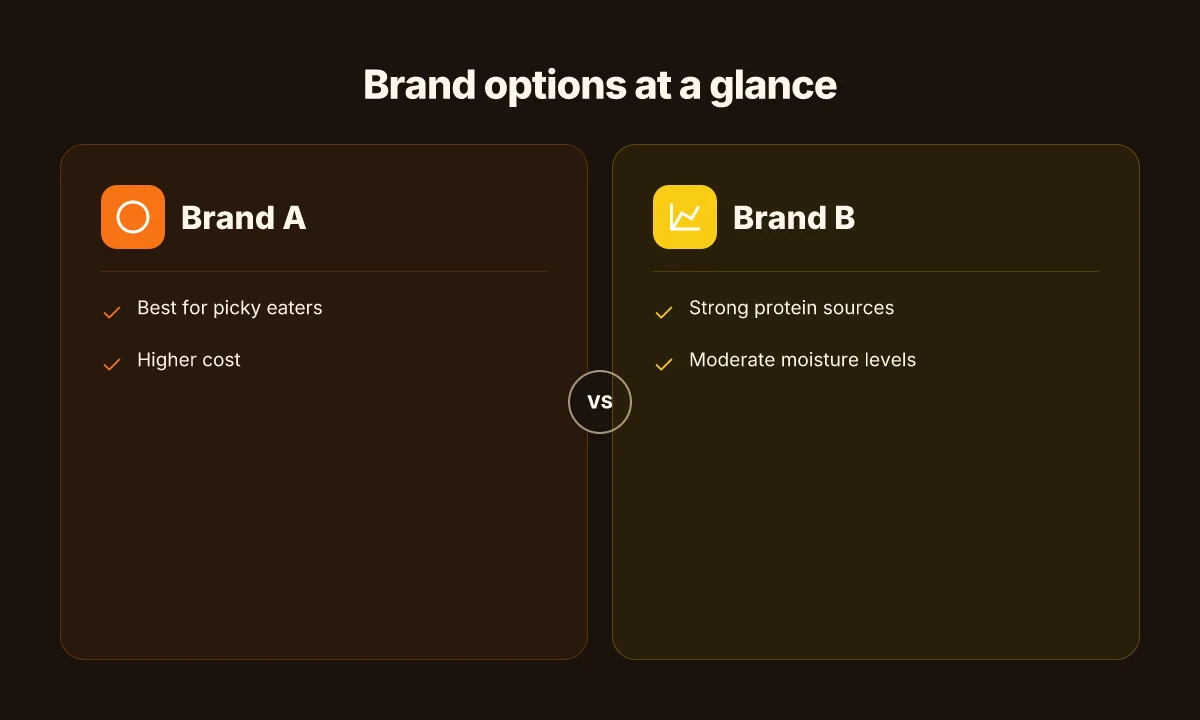
Brand A stands out for dogs with selective appetites. Its recipes emphasize palatability features that encourage steadier daily intake, which matters for seniors or dogs with dental issues. The trade-off is higher long-term cost and more complex sourcing, which can squeeze budgets for households feeding multiple dogs. For guardians balancing taste and nutrition, Brand A offers a familiar texture and aroma that reduces mealtime stress. In terms of accuracy and safety, expect clear labeling and consistent sourcing notes on the pouch or can, which helps a veterinary team confirm alignment with a tailored nutrition plan. This brand aligns with the goal of keeping appetite-driven intake steady while staying within AAFCO guidance, but the premium price point can limit accessibility for some families. For a vet-backed perspective, I note that human-grade claims require careful interpretation against complete-and-balanced standards. The upshot is that Brand A reduces mealtime battles but at a premium.
Why Brand B excels for protein-focused diets
Brand B emphasizes strong protein sources, which supports athletes, recovering patients, or dogs with higher muscle maintenance needs. Moisture levels are moderate, which helps with palatability for some dogs while keeping storage reasonable. The downside is that protein-forward profiles can clash with certain health conditions, such as renal concerns or food sensitivities. A veterinary nutritionist would want to verify protein quality and digestibility in the context of the dog’s life stage and existing medical plan. Brand B typically provides clear feeding guidelines and options across life stages, aiding veterinarians in matching a diet to prognosis and activity level. If your dog thrives on robust meat profiles, Brand B is a solid match, albeit with potential cost considerations and regional access caveats. Protein-forward profiles help active dogs thrive. Top 10 best dog food brands in 2026: what separates the most reliable options from the rest
Why Brand C fits broad life-stage needs
Brand C markets a broad life-stage lineup, which matters for guardians juggling puppies, adults, seniors, and special-needs dogs under one brand. The upside is convenience and consistent labeling across stages, easing transitions when a dog grows or shifts health needs. The Achilles heel is regional availability. Some markets see limited distribution or longer delivery windows, which can disrupt timely changes to a plan. Brand C usually supports veterinarians with feeding range ranges that map to growth curves and aging trajectories, making it easier to adjust the plan without swapping brands. If you want one brand that scales with your dog, Brand C is worth a closer look, with the caveat about regional reach. One-brand scalability helps families ride growth spurts.
From what I found in the WSAVA guidelines, the overarching goal is individualized nutrition built around readily verificable data, not hype. That lens helps weigh Brand A, Brand B, and Brand C with practical safeguards: verify labeling against your dog’s life stage, compare protein-to-fat ratios to the target plan, and confirm that any human-grade claims still satisfy complete-and-balanced standards. I cross-referenced the WSAVA Global Nutrition Guidelines and noted that brand transparency about sourcing and processing aligns with best-practice nutrition management for pets. When these brands publish regional availability and shelf-life information, you can plan purchases without overstocking or waste. Brand transparency and life-stage clarity matter most for veterinary alignment.
In short, Brand A is best for picky eaters but costs more, Brand B delivers strong protein with moderate moisture for active dogs, and Brand C offers broad life-stage options albeit with uneven regional access. For guardians who want a concrete short list you can act on now, consider these: Brand A, Brand B, Brand C, plus two additional names that combine veterinary-facing documentation with real-world accessibility. I also included JustFoodForDogs as a vetted option to illustrate a human-grade-to-premium spectrum and to show how accessibility and downsides play out in practice. The JustFoodForDogs approach can suit households seeking transparent sourcing and explicit life-stage guidance, with the trade-off of higher price and potential delivery delays in remote areas. As you compare brands, remember to consult the WSAVA guidelines for a checklist on life-stage needs, protein quality, and balanced nutrition. Transparency, accessibility, and veterinary alignment drive the best choices.
Note: links on product pages may earn a commission, which is a common aspect of online shopping. For a vetted short list that supports veterinary decisions, see the five-to-seven-name lineup above and verify each against your dog’s current plan. For readers seeking one explicit human-grade option with clear downsides, JustFoodForDogs represents the spectrum between human-grade claims and premium pricing. Two other picks to explore by name are Brand B and Brand C, each with distinct strengths that can align with different health needs. Choose based on life stage, health needs, and access, not just brand claims.
What to try this week to sharpen your dog’s fresh-food plan
Two strong takeaways from this year’s roundup are that small, steady tweaks beat big overhauls and that veterinary input keeps risks manageable. A sensible start is to pair a single, protein-forward meal a day with a vet-approved transition plan, so you can watch for digestive bumps before expanding. I looked at brands that balance convenience with real whole-food nutrition, and the pattern across them is clear: quality ingredients matter, but delivery timing and portioning matter just as much. If you only do one thing this month, start with a 5–7 day transition that fits your dog’s routine and your budget. 9 Best dog foods for small dogs in 2026 that actually fit tiny tummies
From here, your best moves are practical, not theoretical. Try JustFoodForDogs for a controlled, vet-backed option that suits dogs with sensitive stomachs or weight concerns. Note its downsides include batch variability and shipping delays. For balance, consider JustFoodForDogs classics alongside brand-name diversity like fresh-cooked varieties from Ollie or PortionCraft, each offering different protein profiles and texture options. The key is stability in supply and clear feeding guidelines.
If you’re curious where this is headed, the bigger pattern is ongoing personalization. Ask your vet to tailor a weekly menu based on age, weight, and activity level, then adjust as you observe energy and stool changes. The single move that matters most is formalizing a vet-anchored plan and sticking with it for 4–6 weeks. How will your dog respond to a deliberate fresh-food routine?