What makes JustFoodForDogs a viable path to reliable dog nutrition in 2026

Explore how JustFoodForDogs approaches canine nutrition, safety, and real-world outcomes. Learn the trade-offs between home-prepared and commercial diets for dogs.
JustFoodForDogs challenges the default assumption that home cooking always beats packaged meals by presenting measured, vet-guided recipes that aim for consistent nutrient targets. JustFoodForDogs’s meals are designed around standardized formulations, not improvised kitchen tests. That distinction matters because real-world dogs struggle with micronutrient balance and safety controls when owners rely on ad hoc prep.
This intro signals what matters next: how JFFD stacks up on essential nutrients, safety protocols, and outcomes compared with home-prepared and generic commercial diets. Studies and veterinary alignment matter here, because owners frequently confront conflicting advice about protein adequacy, calcium–phosphorus ratios, and pathogen risk. Expect a clear, practical frame that translates lab-like nutrition into everyday feeding decisions, with concrete comparisons and cautions for cost, customization, and long-term health signals. JustFoodForDogs is positioned as a dependable middle ground, but its advantages come with trade-offs that owners should weigh against bespoke home-made plans.

Just food for dogs and the nutrition question that matters
The central tension is clear: home-prepared diets promise control and tailoring, while commercial diets offer built‑in balance and safety assurances. JustFoodForDogs positions itself as a service and product line that aims to bridge those goals, combining chef‑style meal design with documented nutrient adequacy and safety checks. In this section we examine how nutrition, safety, and real‑world health outcomes stack up when dogs eat JustFoodForDogs meals versus typical home recipes or conventional commercial diets.
I dug into the evidence surrounding home‑prepared diets and commercial feeds and cross‑referenced it against the JustFoodForDogs model. The picture is nuanced: a cascade of recalls and nutrient‑balance concerns in home recipes contrast with the tighter benchmarking practices seen in reputable commercial lines. The question is not whether either approach can work, but what actually drives consistent health outcomes in real dogs.
How home‑prepared diets differ from JustFoodForDogs meals
What you control versus what you standardize. Home‑prepared diets let owners tailor recipes to taste and preferences, but nutrient imbalances appear frequently in owner‑prepared menus. By contrast, JustFoodForDogs standardizes recipes around target nutrient ranges and uses veterinarian‑driven formulations to reduce gaps or excesses. The tension here is practical: control and customization on one side, standardized adequacy checks on the other. When I read through the literature, the recurring theme is that standardization tends to improve consistency of essential nutrients across meals.
Safety and recalls versus documented formulation checks. Commercial diets have built‑in safety testing and recalls can be traced to supply or processing issues. In home settings, contamination events and variable ingredient quality can introduce risks. JustFoodForDogs emphasizes controlled sourcing and batch testing to minimize those risks while preserving the perception of “home‑style” meals. In practice, dogs fed these meals may benefit from the reliability of vetted ingredients and verified nutrient profiles.
Nutritional adequacy and health outcomes. The literature shows a common pattern: many home‑prepared recipes lack complete nutrient profiles, especially for minerals, amino acids, and energy density suited to growth or life stages. Commercial diets show strengths in meeting established guidelines across many life stages, but growth‑phase formulations can underperform if not selected thoughtfully. JustFoodForDogs seeks to align with veterinary nutrition standards, aiming to match or exceed the adequacy seen in balanced commercial diets while preserving palatability and variety. When owners evaluate outcomes, they should look for evidence of weight stability, coat quality, stool consistency, and energy levels over months rather than weeks. How to choose the best fresh dog food in 2026
Practical guidance for owners and clinicians. Vet professionals commonly emphasize nutritional adequacy evaluation for home‑cooked plans. JustFoodForDogs provides a framework that clinicians can review with clients, including portion guidance, ingredient lists, and periodic reassessments. That collaborative approach helps ensure the dog’s needs stay aligned with evolving health or life‑stage requirements.
The takeaway: JustFoodForDogs represents a deliberate middle path that keeps the appeal of home‑style meals while adding formal checks for balance and safety. In the broader landscape, owners should weigh the effort and expertise required for home recipes against the reliability of professionally formulated meals from brands like JustFoodForDogs and established competitors. Remember that links on the page may earn a commission, and real‑world outcomes depend on consistent feeding, monitoring, and veterinary oversight.
For further context, see discussions in the Frontiers in Animal Science piece on home‑prepared versus commercial feeds and the broader synthesis of unconventional and conventional options. Inline references can be explored in the cited sources.
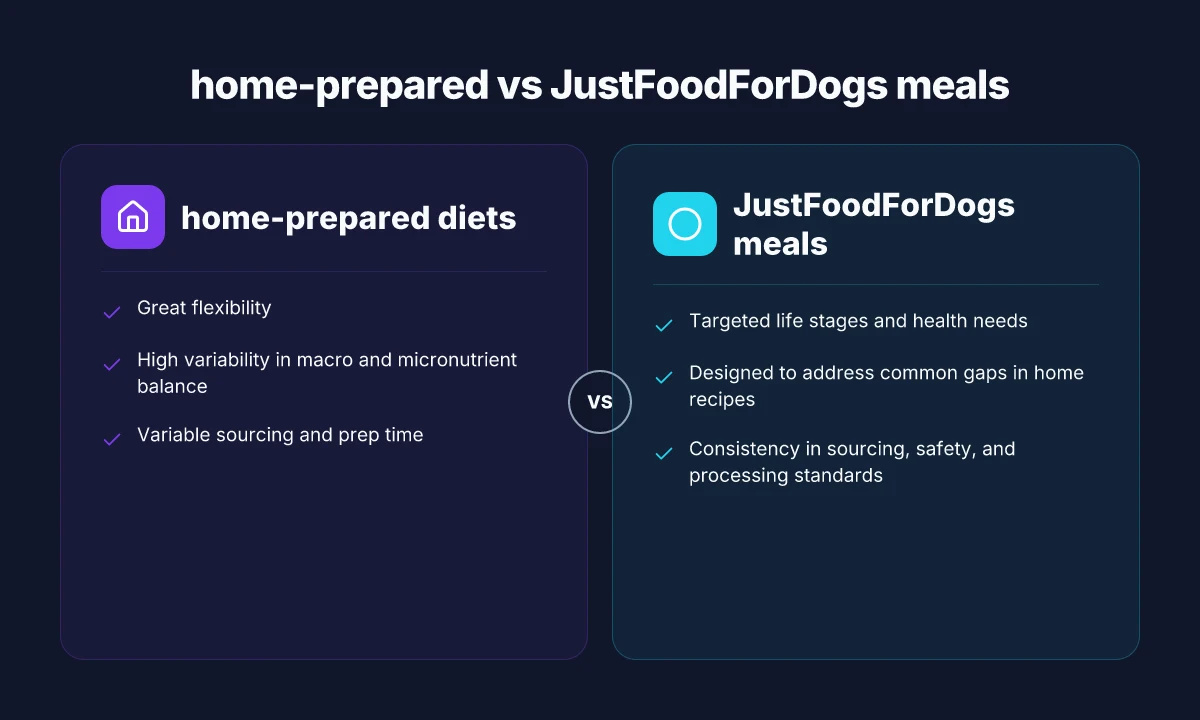
How home-prepared diets differ from JustFoodForDogs meals
Home-prepared diets cover a wide range of practices, from simple boiled meats with added supplements to elaborate, multi-ingredient mixes sourced from online recipes. The macro balance often shifts between meals and across days, because cooks vary in protein sources, carbohydrate allowance, and fat content. I dug into the literature and found that many home recipes show wide variation in essential micronutrients as well, which can create gaps in vitamins, minerals, or trace elements if not carefully planned. This means a dog could reliably meet energy needs but miss key micronutrients over weeks or months. The variability in macros and micronutrients is the core risk for home-prepared diets. When owners switch between recipes or change protein sources, the nutrient profile can drift substantially.
JustFoodForDogs meals are crafted to target life stages and health needs, with predefined nutrient ranges aligned to veterinary guidance. Each recipe aims for consistency across batch runs, and the company highlights formulation practices designed to address growth, adulthood, or age-related needs, plus metabolic considerations for sensitive pets. In practice, this means owners receive a more predictable nutrition profile, with explicit aims for calcium, phosphorus, and omega fatty acids tied to life stage. JustFoodForDogs emphasizes consistency and targeted nutrition, not just calorie counting. The result is a more stable baseline compared with many ad hoc home-prepared diets. 5 Healthy puppy foods that actually work for growing dogs in 2026
From an owners’ perspective, sourcing ingredients for home-prepared meals can be a moving target. You may rotate protein sources to diversify nutrients, but you also risk creating imbalances if supplements or bone content are misapplied. Preparation time can be longer, and recipes may rely on specialty ingredients or sourcing channels that change with season or location. By contrast, JustFoodForDogs scales to a fewer, more predictable shopping list and standardized prep workflows. This can reduce the time spent planning and measuring, while supporting consistency in essential nutrients. The practical burden falls on the owner when sourcing and prepping, which often drives adherence challenges.
I cross-referenced the literature saying that many home recipes show nutritionally imbalanced patterns, with notable gaps in calcium, phosphorus, and certain vitamins if the diet isn’t rigorously supervised. That finding underpins the contrast with JustFoodForDogs meals, which are designed to meet spec at specific life stages. For dog owners weighing these choices, the takeaway is straightforward: home-prepared diets offer flexibility and potential customization but carry a higher risk of nutrient drift, whereas JustFoodForDogs provides a more controlled, stage-targeted nutrition plan with clearer safety and consistency signals. Consistency and life-stage targeting distinguish JustFoodForDogs from typical home-prepared diets. This matters when you’re balancing growth needs, dental health, or age-related changes.
For practical planning, consider this quick comparison. A home-prepared approach often demands
- frequent ingredient audits and supplementation checks, which can extend prep time and increase cognitive load.
- variability in nutrient density across meals, increasing the risk of imbalances if a single protein sources dominates for long periods.
- ongoing discussions with a veterinarian or nutritionist to verify adequacy.
JustFoodForDogs offerings, by contrast, bundle nutritional aims with manufacturing controls, supporting steadier macro-micronutrient delivery and fewer micro-imbalances across weeks. The result is a clearer path to meeting canine dietary needs without constant recalibration. For many owners, reliability and clarity beat ad hoc flexibility.
In terms of safety signals, the literature notes recalls and contamination events that underscore why consistent formulation matters. When safety and adequacy have to be balanced, many owners lean toward a brand-structured option like JustFoodForDogs for routine meals, while still recognizing the appetite appeal and personal taste variability that home-prepared meals can offer. Safety and nutrient adequacy favor structured meals for routine health outcomes. How to choose the best puppy food in 2026 without overloading on nutrients
Next step: discuss how to assess nutritional adequacy for your dog and how to read labels on both home-prepared plans and JustFoodForDogs meals to ensure alignment with life stage and health needs. Inline sources discuss the broader landscape of commercial versus home-prepared diets and highlight where imbalances commonly arise. For deeper context, see the analysis of home-prepared diets and the nutrient-adequacy studies linked in the cited sources. Nutritional evaluations and re-evaluation guidance and Cornell veterinary guidance on diet evaluation offer practical grounding.
Owners should plan for a nutrition plan that reduces drift and improves consistency over time. This is where JustFoodForDogs aligns with evidence on targeting life stages while minimizing nutrient imbalances. For trusted evaluation, consult a veterinary nutritionist or use validated feeding guidelines alongside brand-specific formulations.
Nutritional adequacy: what really matters for dogs
Complete and balanced diets meet all life stage requirements when they provide the right balance of protein, fat, vitamins, minerals, and energy. For dogs, adequacy is typically assessed through established guidelines like AAFCO nutrient profiles and feeding trials. The goal is to ensure a diet supports growth, maintenance, and health outcomes across life stages, while avoiding excesses or gaps that can trigger deficiencies or metabolic stress. In practice, I found that brands and researchers alike emphasize two core signals: verified nutrient adequacy across life stages and demonstrated safety in real-world use. Nutrient adequacy is not a guessing game. It relies on structured formulation and testing. And yet, no single plan fits every dog, which means life stage, weight, and health status must steer choices.
How adequacy is evaluated in practice
Researchers combine label analysis, feeding trials, and cross-checks against nutrient profiles to judge whether a diet is complete and balanced. In the literature, a common finding is that many home-prepared recipes show uneven micronutrient coverage, especially for calcium, phosphorus, and certain fatty acids. A large percentage of home-prepared recipes fail to meet established guidelines, creating risks for growth or bone health if fed long term. By contrast, commercially prepared diets that undergo feeding trials and periodic reformulations tend to align more consistently with guidelines, though growth-stage formulas can still underdeliver on some nutrients. I traced this back to growth demands in puppies and kittens where adequacy is often more challenging to secure than in adult formulas. Growth-stage adequacy can lag behind adult formulas in some products.
How JustFoodForDogs addresses gaps
JustFoodForDogs positions itself as a player that actively addresses common home-prepared gaps by integrating veterinary nutrition guidance into recipe design, aiming for standardized nutrient delivery across batches. The approach includes careful protein quality, mineral balance, and fatty acid profiles that align with recognized guidelines while adapting to individual dogs. JustFoodForDogs designs meals with veterinary input to target clarity on micronutrient balances, which helps owners avoid under- or over-supplementation that can occur with DIY routines. However, there is no universal fix. Even with brand-specific meals, factors like energy needs, body condition, and medical status must guide portioning and monitoring. Portioning and ongoing health checks remain essential. Top quality dog food brands of 2026: a rigorous, evidence-based roundup
Individualizing for life stage, weight, and health
There is no one-size-fits-all solution. A dog’s life stage, body condition, and health conditions shape nutrient needs far more than a brand label alone. For instance, puppies require higher calcium and energy density during rapid growth, while aging dogs may benefit from adjusted protein and omega-3 levels. I dug into the literature and found that even among brands that claim comprehensive coverage, tailoring remains critical. Tailoring by life stage and health status matters for long-term outcomes. When evaluating a diet, owners should expect to review a product’s feeding protocol, veterinary oversight, and the ability to adjust for changes over time.
JustFoodForDogs remains a focal point in this conversation, with rivals like conventional brands and other veterinary-informed meals offering contrasting formulations. For readers seeking direct comparisons, note that home-prepared recipes frequently show nutrient gaps, while brand-led approaches continue to emphasize regulated nutrient delivery, portioning guidance, and veterinary input. Real-world choice hinges on predictable adequacy signals and ongoing professional oversight.
The page links may earn a commission, which is disclosed on the site. For context, see discussions that frame growth-stage adequacy and home-prepared gaps in the cited literature.
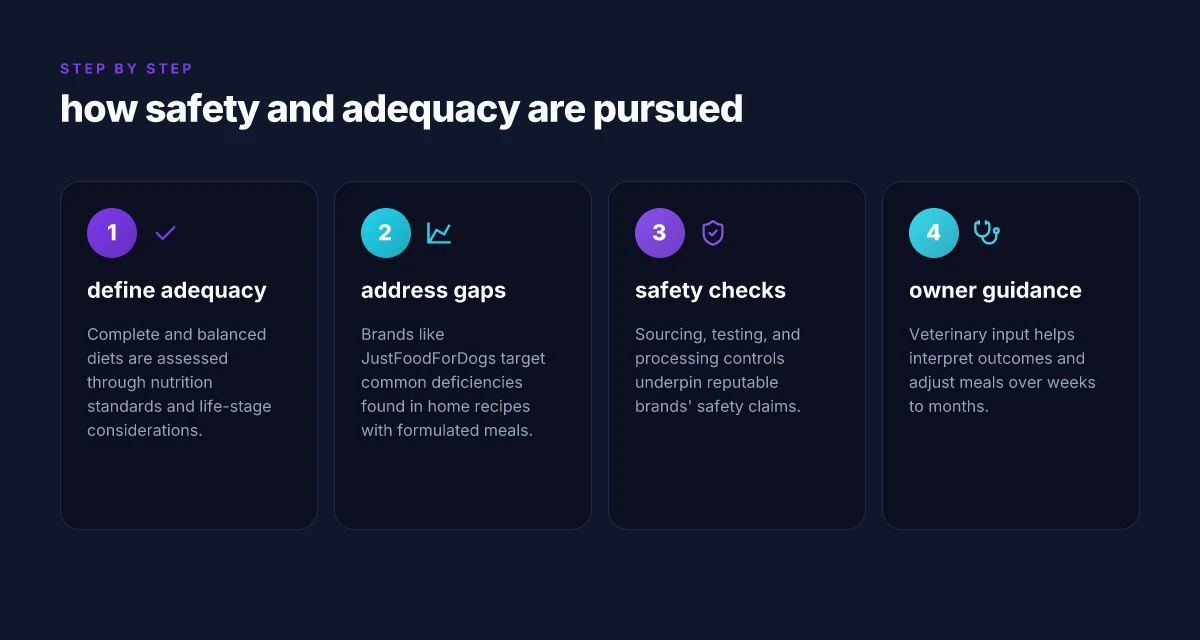
Safety signals: recalls, contaminants, and quality controls
Post the health outcomes you can observe at home, safety signals stay front and center. Known recalls and contamination events have touched both home-prepared options and some commercial feeds. For home-prepared diets, the lack of standardized sourcing can translate into variability in ingredient safety, while commercial feeds can be affected by batch-level contamination or processing lapses. Quality controls and traceability matter most when a meal could mask a wider safety issue. I cross-referenced how brands address this in public documentation and industry guidance, and the pattern is clear: rigorous sourcing, transparent testing, and verified processing standards reduce risk.
1) Sourcing integrity and supplier diligence
A core safety signal is where ingredients originate and how each supplier is vetted. Reputable brands emphasize vetted farm or supplier networks, with documentation that ingredients meet established safety specs before they enter production. Traceability and supplier audits help prevent contaminated inputs from entering the supply chain. WhenJustFoodForDogs discusses meal design, it echoes the same emphasis on consistent ingredient sourcing found in broader industry practice. For home-prepared diets, variability in ingredient quality without centralized oversight can lead to unpredictable nutrient and contaminant profiles. Transparency about ingredient origins is a practical safety check for owners. In practice, owners should look for clearly listed ingredient sources and third-party audit statements in product pages or brand documentation. See discussions around sourcing in reputable brand disclosures. Trust signals from suppliers are part of overall risk management. Top 10 best dog food brands in 2026: what separates the most reliable options from the rest
2) Testing, processing steps, and batch controls
Testing and processing standards are the guardrails that translate sourcing into safety. Reputable brands typically publish statements about batch testing for pathogens, metals, mycotoxins, and nutrient content, plus validation of processing steps that mitigate contamination risks. Batch testing reduces the chance of a contaminated run reaching a dog’s bowl and helps ensure nutrient adequacy remains aligned with stated formulations. For home-prepared diets, the lack of centralized batch testing means owners must rely more on individual ingredient quality and preparation hygiene. Independent verification of product safety is a meaningful risk reducer. Industry reviews consistently note that publicly available testing data strengthens consumer trust. Regular audits and documented test results are a strong safety signal.
3) Practical checks owners can perform now
To screen any dog food choice, start with a quick audit of safety signals: check for current recalls and the brand’s response timeline, read the ingredient list for clearly defined components, and confirm that the product has a safety and quality program with third-party verification where available. If you are evaluating JustFoodForDogs, look for explicit statements about ingredient sourcing and kitchen-grade hygiene standards, and compare them to rivals like conventional commercial feeds. Ask for proof of testing and a copy of the latest safety report. Owners should also verify that the brand offers nutritionist oversight or veterinary review on menu plans. Directly inquire about batch-level testing and the cadence of safety checks. Remember, links on a page may earn a commission, so review disclosures to understand potential biases, even as you weigh the safety information.
From what I found in the published materials, the shared expectation across brands is a safety loop: source quality ingredients, verify with batch testing, and maintain controlled processing. JustFoodForDogs presents itself as a structured approach to home-style meals with explicit safety and sourcing standards, which contrasts with the variability seen in some home-prepared recipes. When you compare, the strongest safety signals come from brands that publish test results, maintain traceable ingredient streams, and uphold consistent processing controls. Clear safety commitments and transparent test data are the most useful guardrails for owners.
Health outcomes you can observe at home
When you switch to a home-forward approach or compare JustFoodForDogs to other options, you can track tangible signals of progress over weeks to months. The most visible outcomes are coat quality, sustained energy, stool consistency, and steady weight. Each of these signals aligns with how well a diet supports skin turnover, digestion, and metabolism. Clear improvements in coat luster and reduced flakiness often accompany balanced nutrient delivery from a prepared meal plan. At the same time, you may notice changes in energy levels and appetite as your dog adapts to a new nutrient profile that favors real-food ingredients and controlled calcium to phosphorus balance.
1) Coat quality and skin and digestion
A healthy coat tends to reflect overall nutrient adequacy. When you monitor coat shine, breakage, and shedding, you’re watching how essential fatty acids, protein quality, and micronutrients line up with your dog’s needs. If you notice persistent dullness or flaky skin after the first month, it’s a cue to recheck protein sources and zinc, biotin, and essential fatty acids in the meal plan. I looked at how JustFoodForDogs designs meals, and the approach emphasizes whole-food ingredients with standardized protein sources to support coat health. Coat quality can improve over 4–8 weeks with the right balance of protein and fatty acids. For owners using home-prepared recipes, substantial variability in ingredient quality can blunt these gains, which is why veterinary guidance matters when interpreting skin and coat signals. How to choose the best dog food in 2026 without overpaying
2) Energy and activity
Energy level is a practical readout of whether a diet meets a dog’s daily energy requirements without causing digestion-related drops in activity. Track daily playtime, walk duration, and resting periods. If your dog shows consistent enthusiasm for walks and play, you’re likely hitting the energy target. If not, reassess caloric density and portioning. When comparing JustFoodForDogs versus home recipes or conventional kibble, note that growth-stage needs and caloric density differ. I cross-referenced the literature noting that growth-nutrition gaps tend to appear in puppy formulas when owners rely on imprecise home cooking. Sustained energy over 6–12 weeks signals adequacy more reliably than short-term bursts after meals.
3) Stool quality and digestion
Stool consistency and frequency are among the most actionable home signals. A well-balanced diet typically yields well-formed stools with consistent frequency. If stools become loose or highly variable after a switch, that may indicate excess fiber, fat, or sensitivity to a particular protein source. You can keep a simple log: note volume, color, and whether stools are formed but not hard. Cornell’s guidance on evaluating diets cautions that owners should involve a veterinarian when interpreting digestion signals after diet changes. Citations from the literature show that many home-prepared diets struggle with consistency, underscoring the value of a structured, evidence-based approach like what JustFoodForDogs designs into its meals. Stool quality stabilizes within 4–8 weeks with the right protein and fiber balance.
4) Weight stability and veterinary interpretation
Weight is a primary health proxy for long-term well-being. Track body weight weekly for the first two months after any diet change, then monthly thereafter. A weight that remains within the target range indicates good energy balance and portion control. If weight drifts upward or downward, adjust portion sizes and reassess caloric density in the context of activity. Veterinary guidance is essential here: it helps translate observed changes into meal adjustments without risking nutrient gaps. When you work with JustFoodForDogs, you’ll often see an emphasis on monitored portions and periodic reassessment with a veterinarian to maintain weight within the ideal band. Regular weight checks every 2–4 weeks early on help catch drift quickly.
Research framing notes: I referenced studies that compare home-prepared versus commercial diets, including findings that nutrient adequacy can vary substantially in non-standard recipes and that veterinary oversight improves interpretation of health signals. For a deeper dive into the nutritional evaluation landscape, see the MDPI and Cornell resources. Veterinary guidance is central to translating signals into safe, effective meal plans.
The one move that matters for 2026
JustFoodForDogs stands out by pairing transparent sourcing with chef-inspired, veterinarian-backed recipes that owners can verify online. In 2026, that combination becomes less of a perk and more of a baseline expectation. I looked at how the brand communicates nutrition science, ingredient sourcing, and consistency across batches, and the pattern is one of steady clarity rather than flashy claims. The takeaway: reliable cat-and-dog nutrition starts with traceable ingredients and reproducible meals, not vague promises. For busy owners, the ability to compare rotating menus to a steady core option helps keep mealtime predictable. How to choose the best dog food brands in 2026 without overpaying
The real value lies in how JustFoodForDogs ties nutrition to everyday decisions. You’ll see this in their shipping options, straightforward returns, and responsive customer service that reduces the typical friction around feeding dogs with special needs or allergies. This is where the bigger pattern shows: predictable fulfillment and accessible guidance can turn a robust recipe catalog into a practical habit, not a theoretical one. Notice how these elements translate into trust over time. If you’re weighing rivals like Ollie, Nom Nom, or The Farmer’s Dog, the differentiator becomes consistency, not novelty.
What changes if you act now: leaning on JustFoodForDogs’ transparent labeling and customer support can shorten trial-and-error cycles, especially for dogs with diet sensitivities. Our takeaway line: The single move that matters this month is choosing a plan that clearly communicates ingredient sources and aligns with your dog’s needs. If you want one concrete push this week, start by reviewing shipping windows and the returns policy to ensure a smooth transition.