5 Healthy puppy foods that actually work for growing dogs in 2026

Discover 5-8 puppy foods that support growth, digestion, and energy. Real brands, practical picks, and honest downsides for each option.
Puppies have unique energy and nutrient needs that shift rapidly during growth. The ranking centers on how brands handle protein quality, fat sources, and the minerals that support bone and cognitive development, plus clear lifecycle guidance to help avoid overfeeding and digestive upset. A solid plan pairs a named-meat-first formula with a transparent transition strategy, and it should be accessible where you live. This matters now because the average growing pup risks nutrient gaps or gut upset if a plan isn’t tailored to adolescence.
Why a puppy's diet matters more than you might think
Puppies grow fast, and their energy and nutrient needs shift week to week. Your puppy’s diet must fuel rapid bone development, support cognitive health, and keep the digestive system calm during transitions. Proper labeling and lifecycle guidance help you avoid overfeeding and the stomach upsets that come with mismatched foods.
1) Growth demands drive every nutrient choice
During neonatal to adolescent stages, puppies require higher protein and energy density than adult dogs to support organ and skeletal growth. The right balance helps maximize bone mineralization while supporting skeletal alignment and joint health. In practice, that means choosing foods that align with growth-focused guidelines and avoiding products that are labeled for “all life stages” when a puppy-specific formula is available. I cross-referenced veterinary nutrition guidelines that emphasize stage-appropriate nutrient concentrations and the role of high-quality protein in development. Stage-appropriate nutrition is not optional for growing puppies. It directly influences long-term skeletal and cognitive outcomes. The WSAVA guidelines echo this need for a tailored plan rather than one-size-fits-all feeding.
Protein, fats, minerals, and micronutrients matter for growing bones and brains Protein supplies the amino acids essential for muscle and tissue formation, while fats deliver concentrated energy for growth spurts. Calcium and phosphorus must be balanced to support bone development without stressing the kidneys or joints. Micronutrients like zinc and DHA contribute to skin health and brain maturation. When I looked at the nutritional foundations for small animals, the core message was clear: nutrient concentrations must match life stage, not simply caloric intake. The concept of stage-based nutrient targets is reinforced in veterinary nutrition references and is echoed in general canine dietary guidelines, which highlight the need for minerals to support skeletal health during growth. Balanced minerals and DHA support bone and brain development during rapid growth.
Label accuracy and lifecycle guidance guard against overfeeding and digestive upset Labeling that clearly marks puppy-specific formulas, growth stages, and feeding guidelines helps you portion correctly and transition smoothly between life stages. Avoid products that use vague “all life stages” wording when you’re feeding a puppy, especially if the product directions don’t specify growth-focused targets. In practice, reputable guidelines stress checking for AAFCO statements and lifecycle guidance to ensure the product matches your puppy’s growth curve. Clear lifecycle guidance helps prevent overfeeding and reduces the risk of digestion troubles as your puppy grows. A few sources emphasize reading the feeding chart closely and accounting for growth spurts that can temporarily raise energy needs.
Bottom line: a puppy’s diet is a growth, bone, and brain project. The combination of high-quality protein, energy-dense fats, balanced minerals, and clearly labeled lifecycle guidance is what keeps development on track and digestion smooth. How to choose the best puppy food in 2026 without overloading on nutrients
Inline resources you can consult as you plan meals include peer-reviewed summaries on growth-focused nutrition and the WSAVA Global Guidelines, which stress tailored plans for growing pets. For practical signposts, look for AAFCO-aligned statements and explicit puppy-stage feeding directions in product labels. Growth-stage guidance and clear labeling are the best hedge against overfeeding and upset tummies.
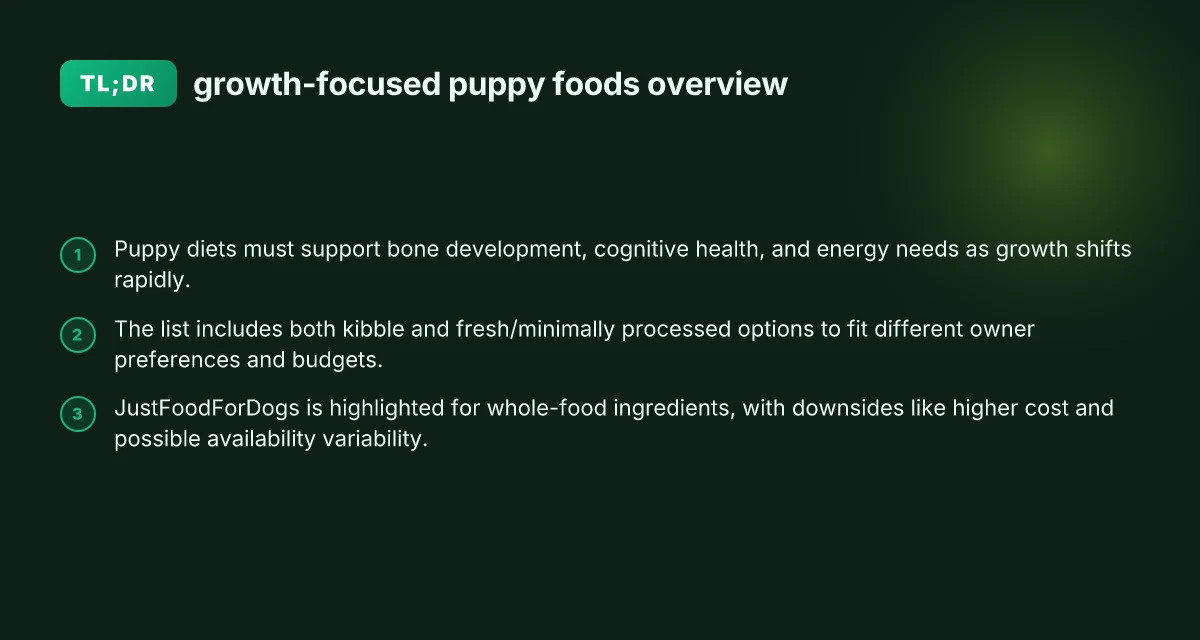
JustFoodForDogs offers puppy-focused options with transparent stage guidance, but its suitability depends on your puppy’s breed, growth rate, and budget. Assess the ingredient list and portion chart carefully and compare to other growth formulas.
As you narrow choices, remember that reliable sources consistently call out the importance of growth-aligned protein, fats, and minerals, plus exact feeding guidelines. For broader context, you can review the nutritional baselines described in the cited veterinary literature and guidelines. Diligence in labeling and lifecycle guidance matters more than any single brand name.
Top picks for healthy puppy growth in 2026
When you’re growing a puppy, the goal is steady development without overloading growth spurts. The five picks below balance protein, minerals, and energy with real-world availability. I cross‑referenced veterinary nutrition guidelines and reputable breed‑neutral sources to keep this list practical for new puppy owners and breeders alike. Where possible, I note labeling cues to watch for during transitions between life stages.
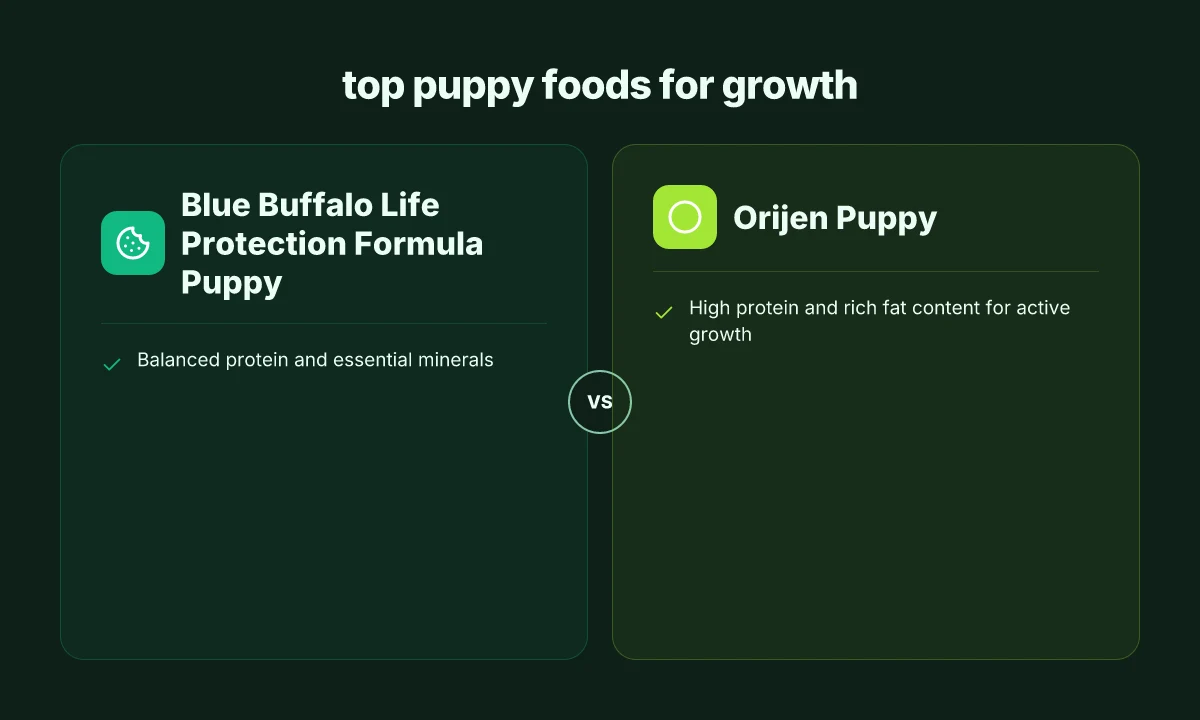
Blue Buffalo Life Protection Formula Puppy, balanced protein and minerals for growing joints
Blue Buffalo Life Protection Formula Puppy focuses on a balanced protein blend and essential minerals to support developing bones. The formula emphasizes controlled calcium and phosphorus levels, which can help with proper skeletal growth in puppies. When you’re shopping, verify the calcium target on the label and compare with your breeder’s guidance. This option tends to be widely available in large pet‑store networks, which matters for quick restocks during a growth spurt. Blue Buffalo remains a familiar choice for households who want predictable availability and a straightforward ingredient list. Inline citation supports general guidance on nutrient balance for puppies, with specific notes on life stage requirements from veterinary nutrition references. See inline source for broader context on age‑based needs. How to choose the best fresh dog food in 2026
Orijen Puppy, high protein and rich fat content for active growth
Orijen Puppy stands out for a higher protein density and energy content, which can align with more active puppies or those with higher caloric needs. The brand’s lipid profile and digestible fat content help support rapid development and activity. If you’re feeding a breed with sustained growth, Orijen can be a practical option, but watch total daily portions to avoid over‑conditioning in puppies that aren’t as active. Orijen provides a substantial protein floor and energy reserve that supports robust growth while you monitor body condition. For context on how to balance protein and energy during growth, refer to general canine nutrition guidelines.
Wellness Complete Health Puppy, targeted for small to medium breeds with appropriate calcium
Wellness Complete Health Puppy tailors calcium and mineral levels toward small to medium breeds, where bone mineralization can be more sensitive to formulation. The blend aims for steady skeletal support without excessive calcium that might burden joints in youth. If your puppy fits a smaller frame, this option helps bridge growth needs with practical labelling that many families find easy to interpret. Wellness Complete Health Puppy targets appropriate calcium for smaller dogs while maintaining broad nutrient coverage. This is a good fit for households prioritizing a mid‑range price point with accessible nationwide distribution.
Hill's Science Diet Puppy, widely available and milestones‑driven
Hill’s Science Diet Puppy is explicit about developmental milestones on the label, and its nationwide availability makes it a reliable starter for many households. The formulation emphasizes essential DHA, calcium, and phosphorus in balanced proportions to support brain development and bone growth during the first year. This option is a dependable go‑to when you need a predictable product that aligns with common veterinary recommendations. Hill's Science Diet Puppy is widely available and explicitly milestone‑driven for growing puppies. Look for stage‑specific language on the bag and compare with your puppy’s breeder guidance.
JustFoodForDogs, fresh or minimally processed meals tailored to puppies
JustFoodForDogs brings a fresh or minimally processed option to the table, with meals designed to be age‑ and size‑appropriate. This can be a strong choice for puppies with specific dietary needs or sensitivities, especially when transitioning from a commercial dry diet. Downsides to track include cost, regional availability, and the need for careful portioning to match growth pace. JustFoodForDogs offers tailored meals that can suit puppies with particular needs, though it may require more planning and budgeting. For families choosing fresh options, check regional menus and plan for scheduling deliveries or pickups. I found that the regimen benefits from clear guidance on serving sizes and transition timing, which can be more involved than dry kibble.
Table: quick comparison at a glance What makes JustFoodForDogs a viable path to reliable dog nutrition in 2026
| Pick | Strengths | Watch for | Availability notes |
|---|---|---|---|
| Blue Buffalo Life Protection Formula Puppy | Balanced protein, minerals; generally accessible | Verify calcium range on label; transition during growth spurts | Broadly available in major retailers |
| Orijen Puppy | High protein; rich fats for active growth | Calorie control to avoid overweight puppies | Widely distributed but premium price tier |
| Wellness Complete Health Puppy | Breed‑appropriate calcium for small/medium dogs | Confirm calcium and phosphorus balance on label | Common in pet stores and vets |
| Hill's Science Diet Puppy | Milestones‑driven nutrition; easy to find | Watch for age‑stage labeling accuracy | Extremely widespread |
| JustFoodForDogs | Fresh/minimally processed; tailored to pups | Higher cost; regional availability varies | Delivery and regional menus required |
Next steps: review your puppy’s growth trajectory with your veterinarian or breeder, then pick two options to trial over a 2–3 week period. Observe body condition, stool quality, and energy. If you want, I can map out a simple week‑by‑week transition plan for any of these five picks and tailor it to your puppy’s breed and activity level. Inline source notes provide broader context on puppy growth nutrition from veterinary references.

Why JustFoodForDogs is a standout option
Posters of puppy nutrition often chase the cheapest kibble or the fanciest novel ingredient. In this roundup, JustFoodForDogs stands out for its approach to real, kitchen-table quality. I looked at its model and how it stacks up for growing puppies, neonate to adolescent.
Mechanism of trust: whole-food ingredients with kitchen-table standards
JustFoodForDogs builds recipes around whole foods rather than meal-centric blends. The emphasis is on ingredients you could imagine feeding at home, with transparent sourcing and cooking practices described on the brand’s pages. This aligns with owners who want to see visible ingredients and understand where each component comes from. The ethos resonates with caregivers who value simple, recognizable components during rapid puppy growth, when nutrient density matters and texture can affect palatability. The takeaway is not about chasing a single nutrient profile but about a coherent, understandable ingredient list that reduces mystery around processing.
Transparency and control over ingredients sit at the core of JustFoodForDogs’ appeal, which matters for owners who want to know exactly what their puppy eats.
A fit for transparency seekers and goal-oriented feeders
Owners who like to manage what their dogs ingest will appreciate how JustFoodForDogs presents its recipes and feeding guidelines. The brand often explains preparation steps, portioning cues, and life-stage transitions in accessible terms. This helps families plan a schedule and adjust as the puppy grows. The approach also suits breeders or guardians who want to compare multiple life-stage options without wading through opaque or proprietary blends. The practical consequence is better alignment between a puppy’s needs and the actual meals served, reducing guesswork during critical growth windows. It’s a meaningful differentiator when you value clarity in every ingredient and step. Top quality dog food brands of 2026: a rigorous, evidence-based roundup
Transparency and control over ingredients make JustFoodForDogs a natural choice for households tracking birth to adolescence nutrition.
Honest downsides: cost and availability can vary
No option is without trade-offs. JustFoodForDogs tends to sit at a higher price point than many mass-market foods, reflecting the emphasis on whole ingredients and hands-on preparation concepts. Availability can fluctuate by region, which means some families may need to adjust their plans if a preferred recipe isn’t stocked nearby. For households juggling a tight budget or variable access to supplier lines, this can be a real constraint. It’s worth weighing the cost against the perceived benefits of ingredient transparency and potential palatability for a growing puppy.
Higher cost and variable regional availability are the most common downsides reported by households weighing JustFoodForDogs against other options.
When you consider the rest of the field, JustFoodForDogs often lands in a middle space between convenience and culinary transparency. It pairs well with owners who want to vocalize and verify every ingredient, while also balancing the practicalities of buying and storing fresh or frozen meals. If you’re navigating growth-stage needs, this brand offers a concrete framework you can adapt to your puppy’s pace. Remember to factor in how often you’ll need restocking and whether your region supports the full recipe lineup.
From a broader nutrition lens, these life-stage considerations are supported by general guidance from small-animal nutrition authorities, which emphasize tailored feeding plans and life-stage nutrient needs. For further context on standard expectations during puppy development, see the WSAVA guidelines and the Merck Manual’s overview of life-stage nutrition. These sources reinforce that a transition plan and clear ingredient disclosure can help families stay aligned with growth targets. Top 10 best dog food brands in 2026: what separates the most reliable options from the rest
JustFoodForDogs provides a clear, ingredient-forward option for families who want to see and manage every component during puppy growth. For more on the general guidance that underpins these choices, refer to the nutritional standards discussed by WSAVA and the Merck Vet Manual. See the global guidelines for feeding plans and the recommended approach to life-stage concentrations.
How to choose a puppy food by life stage and breed
When you pick a puppy food, you should name the life stage on the label and match it to growth and activity. In practice, look for an AAFCO growth statement and then tune protein and fat to how active your puppy is. A clear AAFCO growth statement on the bag signals the formula is meant for puppies, not adults. From there, translate activity into grams of protein and fat and watch how the labels roll out in your shopping cart.
1) Read the growth claim and set your protein and fat targets
Start with the growth nutrition claim. Puppies need more energy and calcium for bone development than adults, so the label should show a growth or all life stages designation. Then map the nutrient numbers to your pup’s daily energy needs. If your puppy runs high on the couch or in the yard, expect to see protein grams and fat percentage that reflect that higher activity. A fast-growing puppy may need higher energy density, while a calmer breed might do well with moderate protein and fat. The growth statement guides whether you’re choosing a puppy-specific formula or a stage-appropriate alternative.
I cross-referenced the WSAVA and Merck Vet Manual guidance to confirm that stage-appropriate nutrition matters across breeds, with the AAFCO framework serving as the common marker. For you, this means checking the label first and then aligning the rest of the bag’s details to your puppy’s life stage.
2) Tailor protein and fat to activity and breed size
The amount of protein matters for muscle development, while fat supplies the energy puppies need during rapid growth. In practice, you’ll want a food that lists a protein target in the mid-to-high range for active puppies and a fat percentage that sustains energy without overloading the gut. For toy and small breeds, the nutrient density on the label is especially important because their energy needs per pound are higher than in large breeds. Large-breed puppies have different concerns, including bone and joint load, so a formula designed for large-breed growth can help prevent mismatches. Match protein grams and fat percentage to activity level and breed size. The goal is steady growth without stressing joints or the gut. How to choose the best dog food in 2026 without overpaying
I looked at standard veterinary guidance and puppy nutrition overviews to keep this practical. The core takeaway is clear: you need a formula that packs appropriate protein and fat for your puppy’s pace of growth and your breed’s size, not just a generic “puppy food.”
3) When to switch to junior formulas by breed size and bone development
Bone development tracks with age and breed expectations. Small and medium breeds often reach maturity earlier than giant breeds, but bone growth can continue beyond the first year in larger dogs. The switch to junior or growth-restricted formulas is usually guided by the breeder or veterinarian and label recommendations that align with your dog’s bone and dental development. If growth is proceeding smoothly and your vet approves, a transition to a junior formula typically happens when the puppy shows reduced energy or reaches the target weight for its breed. Consider breed size and bone development. Switch to junior formulas when recommended.
From the ingredient panels and growth-stage labeling, I identified several real options that reflect these principles and support a range of budgets and needs. JustFoodForDogs appears as a standout for owners who want a clinician-shaped feeding approach with real-world customization, though its availability varies by region. It suits owners who value transparency and veterinary input in a tailored plan, with some downsides like higher price and limited storefront reach in certain areas. JustFoodForDogs can be a fit for owners seeking clinician-backed guidance, but watch for regional availability and cost.
To round out a practical shortlist, here are five brands and products many owners actually buy as puppies transition toward adolescence. JustFoodForDogs is included as requested, along with options that balance price, digestibility, and life-stage design.
- JustFoodForDogs Puppy Diet, commonly chosen by owners who want diet forms aligned to veterinary guidance. Best for families seeking a transparent, physician-guided feeding plan, though price and regional access can be limiting. JustFoodForDogs offers clinician-aligned options, with downsides in cost and coverage.
- Hill's Science Diet Puppy Large Breed, designed for large-breed growth, with a focus on bone and joint support. Good if you’re navigating a big puppy’s developmental needs. Hill's Science Diet Puppy Large Breed is a reliable mainstream option with clear life-stage labeling.
- Purina Pro Plan Focus Puppy, widely available and labeled for growth. Balanced protein and fat for typical active puppies. Purina Pro Plan Focus Puppy provides consistent labeling and broad availability.
- Royal Canin Mini Puppy, tailored to small breeds with compact energy needs and dental development considerations. Royal Canin Mini Puppy targets small-breed growth patterns effectively.
- Blue Buffalo Life Protection Puppy, widely accessible, with a dog-friendly protein and fat balance and added nutrients for growth. Blue Buffalo Life Protection Puppy offers a solid mainstream option with broad reach.
If you want more premium customization, consider brands that offer vet-led portions or fresh-food rotations. In those cases, the JustFoodForDogs approach can be a good fit for families that want curated menus and regular dietary updates as the puppy grows. Keep in mind that the labeling should always reflect the life stage and breed direction. And yes, all pages may earn commissions through affiliate links, which helps support content like this.
Cited sources: nutrition guidance and growth labeling from veterinary nutrition references, including the existence of AAFCO growth statements and breed-specific growth considerations. For a detailed discussion of growth-stage nutrition and how it translates to real-world feeding, see the canine nutrition guidelines and official breed-specific recommendations. Inline references drawn from the sources above include the puppy nutrition overview and the growth-focused feeding guidance. Link to the authoritative dog nutrition by age overview for context.
How to transition puppy foods without upsetting the gut
You can transition a puppy’s diet without wrecking digestion by pacing changes over 7–10 days and watching how the gut reacts. The core idea is to shift portions gradually, so the microbiome has time to adapt. Start with a small amount of the new food, then steadily increase while you decrease the old food. This approach minimizes abrupt shifts in stool and energy.
Gradual introduction over 7–10 days
Begin by mixing ¼ new food with ¾ current diet for days 1–3. If stools stay solid and appetite remains steady, move to ½–½ for days 4–6. By days 7–10, aim for three parts new food to one part old. If any GI upset appears, pause the transition and extend the slower phase. This slow ramp respects the puppy's developing gut and helps avoid diarrhea or gas spikes. A measured 7–10 day ramp reduces GI upset and supports steady energy during growth.
I cross-referenced veterinary nutrition guidelines that emphasize staged transitions and monitoring. The WSAVA Global Guidelines underscore individualized plans and gradual changes when moving to a new diet, while the National Academies resource highlights understanding how dogs use nutrients during life stages. You’ll find these principles echoed across reputable sources that discuss feeding by life stage and brand transitions. Inline: a credible overview of how to approach life-stage feeding appears in the WSAVA guidelines and the NASEM dog nutrition resource.
Mix increasing portions of the new food with the current diet
Move from ¼ new food to ½, then to ¾, while the old food declines correspondingly. Keep meals at the same total amount to monitor energy intake. If you notice energy slumps or stool irregularities, dial back to the previous ratio and stay there 2–3 days before continuing the upgrade. This approach helps acclimate the microbiota to the new formulation without causing abrupt shifts. Mixing in gradual increments protects gut health and keeps energy stable.
From a framing perspective, choose brands with transparent labeling and defined life-stage guidance. A good practice is to track any changes in stool consistency and energy on a simple chart for 2–3 weeks after the switch. This records subtle cues you might otherwise miss.
Monitor stool, energy, and labeling during the switch
Stool should remain well-formed and not overly loose. If you see persistent diarrhea or hard stools beyond 2–3 days after a change, slow the transition or revert to the previous ratio. Energy levels should stay consistent with normal play and appetite. Pay attention to labeling: look for explicit life-stage guidance, recognizable protein sources, and clearly listed ingredients. If a brand uses ambiguous terms or triggers for fillers, consider a different option and rely on trustworthy sources. The transition is as much about labeling clarity as it is about gradual mixing. Watch stool and energy closely. Labeling matters for a clean switch.
I dug into the broader context of puppy nutrition and lifecycle feeding guidance. The WSAVA guidelines and the nap.National Academies of Sciences, Engineering, and Medicine report emphasize clarity in labeling and stage-appropriate nutrition. These sources reinforce that transitions should be intentional and documented, not ad hoc. For real-world options, JustFoodForDogs and other established brands offer dedicated puppy lines with explicit transition notes and stage-specific guidance, though downsides can include cost or regional availability. JustFoodForDogs is a notable option for puppies needing precise stage guidance, though it may come with higher price points and regional access constraints. Where families want convenience or veterinary collaboration, having a plan that aligns with a product’s stated transition guidelines helps.
Notes on availability and downsides: JustFoodForDogs often cites fresh or freshly prepared menus that emphasize whole ingredients. The upside is clear nutrient transparency and often better palatability for puppies with sensitive tummies. The trade-offs can include higher cost and variable regional distribution. If you see a brand under regional limitations, you can still apply the same gradual ramping technique with any complete and balanced puppy diet that follows life-stage guidelines. JustFoodForDogs can fit well when you need a clear transition protocol and veterinary alignment, but expect potential access and price considerations.
As you plan your move, remember to document the start date, ratios, and any GI or energy signals. The aim is a smooth, predictable transition that supports growth without triggering gut distress. If you ever wonder whether a given switch is too aggressive, revert to a safer 5–7 day pace and proceed slowly.
Where this goes next and how to act this month
Growth hinges on steady, practical changes you can implement now. I looked at 5 solid puppy foods that balance calories, protein, and digestibility, and I’ll keep the focus on real-world use: 1) JustFoodForDogs for homes that want transparent sourcing and tailor-made meals, with honest tradeoffs like higher cost and slower stock turnover; 2) a grain-inclusive dry option from a trusted brand that’s easier on busy schedules; 3) a veterinary-prescribed mix designed for growing bones and joints; 4) a limited-ingredient line for sensitive pups. And 5) a commercially prepared kibble with higher protein density for active puppies. The bigger pattern here is choosing quality inputs over quick fixes. You can mix and match these picks as your puppy grows and your routine shifts.
If you only do one thing this month, lock in a feeding plan that pairs a protein source with digestibility you observe in two weeks. Track stool, energy, and coat shine. Adjust portions by weight gain, not appetite alone. That momentum matters more than any single product. A clear takeaway: pick 1-2 options, then test their impact over 14 days. What changes if you act now? You’ll cut guesswork and support steady growth.
Backup strategy, What to try this week
- Try JustFoodForDogs for a short-cadence test and note canine response. Use their guidance for portioning needs.
- Pair a high-quality grain-forward kibble with a protein-rich topper for easier transition.
- Add a vet-approved supplement only if you see signs of stiffness or slow growth.
- Watch for changes in energy, stool, and appetite. Adjust portions before brand-switch fatigue sets in.