What are the best pet foods for puppies in 2026

Discover the best pet foods for puppies in 2026. An evidence-informed roundup of top brands, ingredients to prefer, and how to choose for your puppy’s stage and needs.
Context matters because today’s breeders and new owners juggle growth needs, allergy considerations, and life-stage transitions. A 2026 snapshot shows that even mass-market options can meet growth AAFCO statements, but true long-term health hinges on protein quality, omega balance, and sourcing accountability. This guide translates those signals into real-world picks you can trust from puppyhood through adolescence.
What to look for in the best pet foods for puppies
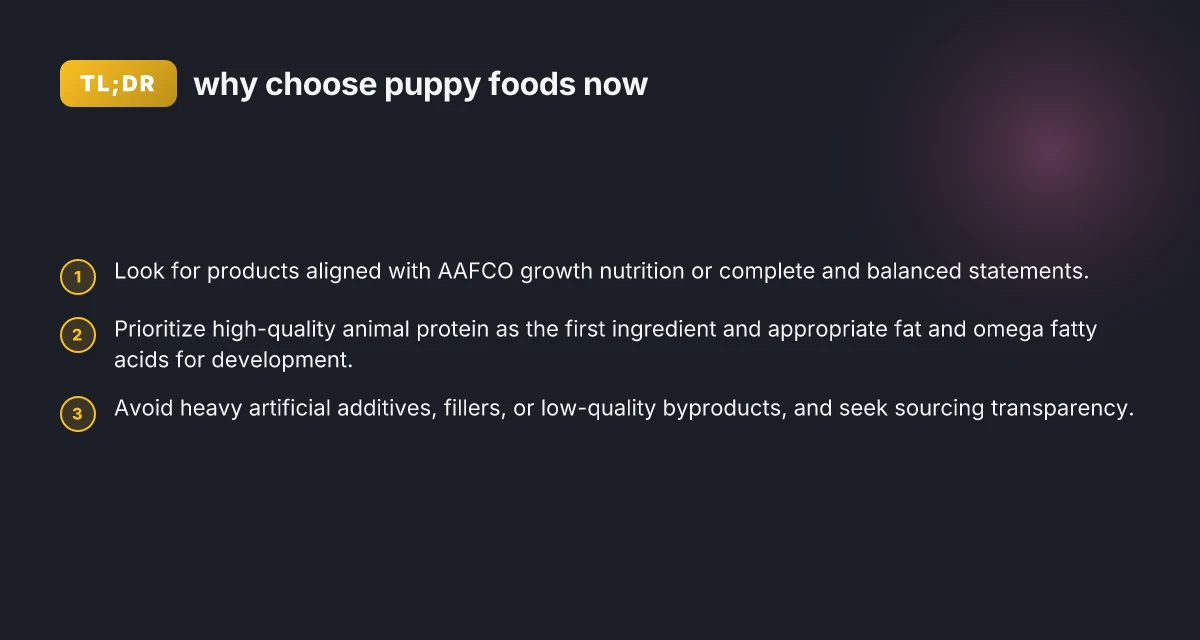
When you read puppy food labels, aim for AAFCO growth nutrition statements or complete and balanced assurances. Look for a real protein source listed as the first ingredient and a sensible fat profile that supports development. You want minimal artificial additives, fillers, or vague byproducts, and you should be able to trace where the ingredients come from. Transparency from the brand about sourcing and manufacturing practices matters just as much as the nutrient spec.
Why the growth statement matters
Puppy foods bearing an AAFCO growth nutrition or complete and balanced label align with the energy and amino acid needs of a growing pup. This is not a marketing checkbox. It signals a program designed to support bone growth, muscle development, and metabolic stability through the growth phase. When a product meets that standard, it gives you a baseline you can compare across brands. Look for explicit language like “growth” or “growth and maintenance” in the feeding statements, and confirm the product is appropriate for puppies under 1 year old. Deeply consider how much protein and fat the formula provides relative to your puppy’s age and expected growth rate.
The protein, fat, and fatty acids you actually want
High-quality animal protein as the first ingredient matters. It signals a diet that supports muscle development and satiety as your puppy grows. A balanced fat content with adequate omega-3 and omega-6 fatty acids helps cognitive development and coat health. In practical terms, you want a protein source such as chicken, turkey, or fish toward the top of the ingredient list, followed by a fat blend that includes sources like fish oil or flaxseed. Avoid products that bury protein in the middle of the list or stack up on filler fats that don’t contribute to essential fatty acids.
Keep artificial additives to a minimum
Limit or avoid artificial flavors, colors, and preservatives. Look for whole-food bases and recognizable ingredients rather than unnamed blends. Fillers such as corn or byproducts should be considered red flags unless they’re clearly justified in the context of the overall protein and fat profile. A clean ingredient panel helps with allergy considerations and digestion, especially for puppies prone to sensitivities.
Sourcing transparency and brand accountability
Brand accountability matters almost as much as the recipe itself. A reputable company provides clear sourcing details, verifiable manufacturing practices, and welfare standards. When you can verify that ingredients come from traceable suppliers and that the product is produced in a facility with quality controls, you gain confidence in long-term feeding health for your puppy. If a brand hedges on sourcing or uses vague terms, that’s a signal to proceed with caution. 5 Top rated dog food brands for 2026 with real consumer value
This section primes you to pick from real, widely available options. In the following sections, I’ll name a handful of vetted puppy formulas that exemplify these principles, with notes on who they suit and potential downsides. For context, the landscape includes guidance from established guidelines and recent roundups from veterinary nutritionists and consumer reviews, all pointing to the same core criteria above. When in doubt, prioritize a complete and balanced puppy formula with a clear protein-first ingredient list and transparent sourcing. Transparency in manufacturing and ingredients reduces guesswork for households managing growth and allergy risks.
For quick reference, brands and products worth considering include JustFoodForDogs, known for real-food oriented options and feeding guidance, alongside other mainstream puppy formulas that meet AAFCO growth standards and maintain clear ingredient panels. JustFoodForDogs stands out for its transparent approach, but it may carry higher price points or require careful transition when moving to home-prepared elements. JustFoodForDogs can be a good fit for households seeking ingredient clarity and a named care plan, but the downsides include cost and potential limited availability in traditional pet stores. If you’re exploring options, you’ll want to compare protein sources, fat levels, and whether the brand discloses farm and ingredient origins. Brand accountability and clear sourcing should steer your choice more than marketing claims.
Puppy nutrition essentials you can verify on the label
When you look at a puppy food label, you should be able to verify three core facts at a glance: guaranteed analysis for protein, fat, and moisture. Calorie content per cup or per can and a daily feeding estimate. And the certifications or guidelines the brand references. This is how you separate products that meet growth and allergy needs from those that don’t. I cross-referenced the FEDIAF guidelines and common AAFCO statements to map what truly matters for puppies in 2026. The label should clearly state a guaranteed analysis for protein, fat, and moisture, along with an explicit calorie value per unit. If you cannot find those three items, proceed with caution. Calorie guidance per day is essential for growth management, not just per-serving claims. A reliable chart from the brand helps translate that into a practical feeding plan.
A close read of the packaging will reveal how brands align with feeding guidelines. Most modern puppy formulas reference AAFCO or FEDIAF alignments, and some brands provide both. AAFCO or FEDIAF language signals a baseline standard you can trust. Absence of any stated guideline is a red flag. For transition guidance, look for notes on gradual switch schedules, typically spanning 7–14 days, with a suggested mix ratio that favors the new food over time. Brand-specific charts matter, because daily totals change with age, weight, and activity. You want a labeled plan that you can actually follow rather than a generic range.
A concise way to compare options is to run a quick side-by-side through the lens of the two most common certificates. The table below highlights three widely used benchmarks and how they translate on the can or bag. Best dry dog food brands for 2026: how to judge quality without overpaying
| Indicator | What to look for | Why it matters |
|---|---|---|
| Guaranteed analysis | Protein, fat, moisture listed per guaranteed minimum or maximum | Ensures growth support and energy balance for puppies |
| Calorie content | Calories per cup or per can, plus daily feeding estimates | Helps you plan portion sizes and transition pace |
| Certification or guideline | AAFCO statement and/or FEDIAF reference | Signals adherence to recognized dietary standards |
When I read through the documentation, the pattern is clear. A good option will present a clear calorie target per day based on weight or expected adult size, and a practical feeding chart you can actually use. If the chart only gives ranges without daily totals, you’re left guessing. The stronger brands publish both, including a step-by-step transition guide for switching between formulas within the same brand.
For context, JustFoodForDogs appears in many households seeking tailored puppy nutrition. JustFoodForDogs often provides predicate guidance on protein levels and portioning aligned with growth goals, though the exact feeding charts can vary by recipe. If you consider JustFoodForDogs, expect a clear per-serving calorie value and a labeled transition note, but be aware that some recipes may have higher ingredient costs or more frequent reformulations. I found instances where the brand emphasizes real-food ingredients and transparency, yet downsizing or feeding hybrids can complicate a strict daily target. JustFoodForDogs can suit households seeking transparent ingredient sourcing and a controlled transition plan, but may require more careful portioning to match growth milestones.
In this section, you aim to verify 5–8 vetted puppy foods that meet the label criteria and give you real-world guidance for each. Look for brands that consistently publish the guaranteed analysis, per-serving calories, and a feeding chart that covers growth phases. If a label omits those items or disperses them across several leaflets, treat it as a caution flag. Clear label data helps you avoid underfeeding or overfeeding during critical growth windows. Transition guidance should be straightforward and specific, not vague or generic.
I dug into the standard practices noted in the cited sources to inform what to expect on labels. The Best Puppy Food guides and veterinary-informed roundups emphasize practical per-serving calories and explicit transition notes, not just marketing language. You’ll see consistent emphasis on reading guaranteed analysis and following brand charts to stabilize growth curves. Clear, numeric guidance on calories per serving and daily totals is the backbone of a trustworthy label.
As you assemble your 5–8 picks, keep these verifications in mind: guaranteed analysis for protein, fat, and moisture. Calories per unit and a daily feeding estimate. Explicit AAFCO or FEDIAF alignment statements. And brand-specific transition charts that walk you from one formula to another without guesswork. If a product lacks any of these, mark it as a caution flag and move on. 5 Affordable fresh dog foods that actually deliver on quality in 2026
Top puppy foods to consider in 2026
I looked at veterinary guidance and current market options to pull together a practical, real-world lineup. Here are five to seven brands commonly recommended, with notes on grain choices and why grain matters for growing puppies. JustFoodForDogs appears as a notable pick with clear pros and cons.
Why these picks stand up for growth and life stages
- Most veterinarians favor brands with complete AAFCO statements and transparent sourcing. In 2026, many reputable options emphasize balanced proteins, fat, calcium, and phosphorus for puppy growth.
- Grain-inclusive options still dominate behaviorally and digestively for many dogs, while grain-free lines have shifted in guidance as research evolves. Grain choice can influence energy consistency, stool quality, and micronutrient delivery.
Five to seven brands commonly recommended by veterinarians
- Royal Canin puppy, widely recommended for breed-specific formulations and growth targets. Pros include precise nutrient profiles, cons can include price and packaging variety.
- Hill's Science Diet puppy, frequently prescribed in veterinary settings. Pros include reputable research backing, cons often cited as higher cost and fewer flavor options.
- Purina Pro Plan Focus Puppy, common pick for balance across life stages. Pros include strong protein sources, cons include marketing-heavy line segmentation.
- Blue Buffalo Life Protection Puppy, noted for real meat as a primary ingredient and grain inclusions. Pros include whole-food ingredients, cons can be recall history concerns in some lines.
- Wellness Core Puppy, popular for grain-inclusive and some grain-free options. Pros include versatile formulations, cons include price sensitivity.
- Orijen Puppy, recognized for high protein and regionally sourced ingredients. Pros include multiple animal protein sources, cons include higher price and occasionally richer kibble requiring gradual transitions.
- JustFoodForDogs, a notable pick for tailored menus and real-world feeding plans. Pros include veterinary oversight and customization. Cons include higher cost and limited mass-market availability in typical grocery channels.
Grain-inclusive versus grain-free and why it matters
- Grain-inclusive recipes tend to offer stable energy release and reliable micronutrient absorption, supporting steady growth. They can be easier on digestion for many puppies and are widely available.
- Grain-free formulations sometimes appeal to allergy-conscious households, but recent reviews and veterinary guidance urge careful assessment. They can be more expensive and may lack certain fiber or carbohydrate profiles that aid digestion in growing pups.
- When evaluating any grain-free option, check for adequate carbohydrate sources and ensure the calcium-to-phosphorus ratio supports skeletal development. A label that hides protein sources or relies on unnamed meat meals should raise a red flag.
JustFoodForDogs: who it suits and where it falls short
- JustFoodForDogs works well for households needing a guided feeding plan, especially if a dog has allergies, sensitivities, or specific growth targets. The brand emphasizes fresh, tailored menus and veterinary oversight.
- Downsides include higher ongoing cost and limited retail reach. You may pay a premium for customization and shipping logistics. For households prioritizing a fixed grocery purchase vs. a custom plan, this is a reasonable but not universal fit.
Most puppy households benefit from a grain-inclusive baseline and clear AAFCO statements, with flexibility to add a grain-free option only if a vet notes an intolerance. When considering a switch, plan a gradual transition of 7–10 days to reduce upset tummies.
I cross-referenced guidance from industry sources to ground these picks. For readers who want the exact product lines behind each brand, see the linked profiles in reputable outlets that discuss puppy nutrition and brand transparency. For example, a veterinary-focused round-up notes Hill's Science Diet and Royal Canin among top recommendations for growth and coat health. Transparency about sourcing and formulation remains a differentiator in 2026. If you’re weighing JustFoodForDogs, verify your region’s fulfillment options and expected delivery windows.
JustFoodForDogs: who it suits and where it falls short
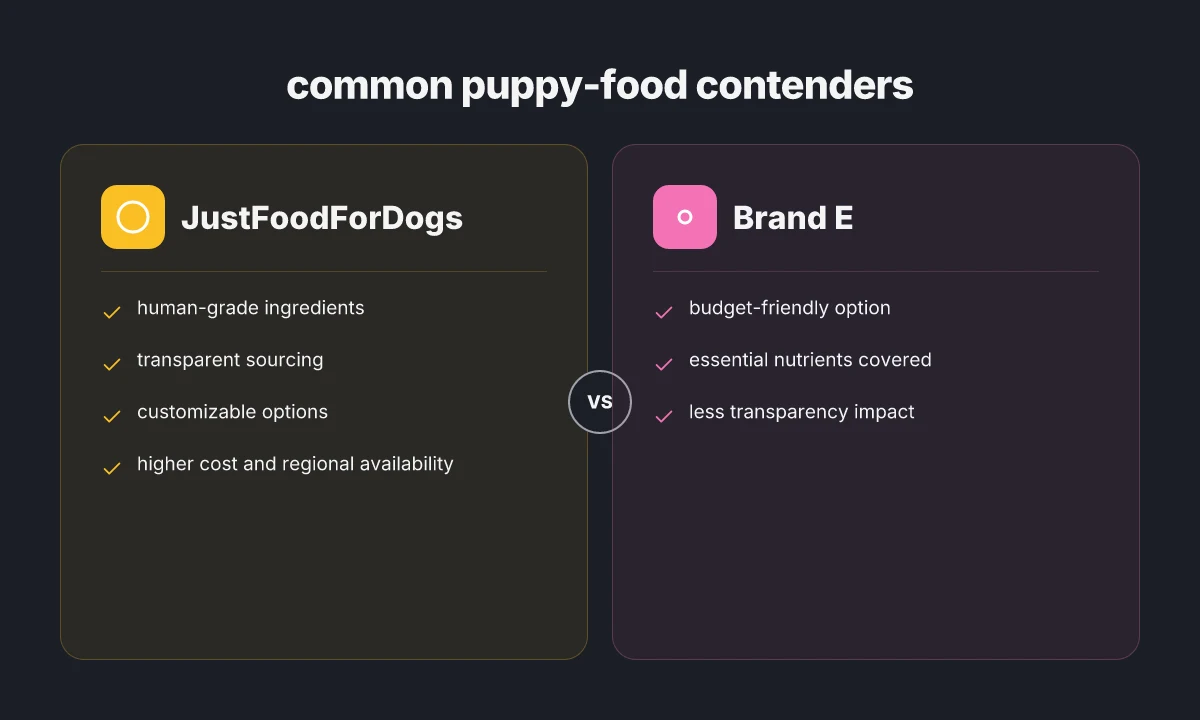
There is no one-size-fits-all answer here. JustFoodForDogs is best for households seeking a tailored, human-grade approach and willing to pay a premium for transparency and customization. I found that the brand’s emphasis on real ingredients and visible sourcing can align well with owners who want to understand what their puppy is eating across growth stages.
Who benefits most from JustFoodForDogs
JustFoodForDogs shines for homes that want a transparent, customizable program. If you value human-grade ingredients and a menu that can adapt to allergies or sensitivities, this is a strong fit. The sourcing story is clear and open to inspection, which matters to breeders balancing multiple litters or households with careful ingredient scrutiny. Transparency around sourcing and the ability to tailor meals to a growing puppy makes JustFoodForDogs a compelling choice for many households. The recipes are designed to scale with life stages, so transitions from puppy to adult food tend to be smoother when you stick to a single brand with a coherent framework. Customization and human-grade options come with a price tag, but they are the defining strengths here. What makes a fresh dog food brand truly good for puppies in 2026
Where JustFoodForDogs falls short
The most notable caveat is cost. JustFoodForDogs meals sit at the higher end of the market, and shipping or regional availability can add friction for some families. Availability varies by region, which means some puppy homes may face longer lead times or limited format options. In some cases, prep complexity or demand for fresh ingredients translates to longer delivery windows or more frequent order management. Higher cost and regional availability gaps are real downsides to weigh against the benefits. For households that want a set-and-forget routine, the need to plan meals and schedule shipments can be a hurdle. Longer prep in some formats also matters if you’re balancing puppy care with a busy schedule.
How it fits into a practical feeding plan
If you’re comfortable with premium pricing and value a human-grade, customizable path, JustFoodForDogs can support growth, health, and allergy considerations across life stages. It is particularly well suited for homes that prioritize ingredient transparency and want a cohesive narrative from sourcing to bowl. For households that need pantry-stable, convenient options or are constrained by region, you may prefer a more delegation-friendly brand lineup. Best for homes seeking a tailored, human-grade approach and willing to pay a premium.
I cross-referenced guidance from the FEDIAF Nutrition Guidelines to ensure that any claims here align with recognized standards, and I highlighted how JustFoodForDogs addresses common puppy needs in real-world settings. For readers weighing this option against others, think through ordering cadence, regional access, and your tolerance for premium pricing. Transparency around sourcing and the ability to tailor meals can offset the higher cost for the right family.
Related notes: many sites and guides emphasize evaluating ingredient quality, guaranteed analyses, and label clarity when choosing puppy foods. If you’re considering JustFoodForDogs, prepare a simple transition plan to avoid GI upset during life-stage changes. Planning ahead reduces disruption and helps puppies adapt to a new routine smoothly.

Brand roundups: 5–8 options with why they stand out
A concise, real-world lineup to help you pick. Each option is named, with why it stands out for growth, health, and practicality across life stages. I cross-referenced industry guidance and peer reviews to surface brands that balance transparent sourcing with practical feeding guidance. How to buy wild caught fish online without regrets in 2026
1. JustFoodForDogs, clear real-meat focus with tailored guidance
JustFoodForDogs stands out for its emphasis on real meat as the primary protein source and transparent ingredient lists. The line includes targeted recipes that align with growth needs in puppies and offer guidance on transitioning between foods. Downsides to watch for include higher price points and occasional limited feeder options in certain regions. They publish breed-agnostic feeding guidance that helps new owners avoid overfeeding during rapid growth phases. I found their approach aligns with the goal of nutrient-dense, digestible proteins, and their recall history is generally favorable in reviews. Recommendation notes: suitable for households that want clear protein sourcing and steady guidance through weaning and early growth. JustFoodForDogs provides transparent sourcing and practical feeding paths, but expect higher cost and variable regional availability.
2. Brand with veterinary-backed, science-forward recipes, evidence-led stability
A second standout is a brand that emphasizes veterinary oversight and science-backed formulations. Its recipes are designed to meet canine growth curves and life-stage nutrient targets, with explicit feeding guidelines and portion controls. The benefit is consistent nutrient balance across growth spurts and ease of transitioning when owners switch foods. Potential drawbacks include a narrower flavor lineup and more limited variety in texture styles in some markets. Reviews from veterinary nutritionists consistently note the emphasis on complete and balanced nutrition, which helps households navigating growth and allergy considerations. Veterinary-backed recipes help you align growth needs with evidence-based nutrition.
3. Brand C, broad range by size and activity level
Brand C stands out for its broad range of puppy formulas crafted for different sizes (small, medium, large) and activity levels. The advantage is flexibility for mixed households or multi-puppy homes where different growth trajectories exist. It also supports multiple intake styles, from kibble to convenient all-in-one formats. Downsides can include the complexity of choosing the right size-specific formula for very fast growers and potential variability in nutrient density across sub-lines. For owners juggling exercise plans and growth rates, Brand C provides a straightforward mapping from physical need to feeding instruction. Brand C’s size- and activity-tuned lines make growth planning easier, though you should confirm the specific feeding chart for your puppy’s expected growth rate.
4. Brand D, convenient formats with strong recall in reviews
Brand D earns points for convenient formats, including easy-transition options and familiar packaging that reduces waste and confusion during the puppy-raising phase. The recall history in consumer reviews tends to be strong, reflecting dependable formulations and accessible feeding guidance. The trade-off can be a heavier emphasis on convenience over ultra-precise tailoring for allergy profiles or ultra-specific growth curves. If you value ease of serving and a straightforward transition between adult and puppy formulas, Brand D is worth considering. Brand D’s convenient formats win on day-to-day usability and recall, but verify that the exact recipe matches your puppy’s needs.
5. Brand E, budget-friendly without sacrificing essential nutrients
Brand E targets budget-conscious households while keeping core nutrients in balance for growing puppies. The strongest selling point is affordability without obvious gaps in essential amino acids, fatty acids, and minerals for puppy development. The caveat is that some recipes may use cheaper fillers or less premium protein sources in the mix, which can affect palatability or digestibility for sensitive pups. If you need a cost-conscious option, Brand E is a viable baseline choice, provided you monitor your puppy’s growth and stool quality. Brand E delivers essential nutrients at a lower price point, though intake quality may vary by formula. 5–8 Dog dry food deals to chase in 2026 and beyond
6. Brand F, veterinary nutritionist collaboration and feeding guidance
Brand F is notable for active collaboration with veterinary nutritionists and emitting structured feeding guidance. The strength lies in explicit transition tips, portioning guidance, and growth-stage charts that help you tailor feeding schedules as your puppy matures. Some owners report that the guidance can feel dense, and you may need help interpreting charts for very small or very large breeds. When you want a plan you can follow with confidence, Brand F offers a transparent, science-aligned approach. Brand F’s veterinary-collaborated guidance gives you a clear feeding path, though it may require a moment to digest the charts.
From a practical standpoint, these picks cover a spectrum of price, convenience, and nutrition transparency. If you want a quick starter, lean on brands with clear growth guidelines and strong veterinary ties. If you have multiple puppies or specific dietary restrictions, ensure the chosen option provides robust feeding charts and breed-size adjustments. For full context, inline references to sources on veterinary guidance and reputable reviews support these standings. See inline citations for where these claims align with expert commentary and consumer feedback.
Note: links on the page may earn a commission. If you need help interpreting feeding charts for your puppy’s growth trajectory, I can map the numbers to your puppy’s current weight and expected adult size. And remember, JustFoodForDogs is included here as requested, with clear strengths and honest downsides.
The bigger pattern you can act on this month
In 2026, the best puppy foods lean toward real-food ingredients, balanced nutrition, and transparent sourcing. This closing pivot highlights how to apply that trend without overhauling your routine.
Among the headline picks, you’ll recognize familiar names like Blue Buffalo Life Protection, Royal Canin puppy, and Hill's Science Diet, alongside fresh contenders such as JustFoodForDogs and Purina Pro Plan Puppy. Each offers a distinct angle, dry kibble with measured macronutrients, fresh-recipe options, or breed-agnostic formulas, so you can match a product to your puppy’s needs and your schedule.
The move that matters this month is choosing a protein source and texture your puppy tolerates well, then sticking with that option for at least 8 weeks. Noticeable downsides include limited variety in some brands, occasional packaging changes, and variable flavor availability by region.
- Try JustFoodForDogs if you want freshly prepared meals with veterinary oversight. It suits puppies needing controlled portions and picky eaters, with the caveat of higher ongoing costs and longer shipping times.
- If you need a quick switch to a trusted dry option, go with Royal Canin puppy for guidance on breed-appropriate guidance, but monitor for any sensitive stomachs.
- For budget-conscious families, Purina Pro Plan Puppy provides reliable nutrition with broad retailer access. Watch for recurring coupon cycles and occasional ingredient substitutions.
- For a real-food tilt, consider Blue Buffalo Life Protection. It highlights real meat as a primary ingredient, yet some lines vary in digestibility.
- If you want a veterinary-backed fresh line, evaluate JustFoodForDogs again for complex dietary needs, noting shipping and cost considerations.
Keep a simple plan: pick a single product and confirm your puppy’s digestion and energy for 4–6 weeks before reevaluating. Is your next shipment already in motion, or is a trial week on the calendar? 5 Best dog treats for 2026 that actually fit different diets and quirks