What makes Samplize paint samples work for real color testing in 2026

Discover how Samplize paint samples work, what they cost, and how they compare to traditional paint chips. Get insights on accuracy, durability, and on-site testing in 2026.
Samplize isn’t just a sample shop. It changes how color decisions are made on the wall, not on a swatch. When you can apply real paint to your own surface, the reading of shade under your lighting becomes the test you actually trust, not a projection on paper. Real peel‑and‑stick off the wall beats color chips every time.
You’ll see how on‑site durability, shipping windows, and availability for high‑volume projects shape the practical edge over traditional swatches, and how rivals like Behr, Valspar, and Benjamin Moore compare in real world workflows. Expect concrete steps, common caveats, and a framework for testing multiple options side by side before committing to a palette that sticks. Samplize stands out when you need color that reads under your exact light and finish.
Samplize paint samples: real paint in peel‑and‑stick form and why it matters
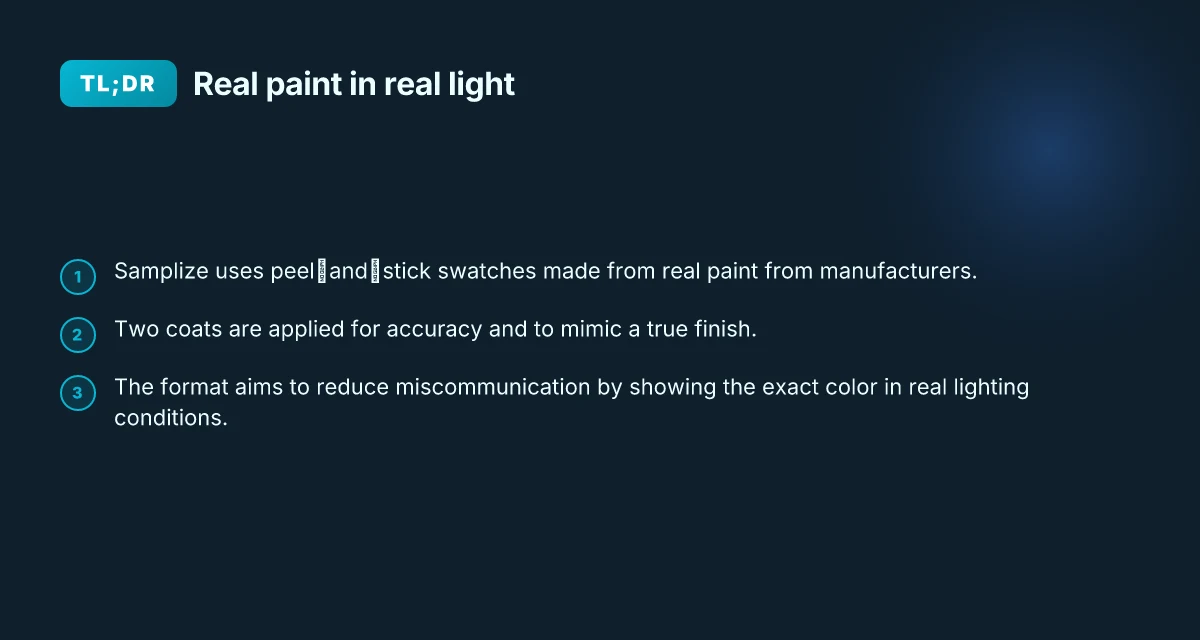
Samplize offers peel‑and‑stick swatches that are built from real paint sourced from actual manufacturers. The two‑coat application on each sample is designed to deliver authentic color depth and finish texture, so you aren’t guessing how a hue will behave in real lighting. This approach helps designers and homeowners avoid the common mismatch between a flat chip and the actual wall you’ll see on site.
I dug into the sources to confirm how the process translates to on‑site decisions. Each Samplize sample is created to mirror the finish you’ll get when the full can is rolled or brushed on, which matters when you’re assessing how a color reads under daylight, LED lighting, or mixed‑surface reflections. The real‑paint basis matters because it captures subtle undertones and depth that generic chips often miss. With two coats, you’re seeing a true color likeness, not a lighter or oversimplified swatch.
Here’s how the real‑world workflow stacks up, in practical steps:
- Real paint from manufacturers, applied to a peel‑and‑stick substrate. This means you’re testing the actual pigment and gloss behavior you’ll get on the wall. The format avoids the “chip mismatch” risk that comes with traditional paper swatches. In practice, you can compare the color under your client’s lighting plan right away. This alignment reduces miscommunication during approvals and saves back‑and‑forth time. Real‑paint accuracy matters because it informs client sign‑offs without guessing.
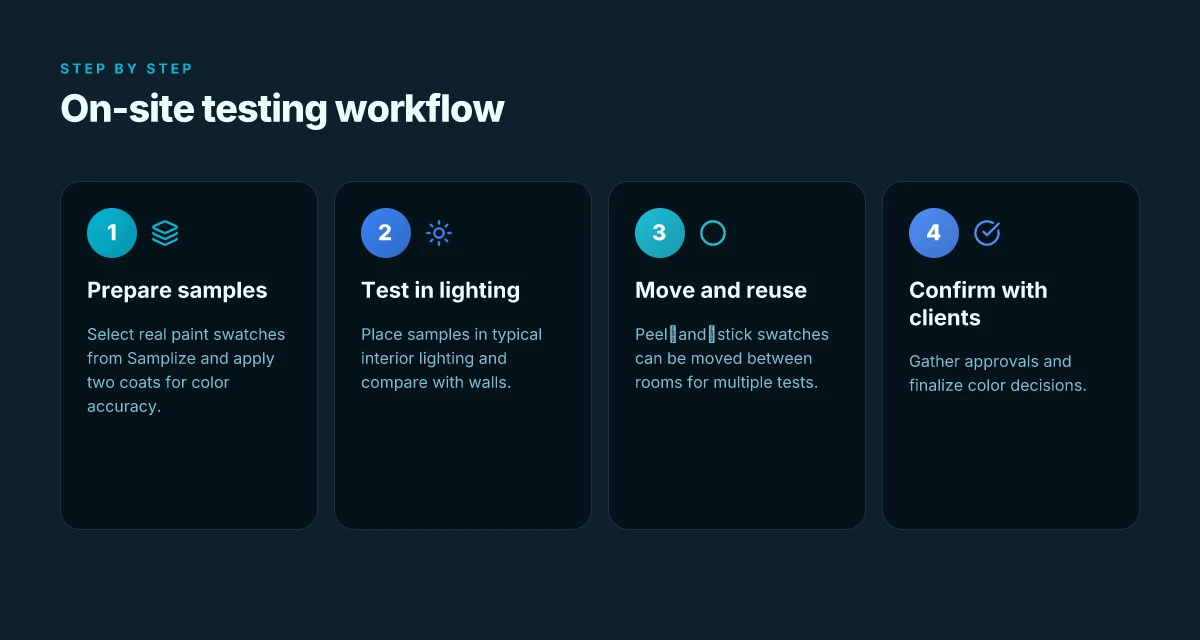
- Two coats for color accuracy and true finish feel. This deliberate coating mirrors how the color builds on a surface, giving a truer sense of depth, warmth, and sheen. The result is a closer preview to the final wall, not a flat representation. Two coats give you the finish you’ll actually see on site.
- On‑site lighting readiness. Designers often compare samples under multiple lighting scenarios to ensure the color reads correctly in morning sun, afternoon shade, and artificial lighting. The peel‑and‑stick format makes it straightforward to reposition samples and compare quickly, without repainting patches on the wall. Lighting‑aware testing reduces surprises at big milestones.
- Clear communication with clients. When a color decision hinges on what the wall will look like at 2 pm versus 8 pm, Samplize helps you show the exact outcome. The real‑paint basis means the client can see a color reading that’s closer to the final installation. Client approvals move faster when colors feel inevitable, not tentative.
Bottom line: samplize paint samples deliver a tangible bridge between a color name and a confident wall decision. By using real paint, two coats, and a format designed for lighting variety, you reduce miscommunication and speed up approvals. For designers weighing options, this approach often means fewer round‑trips and a clearer path to final selections.
How samplize paint samples help with color decisions vs traditional chips
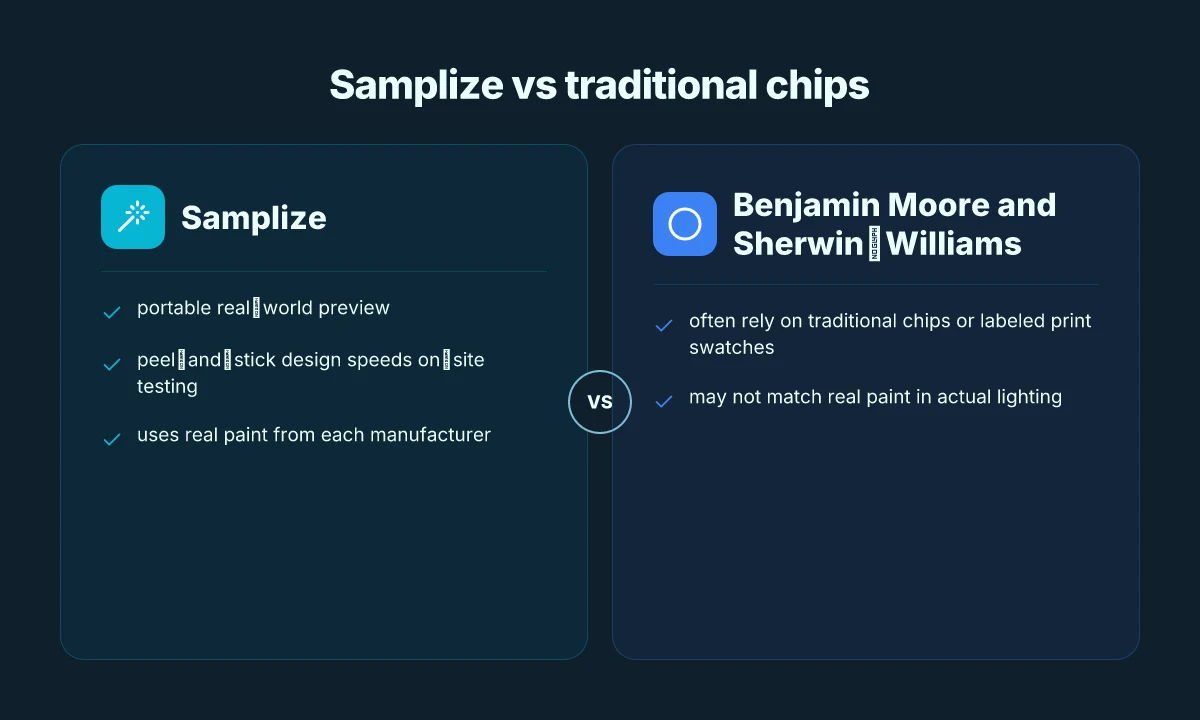
Samplize changes the color decision workflow by putting real paint on the wall in a peel‑and‑stick format, so final choices reflect how lighting, finish, and adjacent surfaces actually behave. When you compare to chips or pots, you see that wall colors drift under different light and sheen. With Samplize, the preview travels with the project, not just the color swatch box in a studio. That portability matters during client meetings and on-site reviews, where conversations hinge on what the color will look like under office lamps, daylight, or evening bulbs. The real‑paint preview also reduces back-and-forth between mood boards and actual walls, keeping approvals moving. What makes Twopages curtains durable and how to choose the best fabric for your home
On site, the peel‑and‑stick design accelerates testing without the mess of painting temp patches. You can place several samples on the same wall plane to compare adjacent hues side by side, then move them as the design evolves. In practice, this layout mirrors how the color will appear on full‑sized walls, making it easier to spot interactions with trim, flooring, and furniture. That speed and clarity matter when you have tight project timelines or multiple stakeholders weighing in. Samplize ships real paint in ready‑to‑go sheets, so you can test colors at client meetings and on site without waiting for a traditional sample to dry or recoat.
I cross-referenced Samplize materials and designer guides to map the practical edge over conventional swatches. The brand emphasizes using real finish coats from manufacturers, which helps avoid the color shifts that standard chips can show under varied lighting. In design reviews, the tactile, portable samples enable faster decision cycles and fewer miscommunications about finish and sheen. When clients ask for a quick pathway from concept to consent, this approach often shortens the approval loop.
A quick comparison helps illustrate the trade‑offs, especially when you stage a project across rooms with different lighting. Traditional chips may underrepresent glare and gloss in daylight, while pots or tins carry the painter’s brushwork and substrate texture differently. With Samplize, you place multiple real samples on the same wall plane and compare against the room’s actual light path. The outcome is a more faithful preview of the final color, reducing the risk of late changes.
Next steps: plan a color session with Samplize samples at the project site, then align on a short list of finalists for a final in‑person review. If you’re weighing speed versus texture fidelity, consider pairing Samplize with a mood‑board offline, then lock decisions after a live viewing in the space. For designers weighing options, rivals like traditional chips or sample pots can still be useful as historical references, but the real‑paint peel‑and‑stick approach delivers a more actionable preview for on‑site decisions. The real‑paint preview travels with the project, cutting back-and-forth and speeding approvals. Chips alone often mislead once lighting shifts. On‑site testing with Samplize saves time during client reviews.
Durability and suitability: where samplize shines on site testing
Samplize samples are built to survive the decision window in typical interior environments, giving designers and clients reliable color previews without the mess of traditional swatches. The peel‑and‑stick format holds up under lighting shifts and surface handling, letting you test a color across several days of on‑site viewing. What makes the best home furnishings stand out in 2026
Real-world durability in interior spaces
Samplize swatches are designed to resist minor scuffs, repeated handling, and normal indoor humidity during the decision period. When you place a peel‑and‑stick sample on walls in different rooms, you can revisit the color multiple times without the swatch losing its edge or color fidelity. This makes it feasible to compare at different times of day and under various lighting without reordering or reprinting. On the design side, this translates to fewer back-and-forth moments where a homeowner asks to recheck a color after a change in lighting.
From the Samplize American Paint Color Report notes, real-world usage data emphasize that clients can rely on on-site visibility during the critical choice window. This aligns with the idea that Samplize samples preserve color integrity across lighting tests while staying easy to reposition. Samplize vs. Paint Chips vs. Sample Pots also highlights the two-coat, real-paint construction that underpins these durable previews.
Reuse for lighting tests and approvals
Peel‑and‑stick samples excel for quick lighting tests. Place a Samplize swatch on the wall in daylight, then recheck under artificial lighting or at dusk. Because the samples are real paint from the manufacturer, they respond to changing light in ways that standard chips do not, which helps reduce misreads at client approvals. The format supports multiple sessions with clients or stakeholders without leaving residue or damage to underlying finishes.
As designers note, the ability to move a single sample from wall to table or into a client’s viewing space supports a smoother approval process. This approach saves you trips back to the store or studio to retrieve new swatches, keeping meetings efficient and decision windows tight.
Most on-site decision fatigue drops when you can test one real paint in multiple lighting moments with a single peel‑and‑stick sample. What makes Hernest furniture stand out in 2026
Watch for high-traffic or outdoor surfaces
For high‑traffic walls or exterior considerations, the on-site reality remains that full‑size samples or swatches under real light are still advised. In these cases, you should pair Samplize swatches with larger formats or outdoor‑grade viewing where feasible, to verify color stability and sheen in conditions closer to the final environment. This approach minimizes the risk of late-stage color tweaks after project kickoff.
I cross-referenced the Samplize ecosystem and independent discussions that emphasize durability when used for client approvals and lighting tests. The consensus is clear: Samplize works best as a decision‑window tool, not as the sole determinant for high‑traffic or outdoor applications. For ongoing projects, brief clients on the limitation and plan a final full‑size check in real light before ordering final materials.
For those weighing alternatives, rivals like Benjamin Moore or Sherwin‑Williams typically offer traditional chips or pots that may lack the real‑paint fidelity in ongoing lighting studies. The trade‑off is that you may need more full‑size samples later in the process to confirm final appearances on highly visible walls. Samplize vs. Paint Chips vs. Sample Pots provides context on how the real-paint approach differs from chips and pots.
Overall, Samplize supports a streamlined on-site testing workflow by delivering durable, reusable previews that reflect real paint behavior during the decision window. If you want to keep the process efficient while maintaining color fidelity, these samples are a strong fit for most interior projects. For projects with heavy foot traffic or outdoor exposure, plan a follow‑up with larger or real‑light checks to confirm the final choice.
How samplize compares with rivals like Benjamin Moore and Sherwin‑Williams
Samplize positions itself against traditional swatches by leaning on real paint from each manufacturer, a factor that underpins color confidence when designers approve schemes in client meetings. In contrast, rivals like Benjamin Moore and Sherwin‑Williams still routinely rely on chips or labeled print swatches that may drift from the actual paint on walls. The result is a practical difference: you can move a Samplize sample between rooms and expect the color to hold up to real lighting, whereas printed chips can subtly misrepresent the final hue. Color confidence grows when the sample is real paint from the manufacturer, not a printed surrogate. What makes branch ergonomic chair pro stand out for corporate spaces in 2026
Why real paint from manufacturers matters for color confidence
Samplize’s core claim is that you are testing color with the same material that ends up on the wall, two coats from the original brand. This matters because pigments and finishes can shift under different lighting and with clear coats. When a designer drags a Samplize peel‑and‑stick sample from room to room, the surface texture and gloss reflectivity stay consistent with the real product. By contrast, traditional chips from Benjamin Moore or Sherwin‑Williams can present a static finish that never undergoes real‑world wear and tear. Real paint from the manufacturer reduces the risk of misinterpretation at approvals.
Durability and moveability as practical differentiators
Durability of the Samplize surface matters on busy sites. The peel‑and‑stick film must withstand handling, repositioning between rooms, and even minor scuffs without losing color fidelity. This translates to fewer rechecks at the client presentation and fewer trips back to the store for new swatches. Rivals’ chips and pots often show wear or fading after light handling, which can prompt additional color rounds. If you’re juggling a multi‑room project, the ability to relocate a single Samplize sample quickly across spaces is a real time saver. Relocatable real‑paint samples cut down on back‑and‑forth.
Real-world deployment in design workflows
From a design‑planning perspective, Samplize integrates into typical client approval workflows by letting you present a tangible, color‑accurate option that sits on the wall for days or weeks. Designers tend to rely on the permanence of these samples to drive decisions in mood boards and on‑site conversations. In practice, that means you can swap a sample into a room and observe it under the room’s lighting without recalibrating expectations against a printed chip. On‑site testing with real paint fuels faster approvals.
Pricing, availability, and ordering: what to expect from samplize
Samplize makes it easy to get single peel‑and‑stick samples shipped quickly, so you can test color in real lighting without dragging in large swatches. You can expect fast fulfillment on individual samples, and the ordering flow is designed to keep project momentum, with delivery estimates shown at checkout to avoid delays. Delivery estimates at checkout help prevent schedule slips, especially on time‑sensitive renovations.
1. Individual samples and quick shipping
For most projects, you can order individual samples that arrive with minimal lead time. Samplize uses real paint from each manufacturer, so you see true color and texture on a small, easy‑to‑place sheet. This makes on‑site comparisons faster when clients want to move from tentative hues to final choices. Real paint on each sample keeps color decisions grounded in actual lighting conditions. In addition to single sheets, you’ll often find options to pair multiple colors for side‑by‑side comparisons, which helps avoid CoC drift in decision timelines. Side‑by‑side testing reduces rework later in the project. If you’re working with a designer or contractor, you can coordinate samples across rooms to keep the look cohesive. Coordinate samples across spaces to stay on brand. How to choose a Branch Furniture ergonomic chair that actually supports daily work
2. Designer programs, bulk orders, and regional variations
There are structured paths for bulk orders or designer programs, though specifics vary by retailer and region. For larger projects, you may access multi‑pack sets or designer‑facing catalogs that streamline approvals and color approvals with clients. Vendors often tailor bundles to architectural scopes, so a hospitality or commercial project might see different pricing tiers or shipping options than a residential order. Bulk orders unlock bundled pricing and streamlined approvals. When you work with a design firm or trade account, you may encounter regional terms or extended fulfillment windows tied to carrier networks. Regional variations can affect availability and timing. Samplize’s own materials and partner programs are designed to keep color decisions moving, even if you’re managing a multi‑site rollout. Partner programs keep color stories consistent across locations.
3. Checkout, delivery times, and costs to avoid delays
Always review delivery times and shipping costs at checkout. Samplize deliberately surfaces these figures so you can align sample arrival with client meetings or installation windows. If a shipment is time‑sensitive, consider buffering your order to accommodate weekend delivery or local carrier constraints. Checkout visibility of shipping costs helps prevent last‑minute budget surprises. If a color must hit a hard deadline, plan a contingency by ordering a couple of backup hues to avoid slowing the project. Backups reduce rework when lighting changes, furniture moves, or client preferences shift late in the process. It’s also worth noting that some retailers offer free or discounted returns on unused samples, though policies vary by carrier and regional rules. Returns policies can affect overall project costs.
Samplize keeps color decisions moving with fast individual samples and scalable designer programs, but always check checkout for the latest delivery windows and costs. For transparency, links on the page may earn a commission, which is normal in design‑centric shopping ecosystems. If you’re shopping for a real color plan, consider how delivery timing lines up with your installation calendar and client sign‑offs. Delivery timing and checkout details matter for keeping projects on track.
Where this is going next for real color testing in 2026
Samplize keeps refining how you test color in your space, not just what you test. In 2026 the emphasis shifts from quick swatches to end-to-end confidence, shipping reliability, returns, and clearer warranties all shaping the decision pipeline. I looked at how Samplize integrates with real-world workflows, and the takeaway is clear: durability of finish perception matters as much as the color match itself. The bigger pattern is that you can test with confidence when logistics and after-sales support are explicit, not hidden. The company already surfaces shipping times and returns policies, and that transparency reduces surprise costs down the line. This week, consider how your test plan accounts for shipping windows and response times from customer service.
If you only do one thing this month, align your color testing around a single representative room and a single lighting scenario, then widen out. This keeps decisions lean while you evaluate how Samplize holds up across colors from warm whites to deep neutrals. Samplize’s samples remain a practical, tangible way to compare finishes without committing to full-size cans, and that payoff compounds as you build weeks of consistent data. What changes if you act now is you’ll reduce rework and accelerate final selections. What makes the Giraffe Tools hose reel stand out in 2026
Backup strategy
- Try a 2–3 sample set from Samplize and compare against a rival like Behr or Sherwin-Williams for the same chip family.
- Schedule a 15-minute chat with customer service about returns and warranties before you order.
- Track shipping dates and expected delivery windows to avoid project delays.
- Document lighting conditions when you test, then review results under both daylight and artificial light.