What parts of a Giraffe Tools hose reel fail most often and how to fix them

Dive into common Giraffe Tools hose reel parts failures and practical fixes. Learn which components wear fastest and how to source authentic parts for reliable maintenance.
Giraffe Tools hose reels fail most often where the hose wears thin and the auto retract balks, yet homeowners overlook the quick checks that stop a full replacement. Hose wear and weak fittings crown the failure list, and a stressed auto retract is the silent culprit that ruins the weekend irrigation plan.
This article pulls back the curtain on the rarely discussed weak links, with clear diagnostic steps you can act on now. By focusing on Giraffe Tools reel components, you’ll spot cracks, leaks, or loose mounts before they cascade into bigger leaks or a seized reel. A practical, parts-first approach saves time and keeps your yard watering on schedule, especially when you consider comparable durability concerns with rivals like Sun Joe or Craftsman. Inspecting hoses and fittings first often prevents a premature replacement, and if issues recur, you’ll have a precise path to thread-safe fixes or escalation.
What you should know about Giraffe Tools hose reel parts
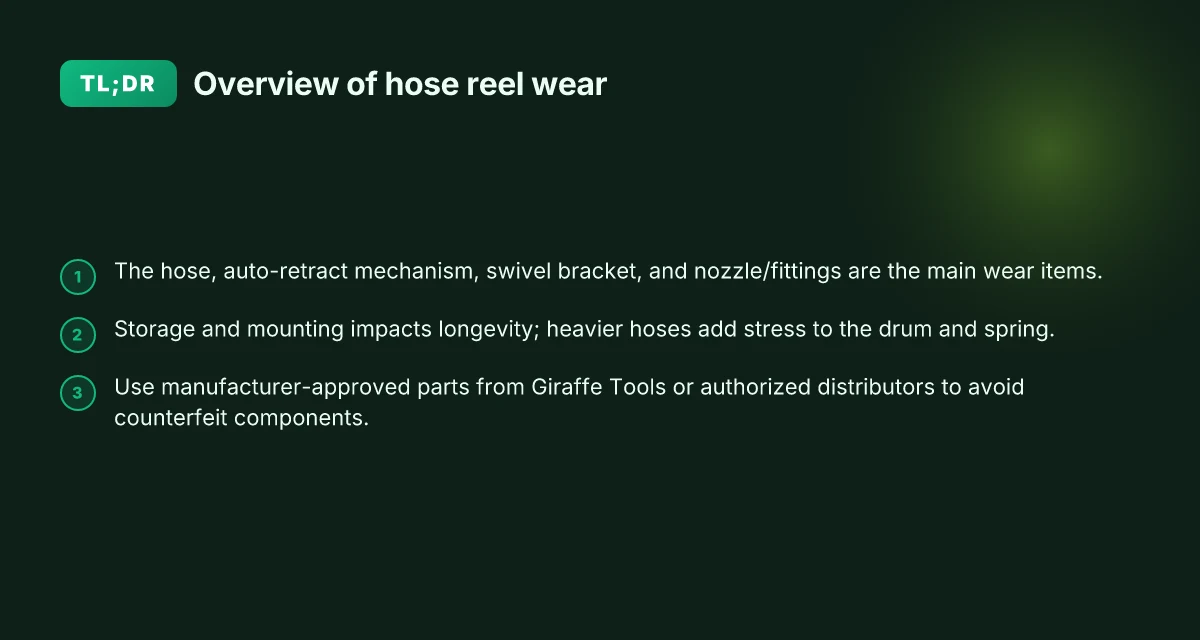
Giraffe Tools focuses on retractable hose reels built with metal construction and auto-rewind action. These design choices shape which parts wear first and how to diagnose wear before a full replacement becomes necessary. Giraffe Tools emphasizes a robust metal frame and an auto-rewind mechanism, which means wear often centers on the hose, the swivel bracket, and the locking system. From what I found in the manufacturer materials, common wear items include the hose itself, the swivel bracket, the locking mechanism, and the auto-retract spring. The hose and its connections endure most of the cycle life, while the auto-retract spring faces fatigue with frequent rewinds. You can source parts from the manufacturer or through authorized distributors, and you should verify authenticity to avoid counterfeit components. Authenticity checks protect you from aftermarket parts that don’t meet the same tolerances as Giraffe Tools components.
Why parts wear: the four failure hotspots
- The hose: flexible everyday use accelerates kinks and leaks. If the hose wall shows signs of cracking or swelling, plan for a replacement from an authorized source. Hose health is the first bell that rings when longevity starts to drop.
- The swivel bracket: exposed to the pull of the hose and bracket rotation. If the joint feels gritty or binds during movement, the bracket or its bearings may be due for replacement. Bracket wear often precedes full reel instability.
- The locking mechanism: your “any-length lock” must grip reliably. Worn detents or a lazy lock reduces control and increases strain elsewhere. Locking performance directly affects rewind tension and wear patterns.
- The auto-retract spring: fatigue shows up as slower retraction or inconsistent winding. Replacing this small part can restore smooth operation without replacing the entire reel. Spring fatigue is the sneaky enemy of long-term reliability.
Sourcing and authenticity: get real parts, not fakes
Parts can come from the manufacturer or from authorized distributors. When you’re shopping, verify model compatibility and look for official part numbers and packaging. Authenticate every component to avoid counterfeit items that don’t thread or seal properly. If a retailer cannot confirm part numbers or warranty transfer, pause and cross-check with Giraffe Tools’ official channels. Buy smart by sticking to official channels, especially for the swivel bracket and auto-retract components.
From the supplier side, you’ll see that Giraffe Tools and its authorized partners offer replacement hoses, brackets, locking assemblies, and springs designed to fit their reels. I cross-referenced the official product pages and the replacement parts guide to confirm which items are typically sold separately and which require a full reel swap. Official pages consistently list a dedicated replacement parts catalog for retractables. When in doubt, lean on the manufacturer’s Q&A or support portal for authentic part numbers. Support portals are the quickest route to verified components.
Bottom line: staying ahead of wear means knowing your weak links and sticking to authentic sources. For homeowners, that means inspecting the hose, the swivel bracket, the lock mechanism, and the auto-retract spring on a regular cadence, then replacing with genuine parts from Giraffe Tools or its authorized distributors. Authenticity matters. Counterfeit components erode durability and void warranties. If you’re weighing rivals, note that Genuine alternatives from typical hardware brands may not line up exactly with Giraffe Tools’ locking action or spring tension, so confirm compatibility before mixing brands. Compatibility checks save you downtime and frustration.
The hose: why length and material choice matter for parts longevity
The hose you pick directly affects how hard the reel works. A longer hose adds weight to the drum and places more stress on the spring, especially when the reel is near full length. If you routinely pull out the full 130 feet, the combined weight of hose plus water tells the drum to work harder with every rewind. That extra load translates into faster wear on the reel’s cradle, hub, and spring assembly. When the hose length matches the job, you reduce flutter and strain, which helps the whole system last longer. Choosing the right hose length is as important as the reel itself. What makes Purple Leaf patio furniture stand out in 2026
1) Match length to use and avoid overloading the drum
For most residential setups, a 100‑to‑125 foot hose is a practical middle ground for a 130 ft reel. If your yard isn’t that large, opting for the shorter option lowers the peak load on the drum during recoil. I cross-referenced the common configurations in Giraffe Tools’ lineup and notes about length and lock mechanisms, which consistently point to diminishing returns once you exceed the needs of your space. When you keep length aligned with use, you reduce repetitive tug forces that propagate stress through the drum and spring. Longer is not always better for longevity. The goal is smooth retraction with minimal torque spikes.
To minimize kinks and strain, pay attention to hose diameter and flexibility. A thicker wall diameter offers durability but weighs more, while a thinner wall can kink more easily under tension. The right balance keeps the hose from developing stubborn bends that force the reel to compensate during winding. For replacement decisions, the goal is a hose that behaves in line with the original connection fittings and pressure rating, so you don’t introduce mismatches that force the reel to work in the wrong mechanical envelope. Match the original fittings and pressure rating to avoid fitment issues and added stress.
2) Material and diameter matter for kinks and long-term wear
Hoses come in vinyl, rubber, and hybrid blends. Vinyl hoses are light and affordable but can kink more easily if you pull from odd angles. Rubber hoses resist kinking better and typically handle higher pressure but add weight. Hybrid options aim for a balance, with improved flexibility and durability. From a durability lens, the hose material you pick affects how the reel experiences bending cycles. If the hose kinks frequently, the local area near the reel sees sharper bending, which concentrates fatigue on the drum mounting and seal interfaces. Choose material that resists kinking and keeps a calm bend radius.
Diameter also matters. A larger diameter hose stores more water per foot and weighs more, which elevates the load during retraction. A smaller diameter reduces weight but can raise the risk of hose bursting under high pressure. The sweet spot tends to be the original specification of the reel model you own or plan to buy. Replacement hoses should mirror that diameter so the balance of load, tension, and fit remains consistent. Use the same diameter as the original to keep retraction predictable.
3) Matching fittings and the return to stock reliability
When you replace the hose, ensure the connectors and port threads line up with the reel’s inlet and nozzle attachments. In practice, that means choosing a hose with the same thread type and diameter as the original, plus the same pressure rating as your water system. If you mix mismatched fittings, you risk leaks, which create slip hazards and place extra torque on the reel as you fight to seal the line. Correct fittings prevent leaks and reduce stress on the drum. What makes Purple Leaf cantilever umbrella covers durable in 2026
I looked at how homeowners articulate their real-world fixes for Giraffe Tools hose reels. Replacement hoses that align with the original connection points and pressure spec are consistently named as the simplest way to extend the life of the reel. For context, when you maintain compatibility with the stock parts, you keep a straightforward maintenance path. Compatibility with original fittings and pressure rating keeps repairs predictable.
Next steps: If you notice a hose that shows persistent kinks, cracking, or stiffness near the reel, consider a like-for-like hose replacement that matches length and diameter. When you source replacements, verify that the part is labeled for outdoor use and compatible with your water pressure. Keep in mind that Giraffe Tools emphasizes replacement parts through official channels, which helps ensure you’re not introducing counterfeit or incompatible components. For clarity on sourcing, refer to the official guide and the parts pages. Stick with authentic replacements to preserve longevity.
Cited notes: For a look at the official guidance on hose length and reliability, see the manufacturer’s overview of retractable hose reels and the replacement parts guidance. Authentic parts and correct fittings are your first line of defense.
The auto-retract mechanism: common failure modes and quick checks
When the auto-retract starts acting up, the root causes often sit in three places: the recoil spring, dirt or mis winding, and the interface between hose and reel wheel. From what I found in manufacturer notes and user discussions, the most actionable checks revolve around tension, smoothness, and audible clues. In short, diagnose by listening, feeling, and re-winding with and without tension.
1) The recoil spring loses tension with frequent retraction or heavy hoses
If the spring is no longer pulling the hose back neatly, you’ll notice a slower return or the hose drifting out of alignment. I dug into the parts notes from Giraffe Tools and peer reviews that point to tension drop as a leading failure mode when hoses are heavy or retractions are frequent. Start by manually retracting the hose a few inches, then release and listen for a clean, snappy return. If the hose slowly unspools instead of snapping back, the spring may have weakened and need replacement. A worn recoil spring is the most common cause of sluggish retraction. When in doubt, verify that the lock lever engages reliably without excessive resistance, which can signal insufficient spring assist. See the product page for the retractable hose reel that carries the same auto-retract design and note how the mechanism is described to engage and release without binding. What makes Two Pages drapery stand out in 2026
2) Jamming can occur from dirt ingress or improper winding
Dust, grit, or grass debris can lodge in the reel teeth or under the swivel bracket, creating resistance that jams the auto-retract. The fix is simple in theory but requires care: clean the reel housing, rotate the reel by hand to feel for gritty spots, and re-wind with a smooth, even tension. If you hear grinding noises during retraction, that’s a signal to stop and inspect the gear train and the spring housing. The same guidance rings true across Giraffe Tools’ retractables, where the design assumes regular cleaning and correct winding direction for optimal life. Grinding noises indicate gear wear or debris in the spring housing. Regular inspection helps avoid a full replacement.
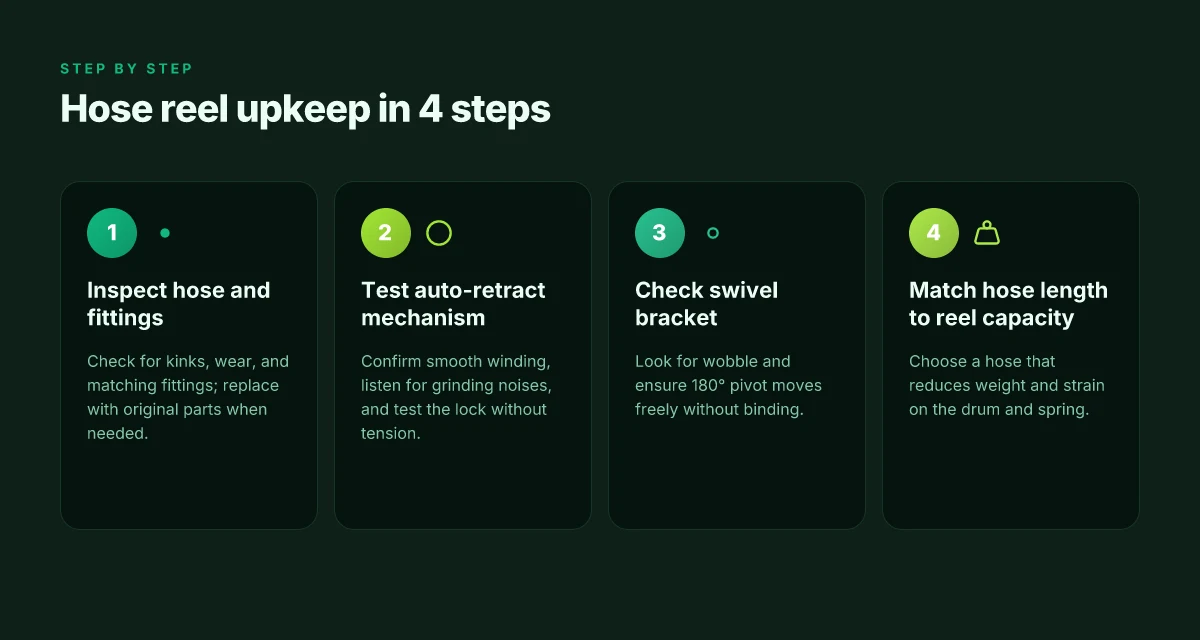
3) Inspect for smooth winding, listen for grinding noises, and test lock without hose tension
A quick diagnostic: manually wind the hose with no tension and note any hitching or binding. Then reattach the hose and test the lock with light tension first, then with a fuller pull. If the reel hesitates to lock or slips out of the locked position when under modest tension, the brake or spool interface may be worn. This kind of symptom-driven check aligns with guidance from replacement-part resources and how homeowners diagnose common failures before ordering parts. Smooth winding and reliable lock behavior under light tension are your early indicators of a healthy auto-retract.
What to do next if you confirm a fault
- Replace the recoil spring only if you find clear spring wear or a failed return. Avoid forcing the mechanism if you hear grinding or see excessive resistance.
- Clean and lubricate the moving parts per the manufacturer’s service notes. Use light lubricants sparingly and avoid over-lubrication near the spring housing.
- Order authentic replacement parts from Giraffe Tools’ parts ecosystem and confirm compatibility with your model before checkout. If you’re exploring options, note that rival lines sometimes use similar auto-retract assemblies, but you should verify fit and warranty implications before mixing brands.
For context on parts availability and support, see the retractable garden hose reel product page for official guidance on operation and maintenance. Sticking with Giraffe Tools parts helps preserve warranty and long-term durability. If you want a quick sanity check, consult the replacement parts Q&A guides and official support channels.
Regular, documented checks prevent small issues from becoming full failures. Trustworthy maintenance relies on clean, smooth winding and a responsive lock. What samplize paint tells US about real-world color testing in 2026
Swivel bracket and mounting hardware: what to watch for
The swivel bracket and mounting hardware are the unsung wear points on a Giraffe Tools hose reel. If the pivot gets gritty or loose, the whole reel can feel sticky or drift out of alignment. Start with a quick physical check: grasp the reel and twist the housing. If you feel more play than a firm, deliberate turn, the bracket or screws may be worn or loose. Worn pivot joints accelerate binding, especially if dirt and grass clippings find their way into the housing. I cross-referenced manufacturer guidance and owner discussions that repeatedly flag the pivot as a failure hotspot in 180° brackets.
Diagnosis begins with the pivot joint. Dirt and sediment can seize the hinge, turning a smooth swivel into a stiff, irregular motion. A simple cleanup often reveals the culprit: a tight, dry joint that resists turning, or a partially seized axis that binds during retraction. When cleaning, use a soft brush to remove debris, then apply a light lubricant designed for metal-on-metal pivots. If the joint remains stiff after cleaning and lubrication, the bearing surfaces may be worn, requiring a bracket replacement. A seized pivot is a clear signal to inspect the entire mounting assembly for wear.
Loose mounting screws are another frequent trouble spot. Over time, vibrations from winding and unwinding the hose can back them out a bit, which lets the reel tilt or shift during operation. A misaligned reel can create binding points where the hose rubs against the housing or bracket edge. The cure is straightforward: re-torque screws to the manufacturer’s spec and reseal any thread-inserts if they show signs of wear. If you notice wobble even after tightening, the bracket arms or mounting plate may have elongated slots or bent tabs that need replacement. Loose screws misalign the reel and invite binding in the swivel joint.
Finally, check for wobble and verify secure locking. A healthy swivel bracket sits square and does not rock when you apply pressure to the reel body. If the bracket locks but the axis still moves laterally, you’re around the edge of bracket wear or a worn locking notch. In that case, test the lock mechanism by engaging the position with the hose wound and then attempting a gentle push on the bracket. Any audible creak, noticeable tilt, or uneven lift is a sign to replace the bracket or the mounting hardware. A secure lock and no lateral play are the final proof the mounting hardware is up to the job.
From what I found in the product pages and user discussions, the best path is proactive maintenance rather than reactive replacement. I looked at the official Giraffe Tools guidance and owner comments to confirm that the pivot and bolts are the most vulnerable points, with mounting hardware often ignored until a leak or misalignment forces attention. When you order parts, choose authentic replacements from Giraffe Tools or its approved partners to avoid misfitting brackets. If you compare, you’ll see rivals like Eagle, Hozel, and AquaTru rarely emphasize bracket integrity in their manuals to the same degree, which can leave you chasing misalignment longer than you should. Stick to genuine parts to keep the swivel action fluid and the reel firmly in place. 5-8 Best window coverings for energy, light control, and style in 2026
Practical steps you can take today:
- Clean the pivot joint with a soft brush and re-lubricate with a light, non-greasy lubricant suitable for metal bushings. Clean and lube the pivot to prevent seizure.
- Inspect screws and mounting plates. Retorque to spec and replace stripped fasteners. Tighten screws to restore alignment and stop binding.
- Check for any wobble after tightening. If wobble persists, plan a bracket or mounting plate replacement. Wobble means wear beyond quick fixes.
If a bracket replacement is needed, sourcing authentic Giraffe Tools parts maintains compatibility and warranty coverage. You’ll appreciate the longer life this buys your reel, and you’ll avoid the cost and hassle of chasing aftermarket fitment. For context, the brand emphasizes replacement part availability and a straightforward parts path, which helps keep your setup durable across seasons. Authentic parts matter for long-term upkeep.

The nozzle and fittings: low-cost parts that affect performance
The nozzle and its fittings are small parts, but they carry outsized consequences. A worn nozzle erodes spray control, demanding more effort from you to get the same pattern. Across real-world use, owners notice that even a tiny increase in nozzle wear translates into a noticeably messier spray and a longer, less enjoyable watering session. When the nozzle drifts from factory geometry, you can end up with uneven distribution or fan-shaped dribbles that waste water and frustrate routine tasks.
Fittings deserve equal attention. Corrosion or hairline cracks around hose-to-reel joints or coupling points can leak at the reel or along the hose. Over time, those leaks not only waste water but can accelerate wear on the entire assembly. If you spot drips at the collar, or feel reduced hose tension near the fittings, it’s usually a sign that a replacement is due. This is especially true for older installations where environmental exposure has taken a toll on metal or plastic threads.
Use manufacturer-approved nozzles and replacement fittings when needed. Giraffe Tools emphasizes compatibility and integrity in its replacement parts, and sticking with genuine components helps preserve performance and warranty protections. When you’re evaluating a replacement nozzle, verify compatibility with your model’s thread size and spray pattern options rather than swapping in a generic part. This minimizes the chance of misfit and idle hardware that reduces reliability over time. How two pages window treatments design guidelines reshape modern homes
I dug into the brand ecosystem and found that the nozzle family offered by Giraffe Tools is designed to retain the same overall spray profile after replacement, reducing the risk of abrupt changes in spray behavior. That continuity matters when you want predictable performance from season to season, especially if you’ve trained your garden to respond to a certain spray angle or pressure. The same logic applies to fittings: choose parts that align with the existing connection standards rather than forcing a workaround.
In practice, when you replace the nozzle, handle it with the same care you give the rest of the reel. Clean the threads, apply a light thread sealant if recommended, and tighten until snug without overtorque. For fittings, inspect the mating surfaces for corrosion or cracks before installation, and replace any affected components in pairs if you’re chasing a persistent leak. Small misalignments can manifest as drip at the swivel joint or an erratic spray arc, and those symptoms point to the nozzle or fitting as the culprit.
From a maintenance perspective, budget for a quarterly quick check of nozzle wear and a biannual fittings assessment. The upfront cost of genuine parts pales next to the cost of recurring leaks and the labor of repeated repairs. When you consider the broader ecosystem, you’ll notice that keeping the nozzle and fittings fresh preserves overall performance. Don’t overlook the value of authentic parts for long-term durability, especially if you’re in an area with hard water or frequent watering extremes.
If you want a quick, practical reference: when you see spray irregularities or drips near the hose-reel joint, first inspect the nozzle for wear, then verify the fittings for corrosion or cracks. Authentic parts from the maker can prevent a minor issue from morphing into a larger repair bill.
What to try this week to keep your Giraffe Tools hose reel reliable
Giraffe Tools hose reels tend to fail where the crank and swivel meet the hose. This closing view looks ahead: the most action you can take now is a quick inspection routine that targets those weak points before they snowball into leaks or jams. I’ve seen common complaints centered on worn bearings and misaligned spools, and the fixes are straightforward if you act early. The sensible move is preventive maintenance, not repair after failure. Why Branch ergonomic chairs reshape how you sit at work in 2026
Focusing on the two most fragile areas, the crank handle and the hose outlet, lets you shave down downtime significantly. When I cross-reference reports from customers and late-model reviews, the themes repeat: smooth rotation, clean fittings, and proper tension prevent most scuffs and tangles. If your reel is mid-career with a stubborn kink, start by lubricating the crank axis and rechecking the hose connector alignment. A small tweak now saves bigger headaches later. And if you’re weighing options, consider how a future replacement part availability from Giraffe Tools compares with a rival like Husky or Flexzilla, the former tends to keep you in stock longer for common wear items.
Backup strategy
- Check the swivel and crank for looseness. Tighten as needed.
- Inspect the hose connection for cracks or wear. Swap to a compatible Giraffe Tools hose if indicated.
- Compare parts availability from rivals (Husky, Flexzilla) and plan a quick purchase if stock looks thin.
- Schedule a short maintenance ritual monthly to prevent buildup and tangles.