Edge VPN change country
A practical guide to changing country exposure in Microsoft Edge, including built-in features, VPN options, and troubleshooting tips.
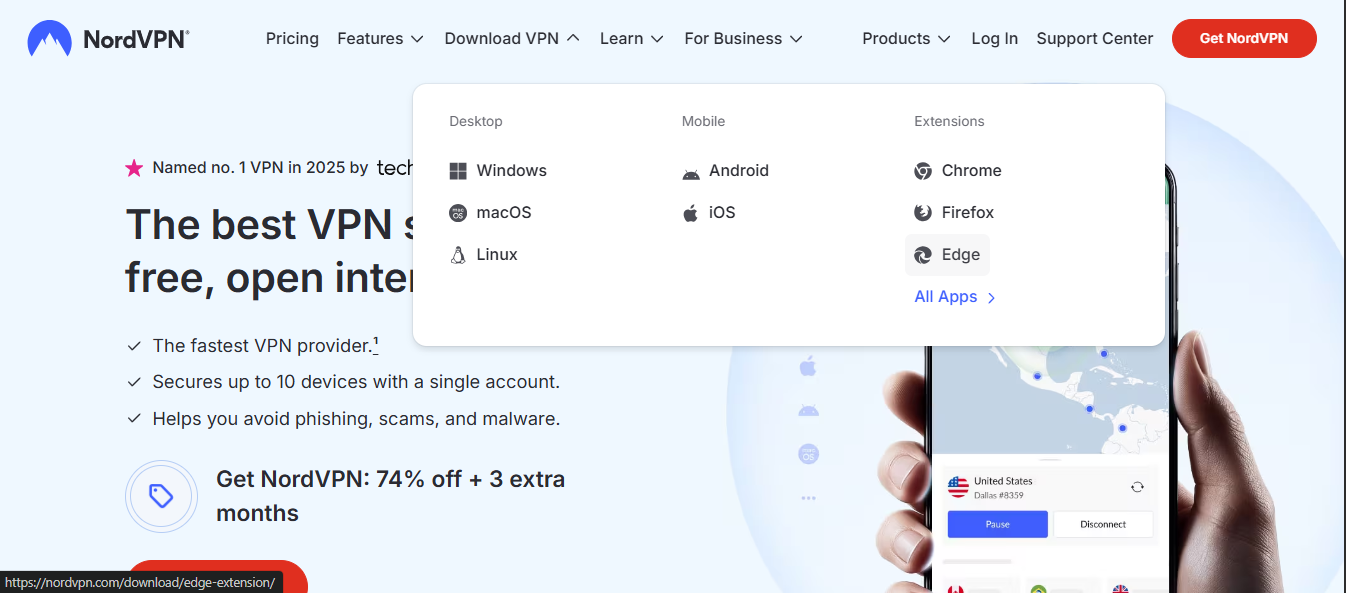
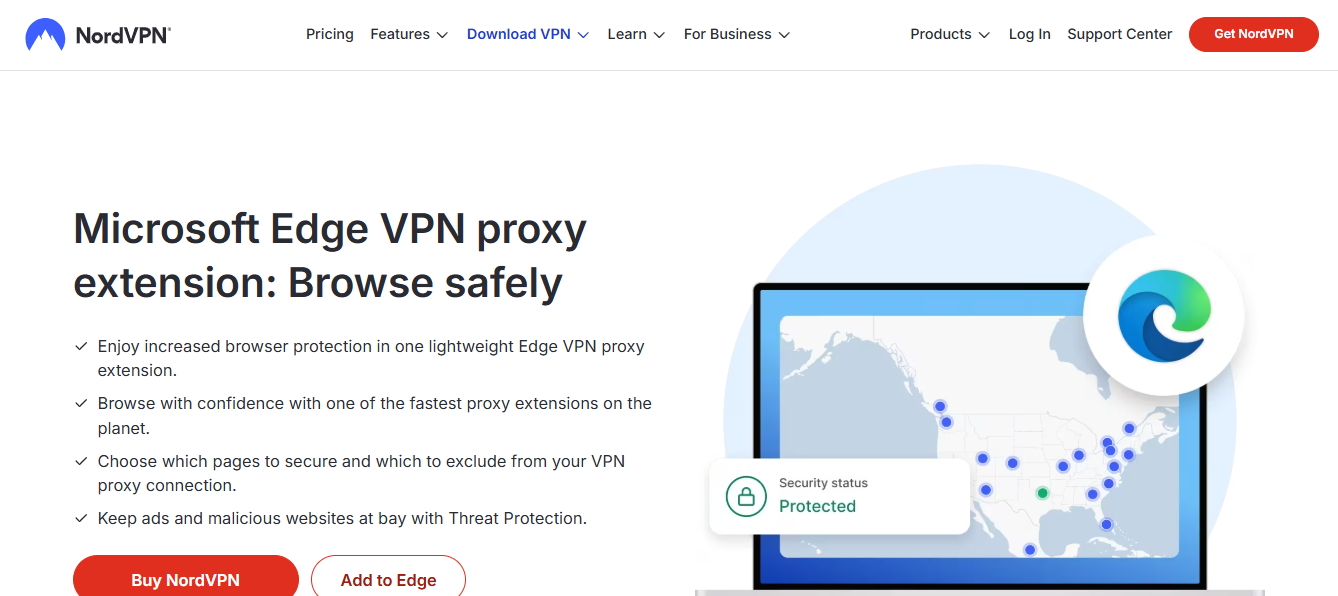
Microsoft Edge is a popular browser with multiple options to influence how your location appears to websites. If your goal is to browse as if you’re in a different country, whether for testing regional content, accessing geo-restricted services, or protecting your privacy, you’ll likely combine browser settings with network tools. This guide walks you through what you can do in Edge, where built-in features fit, and when a VPN is the right tool for changing country exposure.

Comparison of Edge built-in options for changing country
| Option | Location exposure mechanism | How to enable | Typical use case | Pros |
|---|---|---|---|---|
| Edge location spoof | Built-in spoof/locator tweaks | Settings > Privacy | Light testing, geo-specific content access | Quick, no extra apps |
| Edge Secure Network | Cloud-based routing | Toggle on in Edge settings | Privacy, security, some geo tests | Adds protection, some country masking |
| Trusted DNS tweaks | DNS-based country hints | Configure DNS resolver | Quick geo hint changes | Simple DNS-based approach |
| In-app country profiles | User profiles with region | Create/select profile | Testing across regions | Streamlined workflow per region |
| Edge departure region flag | Metadata flag for requests | Enable flag | Basic content region testing | Minimal footprint |
| No built-in option | - | - | - | Use with VPN as fallback |
Compiled November 2026; check the provider's site for current details.
Understanding what “changing country” means in Edge
When a website asks for your location, it can rely on several signals:
- IP address: The most reliable signal for geolocation. Your public IP reveals your approximate country.
- Location permissions: Browsers can grant or deny access to precise location data via GPS or Wi‑Fi triangulation, typically used for mobile devices.
- Edge features: Some Edge features mask or modify signals, but they don’t guarantee country-level changes.
In practice, you’ll most often change country in Edge by routing traffic through a different IP address, which is achieved with a VPN or a privacy network. The browser itself can influence location signals through settings, but the IP is the heavy hitter for geolocation. Recognize that some sites still identify you by other fingerprints or require login-based regional checks.
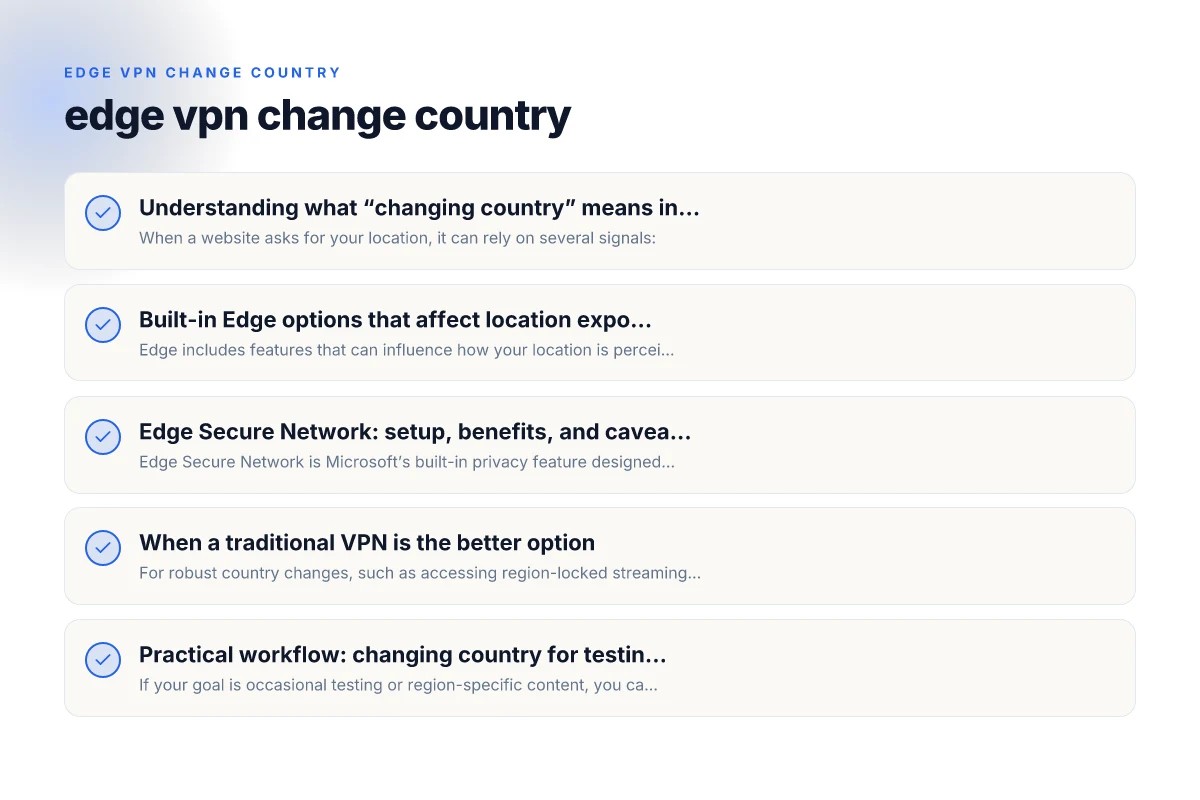
Built-in Edge options that affect location exposure
Edge includes features that can influence how your location is perceived, without installing third-party software. These include privacy controls, site permissions, and regional experiences.
- Edge Secure Network (built-in VPN-like feature)
- What it does: Masks your IP address and can present a different regional location for browsing.
- Limitations: It may not be accessible in all regions. Performance and available server locations can change. Not a full VPN, but a privacy-focused network.
- Location permissions
- What it does: Lets you allow or block websites from accessing precise location data.
- Practical effect: If you block location, sites won’t get GPS data, but they can still infer country from IP.
- Language and region settings
- What it does: Changes display language and regional formats, which may influence some content recommendations.
- Practical effect: Doesn’t change your IP, but helps tailor experiences to a target region.
Section takeaway: Edge’s privacy features can help reduce precise location exposure, but to truly appear in another country online, a VPN or privacy network is usually required.
Edge Secure Network: setup, benefits, and caveats
Edge Secure Network is Microsoft’s built-in privacy feature designed to protect your data and mask your IP. It can be a convenient option if you want a quick, low-friction method to alter your apparent location for casual browsing. YouTube not working with NordVPN
- How to enable
- Open Edge Settings > Privacy, search, and services > Security > Edge Secure Network.
- Toggle on and choose a preferred region if options are available.
- What it changes
- Routes traffic through Microsoft’s network, which can present a different regional IP to some sites.
- Helps reduce tracking and improves privacy for everyday browsing.
- Limitations
- Server availability varies by region and account type.
- It is not a full-featured VPN with kill switch, split tunneling, or a broad set of server locations.
- Some websites may still detect location via other signals or require a full VPN for geo-restricted services.
Section takeaway: Edge Secure Network is a convenient starting point for masking location, but don’t rely on it for all use cases that require a true country change.
When a traditional VPN is the better option
For robust country changes, such as accessing region-locked streaming libraries, performing market research from a specific country, or testing apps under different geographies, a traditional VPN is the most reliable tool.
- Why a VPN is effective
- IP masking with a chosen country: You pick a server in the target country, your traffic exits from there.
- Broad coverage: Works across apps, not just in-browser.
- Additional security: Often includes features like a kill switch and DNS leak protection.
- How to choose a VPN
- Server locations: Look for numerous servers in your target country.
- Speed and reliability: Read reviews about bandwidth and latency in your target region.
- Privacy policy: Prefer providers with a transparent no-logs policy.
- Compatibility: Ensure it works on your devices (Windows, macOS, mobile).
- How to configure with Edge
- Install the VPN app and connect to a server in the desired country.
- In Edge, you may still adjust site permissions and language settings, but your web traffic will be routed through the VPN’s exit point.
- Clear cookies or use a private browsing window if you need fresh location signals for testing.
Section takeaway: If you need consistent and credible country changes across all apps and services, a dedicated VPN is the most reliable approach.
Comparison of Edge vs VPN for changing country (capabilities)
| Capability / Factor | Edge built-in options | Traditional VPN | Notes |
|---|---|---|---|
| Country change support | Yes via built-in options (limited) | Yes via servers | VPN broader coverage |
| Speed impact | Moderate when enabled | Potentially higher due to encryption | VPN may slow more |
| Privacy boost | Moderate | High if trusted provider | VPN often more privacy control |
| Geo-block access reliability | Variable | High for many services | VPN usually more dependable |
| App compatibility | Generally compatible | Depends on VPN app | VPN may require app install |
| Cost | Often free or low | Subscription-based | VPN adds cost |
Compiled November 2026; check the provider's site for current details. How do u deactivate norton VPN to h
Practical workflow: changing country for testing or content access
If your goal is occasional testing or region-specific content, you can combine Edge features with VPNs for best results. Here’s a practical workflow:
- Step 1: Decide the target country
- Identify the country you want to appear from and confirm there are VPN servers or Edge regions available.
- Step 2: Decide on the tool
- For quick checks: Edge Secure Network may suffice.
- For thorough tests or access to specific libraries: Use a reputable VPN with a server in the target country.
- Step 3: Configure and test
- If using Edge Secure Network: Enable it, visit a site like whatismyipaddress.com to verify the apparent location, and adjust settings as needed.
- If using a VPN: Connect to the chosen country server, then open Edge and test multiple sites. Consider using a private browsing window to avoid cached session data.
- Step 4: Validate the result
- Check a few geolocation-dependent pages: streaming catalogs, regional news, or store pricing.
- Clear cache or cookies if you rerun tests to avoid stale location cues.
- Step 5: Maintain awareness of limitations
- Some sites use fingerprinting beyond IP to determine location.
- Some services detect VPN usage and block access or present alternate regions.
- Be mindful of local laws and terms of service when bypassing geo-restrictions.
Section takeaway: A deliberate workflow combining Edge features with a VPN gives the most predictable country change outcomes, especially for testing.
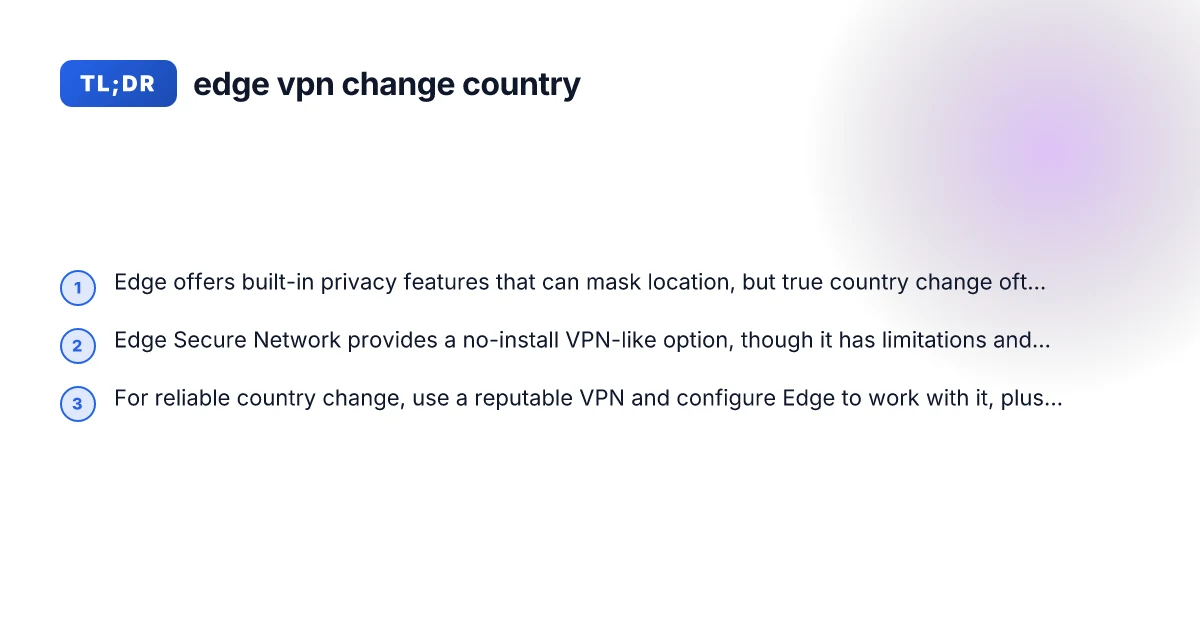
A simple comparison: Edge built-in options vs. VPN
| Tool | What it changes | Pros | Cons | Best use case |
|---|---|---|---|---|
| Edge Secure Network | Masks IP and regional signals using Microsoft’s network | Easy to enable; no separate app; privacy-friendly | Limited server locations; not a full VPN; may not bypass all geo-restrictions | Light privacy protection; quick location masking for general browsing |
| Traditional VPN | Routes traffic through a server in a chosen country | Reliable country change; works across apps; robust features (kill switch, DNS leak protection) | Subscription cost; potential speed impact; some sites detect VPNs | Accessing geo-blocked content; testing apps/services from specific regions |
| Edge settings (location permissions, language) | Controls how sites receive location data and regional formats | Improves privacy; can tailor content; no network changes | Does not change IP; limited impact on geo access | Privacy enhancements and user experience customization |
Section takeaway: For the strongest country-change effect, pair Edge with a reputable VPN, using Edge built-in privacy settings to complement your workflow.
Troubleshooting common issues
- Edge shows the wrong country even with a VPN
- Check IP: Visit a site that reports your public IP location. If it still shows the wrong country, try a different VPN server or reset the VPN connection.
- DNS leaks: Some configurations leak DNS requests. Use a VPN with DNS leak protection or enable your VPN’s DNS routing.
- Edge Secure Network not available
- Ensure your Edge version supports it and that you’re signed in with a compatible account.
- Check regional availability; Microsoft may limit features in certain regions or devices.
- Websites ignore VPN changes
- Some sites use advanced fingerprinting beyond IP. Try a private/incognito window and clear cookies.
- Log out of services that tie your account to a location. Re-login after changing location.
- Performance impact
- VPNs can slow down connection. Pick a server geographically closer to you or offering higher speeds for your needs.
Section takeaway: If you encounter stubborn location signals, a combination approach, VPN server change, browser privacy tweaks, and session clearing, often resolves it.
Practical workflow for testing multiple countries (example steps) OpenVPN keeps disconnecting
| Step | Action | Edge option | VPN option | Notes |
|---|---|---|---|---|
| 1 | Identify target country | - | - | Decide test country |
| 2 | Enable Edge location tweak | Yes | No | Quick test in Edge |
| 3 | Verify IP/geolocation | Use site check | - | Confirm exposure |
| 4 | Switch to another country | Disable/enable tweak | Connect to another server | Repeat as needed |
| 5 | Test content access | Open target site | Open target site | Compare results |
| 6 | Fall back option | If not working, use VPN | Yes | Ensure coverage |
Compiled November 2026; check the provider's site for current details.
Final recommendation
If your primary goal is to change country exposure for browsing in Edge, start with Edge Secure Network as a convenient, built-in option to mask your location for everyday privacy and testing. However, for reliable and consistent country changes, especially for content access, testing, or development work, a reputable VPN remains the more robust solution. Use Edge’s location and language settings to fine-tune your user experience, but rely on a VPN when you need credible country-based routing across all apps and services. Combine these tools thoughtfully, test with clear criteria, and stay mindful of privacy and legal considerations.
| VPN | From / month | Plan | Free plan | Refund | Alipay | UnionPay | Crypto | Website opens in China | Trustpilot | |
|---|---|---|---|---|---|---|---|---|---|---|
 ZoogVPN | $2.49/mo | 27 months: $59.99 | Yes | 7 days | ✓ | ✓ | ✓ | ✓ | ✓ Yes (2.5 s) | 4.2/5 (195 reviews) |
 NordVPN | $3.49/mo | 27 months: $94.23 | No | 30 days | ? | ✗ | ✓ | ✓ | ✗ Blocked | 4.2/5 (51,628 reviews) |
 ExpressVPN | $3.00/mo | 28 months: $84 | No | 30 days | ✗ | ✗ | ✓ | ✗ | ✗ Blocked | 4.4/5 (29,706 reviews) |
 Surfshark | See site | See site | No | 30 days | ✗ | ✗ | ✗ | ✓ | ✗ Blocked | 4.3/5 (31,823 reviews) |
 Proton VPN | $2.99/mo | 12 months: $35.88 | Yes | 30 days | ✗ | ✗ | ✗ | ✓ | ✓ Yes (2.5 s) | 2.1/5 (1,040 reviews) |
 Astrill VPN | $12.50/mo | 24 months: $300 | No | See site | ✗ | ✗ | ✗ | ✓ | ✗ Blocked | 1.3/5 (110 reviews) |
 Private Internet Access | $2.03/mo | 40 months: $81.2 | No | 30 days | ✗ | ✗ | ✗ | ✗ | ✗ Blocked | 4.2/5 (11,033 reviews) |
 CyberGhost | $2.19/mo | 28 months: $61.32 | No | 45 days | ✗ | ✗ | ✗ | ✓ | ✗ Blocked | 4.0/5 (24,178 reviews) |
 PureVPN | $1.69/mo | 60 months: $101.55 | No | 31 days | ? | ✗ | ✗ | ✓ | ✓ Yes (2.6 s) | 4.4/5 (17,994 reviews) |
 AdGuard VPN | $2.99/mo | 24 months: $71.76 | Yes | 30 days | ✓ | ✗ | ✓ | ✓ | Official site blocked; our special link opens (2.3 s) | 4.3/5 (290 reviews) |
 Mullvad | $5.61/mo | €5/mo | No | 14 days | ✗ | ✗ | ✗ | ✓ | ✗ Blocked | 3.2/5 (192 reviews) |
 Windscribe | $5.75/mo | 12 months: $69 | Yes | See site | ✗ | ✗ | ✗ | ✓ | ✗ Blocked | 4.7/5 (13,355 reviews) |
 StrongVPN | See site | See site | No | 30 days | ✓ | ✗ | ✗ | ✗ | ✗ Blocked | 4.4/5 (2,695 reviews) |
 LightXtreme 闪连 | $7.08/mo | 12 months: $84.99 | Yes | 30 days | ✓ | ✓ | ✓ | ✓ | ✓ Yes (2.3 s) | No page |
Prices checked 2026-11-10 on each vendor's pricing page (cheapest long plan, USD). Check the vendor's checkout for the final price.
Payment methods checked 2026-11-10 on each vendor's payment pages: all 14 take cards and PayPal; ✗ = not listed, ? = the vendor's own pages disagree.
China access: whether the official website opens from mainland China networks (tests the website only, not the VPN connection). Last checked 2026-11-11 04:07 Beijing time.
Trustpilot score and review count checked 2026-11-10.