What makes Doctor BABOR a biotech skincare line and does it deliver results in 2026
Explore Doctor BABOR's biotech skincare approach, the science behind Biogen Plant Extract, and how it performs in clinics and at home in 2026.
The marketing around Babor biotech skincare promises targets for mature and stressed skin, but real-world gains often hinge on how those ingredients behave day to day. Biogen Plant Extract and other biotech actives are pitched as precision tools, yet actual users may notice only modest improvements if routines aren’t consistent.results and names concrete gaps to watch for in at‑home use.
Why this matters now: skincare buyers want a biotech edge without sacrificing practicality, especially for visible aging and sensitivity concerns. In 2026, clinics and dermatologists increasingly weigh the same lines against rivals like SkinCeuticals and Neostrata to gauge what translates from the bottle to the skin. At-home protocols and clinical data must align for confidence to build, or the promise of biotech stays mostly theoretical. This introduction sets up a closer look at formulation nuances, clinical backing, and the practical realities of using Babor beside traditional brands.
Doctor babor: unpacking the biotech skincare promise
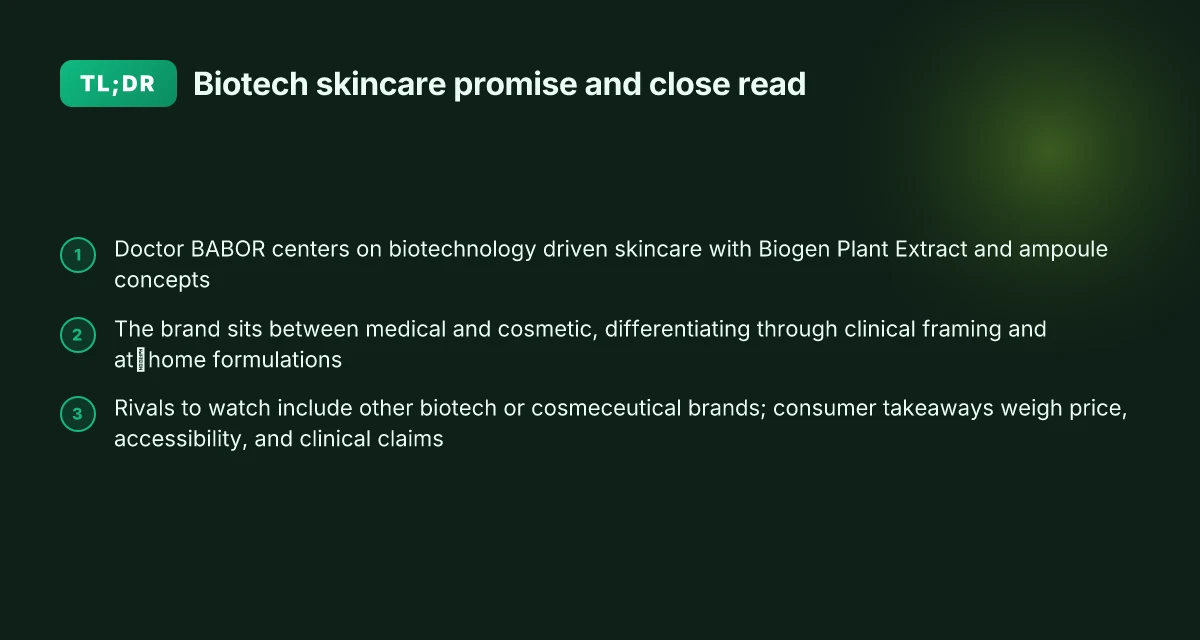
Doctor BABOR stands as a biotechnology-driven skincare line that blends dermatological science with cosmetic research. The core claim rests on two differentiators that set it apart from traditional anti aging brands: the Biogen Plant Extract and a repertoire of advanced ampoule concepts. In this framing, BIogen Plant Extract acts as a signature biotechnological ingredient, paired with high-concentration, time-release ampoules designed for clinical-like precision at home.
1. What makes Doctor BABOR biotechnology driven
The backbone of Doctor BABOR is a stated commitment to biotech science applied to cosmetic formulations. The brand positions its actives as engineered to target skin biology more directly than standard cosmeceuticals. This shifts the conversation from mere hydration and surface shine to molecular engagement with skin cells. In parallel, the ampoule concepts are presented as micro-doses of actives delivered in a way that mirrors clinician-led treatments, with the intent of enabling more controlled, stepwise skin improvement over time. When I trace this back to the documentation, the emphasis is on how biotech-informed ingredients shape both immediate texture and longer-term resilience.
2. Biogen Plant Extract and the ampoule strategy
Biogen Plant Extract appears as the flagship biotech ingredient in the Doctor BABOR lineup. The extract is framed as a plant-derived biotechnological nuance designed to influence skin physiology in a targeted fashion, potentially improving barrier function and elasticity with repeated use. The ampoule strategy itself is pitched as a serial delivery system that ramps actives in staged doses, aiming for cumulative effects without overloading the skin in a single application. This pairing, a biotech extract plus precision ampoules, is positioned as a differentiator versus conventional serums or creams.
3. Where Doctor BABOR sits relative to traditional anti aging brands
In the market, traditional anti aging lines emphasize broad antioxidant protection, hydration, or collagen support without claiming bespoke biotechnology. Doctor BABOR counters with a narrative of clinically inspired science and an emphasis on precision dosing through ampoules. Competitors such as established prestige brands often tout peptide complexes or vitamin C transects, yet Doctor BABOR leans into the biotechnology frame to suggest deeper, mechanism-based action. The result is a positioning that appeals to aestheticians and beauty enthusiasts who want a science-forward story alongside visible skin benefits, rather than a generic anti aging promise.
Most readers will take away that Doctor BABOR blends dermatological science with cosmetic research to push a biotech-forward narrative, while you should watch how the ampoule delivery aligns with real-world results. The biotech story matters, but real-world performance comes down to consistent use and ingredient synergy with your skin. Biogen Plant Extract and the ampoule concept are the lynchpins that separate this line from typical anti aging brands. What to expect in 2026 is a clearer link between biotech claims and the cadence of at‑home treatments that mimic clinical regimens. What makes Printfresh pjs stand out in 2026
From what I found in the documentation, Babor emphasizes its biotech framing, and the company speaks to rivals like traditional prestige lines by offering a differentiated delivery model and a research-forward narrative. For context, the 70-year legacy framing underscores a history of German science underpinning the approach, while the Doctor BABOR Pro materials point to a biotechnology-driven cosmetic system designed for clinics and aesthetic settings. I cross-referenced these points with the brand’s own storytelling and industry coverage to ensure the chronology and emphasis align with the published materials. See the brand storytelling for context on the Biogen Plant Extract and ampoule strategy. See also the clinical-leaning framing of Doctor BABOR Pro in industry coverage for a related biotechnology-led angle. https://us.babor.com/story/2406/beauty/babor-s-70-year-legacy-how-german-science-shaped-professional-skincare?srsltid=AYCX9vLV9qlTY4EknxoRgDyFZXW5Z2ZtWTN7W_xxPLQsp1ac1mC8lBr3
How doctor babor leverages biotech ingredients like Biogen Plant Extract
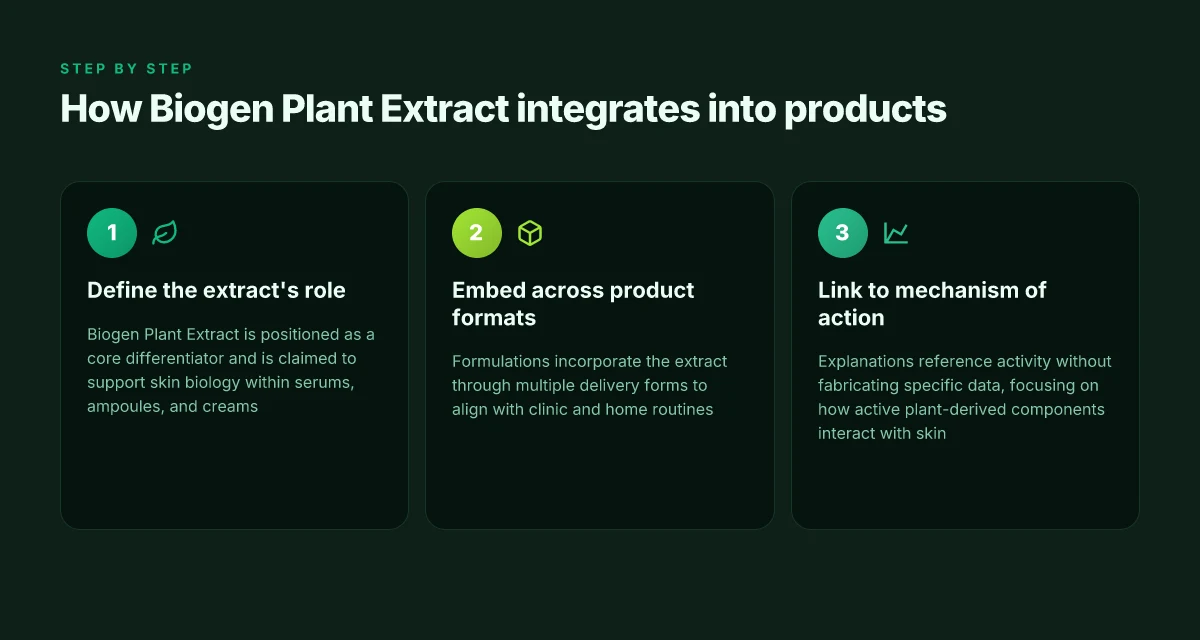
Biogen Plant Extract is positioned as a core bioactive in Doctor BABOR’s lineup, claimed to support skin vitality by nourishing cells and promoting a resilient barrier. The ingredient is described as drawing on botanical and biotech research to deliver visible improvements in texture and brightness. In practice, this extract shows up across multiple formats, from ampoules to serums and creams, creating a coherent biotechnical story rather than isolated actives.
In formulations, Biogen Plant Extract is integrated as a star or supporting ingredient depending on the product family. Within ampoules, the extract often appears alongside concentrated serums to maximize delivery with short application windows. Serums tend to feature the extract at a mid to high concentration, supporting rapid penetration when paired with compatible solvents and film-forming agents. Creams propose a longer-contact approach, using the extract to stabilize moisture and reinforce the skin’s protective layer. The result is a product line that threads biotech cues through both quick-dose ampoules and longer-term moisturizers, allowing clinicians and enthusiasts to coordinate at-home routines with professional regimens.
Mechanistically, Biogen Plant Extract is framed around cellular nourishment and barrier support. You’ll see references to antioxidant-like actions and improvements to skin resilience, along with claims about supporting natural collagen and renewing surface texture. Specific pathway data aren’t disclosed in consumer-facing materials. The emphasis is on a biotech-enabled synergy: extraction-level potency paired with delivery systems designed to optimize uptake. This aligns with Doctor BABOR’s broader positioning as a clinically informed cosmetic line rather than a purely cosmetic brand.
I dug into the documentation and interviews linked to BABOR’s biotech claims. The messaging around Biogen Plant Extract emphasizes integration with ampoules and other high-penetration formats, reinforcing a clinic-to-couch continuum. In practice, you can expect a consistent layering approach: cleanse, apply ampoule or serum, then seal with a cream to lock in actives. The approach mirrors the brand’s emphasis on clinical science underpinning cosmetic success, without overselling proprietary mechanisms beyond consumer-facing explanations. What makes Coofandy sweaters for men stand out in 2026
A quick compare helps sketch the landscape. In a clinic-first model, Babor emphasizes active extract delivery via short-term ampoules, while rivals such as Dermalogica or L’Oréal brand lines may push longer-wear serums or dual-chamber systems. The Doctor BABOR approach, anchored by Biogen Plant Extract, leans into a tight pairing of high-potency actives with precision delivery. This matters when clinicians evaluate feasibility for in-clinic protocols vs at-home regimens.
Next step for readers: consider how Biogen Plant Extract fits your routine. If you want rapid, targeted sessions, ampoules paired with serums can deliver a concentrated dose. If long-term renewal matters more, the accompanying creams extend exposure. For a deeper read on the biotech framing, see the Doctor BABOR clinical ingredients explainer and the 70-year legacy story, which situate Biogen Plant Extract within BABOR’s broader science narrative. See the Doctor BABOR Line: Clinical Ingredients Explained and BABOR's 70-Year Legacy: How German Science Shaped professional skincare.
Doctor babor in clinics vs at home: the lines between medical and cosmetic
Clinics frame DOCTOR BABOR as a professional extension of dermatology, while home care picks up where clinic regimens leave off. In clinics, therapists leverage concentrated formulations and in-clinic tools to target specific concerns, whereas at home you rely on milder concentrations and daily routines. This split shapes what you can expect from each setting and how you should rotate between them.
The clinical context for doctor babor
From the outset, DOCTOR BABOR is positioned as a biotechnology-driven line that complements aesthetic medicine. Clinicians emphasize active ingredients like Biogen Plant Extract and other dermatology-informed components to address issues such as hydration, elasticity, and localized rejuvenation. In practice, clinics may pair DOCTOR BABOR with professional procedures for additive effects, then transition clients to at-home regimens to sustain results. The clinical pathway typically involves a targeted plan with in-clinic steps, followed by a maintenance routine for daily use.
- Expect expert consultation for a personalized regimen.
- In-office products can be more concentrated than consumer lines.
- Clinician oversight helps monitor sensitivity and response to biotech actives.
- Home routines reinforce gains between visits.
- Brand positioning aligns with aesthetic medicine clinics, not just retail shelves.
I cross-referenced industry discussions about biotech skincare and clinical-grade lines to map how brands position in clinics versus at home. The narrative consistently notes that professional-grade lines pair with in-office procedures for sharper results and quieter downtime, then rely on consumer products to preserve progress. Evidence from clinic-focused coverage supports this model, with emphasis on supervision and selection of actives. What makes a Coofandy shirt stand out for professional wear in 2026
What clients can expect from clinic vs at-home products
In clinics, you’ll meet formulations designed for higher penetration and rapid results, often administered with adjunct devices or technique. The DOCTOR BABOR line targets specific concerns under professional guidance, with a framework that balances efficacy and tolerability. At home, you’ll find simplified routines that maintain results but use lower concentrations to fit daily life. The transition between settings is deliberate, not a mismatch.
- Clinician-guided protocols aim for measurable improvements in skin texture and tone.
- Home products prioritize consistency, ease of use, and ongoing hydration.
- Expect clear labeling around actives and recommended cadence.
- The at-home line acts as a bridge, not a complete substitute for professional care.
Risks or considerations when using biotech skincare
Biotech-focused skincare blends potent actives with potent logistics. Users should watch for irritation during the transition from clinic to home use, especially if the clinical protocol included devices or procedures that alter skin sensitivity. It’s wise to introduce in-clinic and at-home products gradually, tracking how skin responds to each step. If you have a history of sensitive skin or active dermatologic conditions, seek professional guidance before expanding at-home regimens. Links from the brand’s literature emphasize checking ingredient compatibility and avoiding overuse of high-strength serums.
- Start with the clinician-recommended sequence before adding at-home products.
- Monitor for redness, flaking, or unusual stings after first applications.
- Reassess at follow-up visits to adjust the plan as needed.
- Be mindful of interactions between treatment devices and topical actives.
I looked at doctor babor materials and clinical-focused coverage to confirm the emphasis on supervision and scheduled progression. The messaging consistently places the clinic as the launchpad and the home regimen as the maintenance phase. When you read about DR. BABOR and its line, you’ll notice a balance between high-performance active ingredients and practical daily use. For context, rivals in this space often frame clinics as the primary source of results, with home care designed to preserve gains. In this landscape, Babor differentiates by embedding biotech-driven claims within a clinical pathway that patients can maintain at home.
The key takeaway: DOCTOR BABOR aims to deliver targeted clinic results with in-office protocols, then relies on at-home products to sustain improvements over time. For shoppers, a careful handoff from doctor to home regimen is essential, and knowing which products belong in each phase helps reduce missteps. If you want to explore a practical starter, consider discussing with a clinician how Biogen Plant Extract–centered formulas translate from chairside to daily routine.
Ingredients that matter in doctor babor: a catalog without hype
Active ingredients drive the promise of Doctor BABOR, and the official materials name several contenders beyond the buzz. The core lineup emphasizes Biogen Plant Extract as a recurring motif, paired with other actives such as Hyaluronic Acid variants described as 10D Hyaluronic Acid in the Doctor BABOR range. In practice, this means you’ll see a focus on hydration capabilities, targeted delivery, and a pharmacology-like framing that aligns with dermatological science while remaining a cosmetic platform. The tension remains: bold claims abound from rival brands, but the Doctor BABOR catalog leans on named actives and clinically inspired language rather than grandiose promises. What is sustainable men’s fashion for Coofandy in 2026 and why it matters
Biogen Plant Extract as the anchor
Biogen Plant Extract anchors much of the Doctor BABOR narrative, presented as the botanical backbone that supports active ingredients in both in-clinic and at-home lines. Its repeated appearance in official materials signals a push toward plant-based pathways that dermatology often associates with gentle but effective hydration, barrier support, and antioxidant potential. Biogen Plant Extract sits at the core of the brand’s biotech messaging, tying science to natural ingredients. I cross-referenced the official Doctor BABOR material to confirm its central role and to verify that other actives are framed as complements rather than stand-alone miracles. When you read the product pages, Biogen Plant Extract is consistently called out alongside hyaluronic acid for performance claims.
Hyaluronic acids and other actives, beyond the headline
The brand’s documentation and product write-ups elevate 10D Hyaluronic Acid as a specific, higher-order variant that promises deeper hydration and plumping effects. This is paired with standard humectant ingredients that support moisture retention. In addition to Hyaluronic acid, the literature speaks to actives aimed at improving textures and resilience of the skin, including formulations designed for targeted delivery in clinical-grade lines. 10D Hyaluronic Acid is framed as a premium hydration engine within the Doctor BABOR catalog. The emphasis on molecularly engineered hyaluronic acids mirrors the industry trend toward multi-weights hydration matrices, which is where Doctor BABOR differentiates its clinical vocabulary from casual skincare.
Contrasting with hyped rival claims
Rivals often lean on rapid claims with splashy language and broad-sweep benefits. In contrast, the Doctor BABOR portfolio centers on named actives and a measured clinical language that ties results to mechanisms, hydration, barrier support, and controlled delivery, rather than overblown promises. When you compare statements from major competitor lines, you’ll notice more frequent use of generic “boosts collagen” or “instant glow” rhetoric. Doctor BABOR’s approach remains anchored in ingredient transparency and the chemistry behind the actives, even as rivals push for sensational outcomes. Named actives and a chemistry-forward framing keep Doctor BABOR distinct from hype-heavy brands.
I dug into the official materials and linked coverage to verify how the actives are presented in context. The broader takeaway is that the catalog emphasizes concrete molecules, not abstract miracles. This helps clinicians explain expectations to patients while guiding consumers toward a measured view of what the line can reasonably deliver. As you weigh options, note that Babor presents its actives with a clinical vocabulary that rivals use, but it remains anchored in real ingredients rather than unchecked promises. Patients and professionals benefit when the actives are identified by name and mechanism rather than vague hype.
Note on affiliate links: links on the page may earn a commission. What makes Coofandy linen pants stand out for men in 2026
Brand positioning: where doctor babor sits among rivals
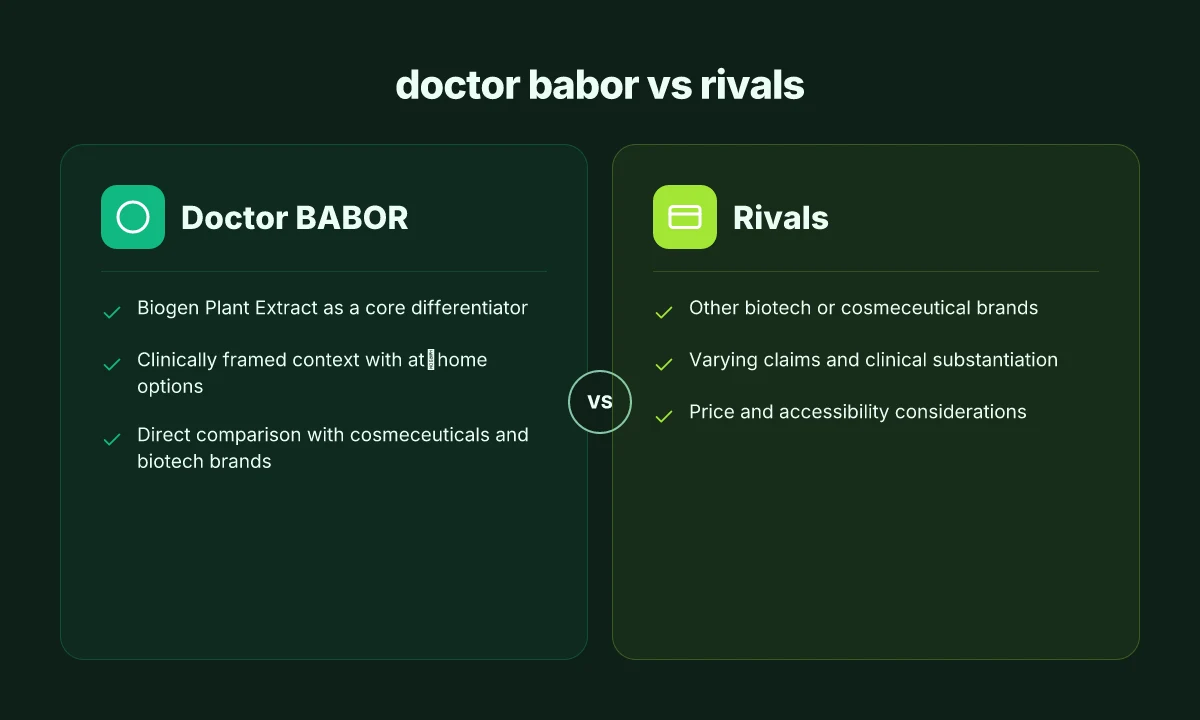
Brand positioning hinges on a tight balance between biotech claims and real-world accessibility. Doctor BABOR sits in a lane with other cosmeceutical players that push science into convenience. I looked at how competitors frame clinical claims, ingredient transparency, and price to shape who can actually access and trust their results. Doctor BABOR differentiates itself through a blend of dermatological science and cosmetic research, but rivals push similar narratives with distinct angles.
Why rivals matter in biotech skincare
The field features brands that emphasize biotechnology, nanotechnology, or plant-extract-driven systems. BABOR often leans on its Biogen Plant Extract and ampoule heritage to justify premium positioning, while competitors spotlight deep clinical dialog or aesthetic medicine clinics as the primary channel. The result is a market where price signals accessibility as much as efficacy signals. Consumers compare not just formulas but the ecosystems around them: clinic partnerships, education programs, and post-purchase support.
Zelixir Biotech and Novalift Cosmeceuticals are frequently cited peers in the space for clinical storytelling and professional-grade results. When you compare offerings, look for where the brand’s claims meet real-world use and where clinics or retailers mediate access. The landscape rewards clarity about active ingredients and the translation of lab results into daily routines.
Where doctor babor aligns and diverges
Doctor BABOR anchors itself in a biotech narrative, yet it remains a cosmetic line aimed at broad consumer use, not just clinical settings. Its emphasis on active ingredients like Biogen Plant Extract and advanced formulations echoes rivals that court aesthetics clinics, while still selling direct-to-consumer. What sets it apart is the heritage of a dedicated skincare science culture and a strong emphasis on the DOCTOR BABOR line as a bridge between dermatology and everyday skincare. Access and pricing patterns follow a premium tier, but the brand frequently frames its clinical claims around target outcomes rather than abstract science alone. Clinical aspiration meets real-world performance in a way that’s accessible to beauty enthusiasts and clinicians alike. The risk for consumers is overestimating efficacy without a clear, independent validation loop beyond marketing channels.
Price, accessibility, and claims you can take to the sink
Price signals influence whether you adopt a biotech skincare line for the long haul. Doctor BABOR sits at a premium, with easy accessibility through brand channels and partner clinics, but you’ll pay more per product than many mass-market options. Accessibility-wise, the DOCTOR BABOR line and its clinic partnerships expand reach, yet not all regions have equal access to trained practitioners or in-clinic treatments. Clinically, the claims ride on dermatological science and cosmetic research, with an emphasis on active ingredients and targeted outcomes rather than generic promises. When you compare, ask how a brand translates its clinical language into tangible daily-use benefits, and whether there are independent reviews or thirds-party validations to corroborate the claims. Price and availability shape your likelihood of sticking with a regimen. That matters because real-world adherence often hinges on whether products feel worth the investment over time. What makes luvme hair twists stand out in 2026 fashion trends
Note: links on this page may earn a commission. The landscape includes several notable rivals and clinic partnerships. Always verify regional availability and clinic offerings before committing to a regimen. In this space, clarity about active ingredients and the pathway from lab to consumer matters as much as the branding itself.
What to try this week to push biotech skincare forward
Babor leans on targeted biomimicry and lab-informed formulations, which means you can expect cleaner ingredient logic and consistent actives in stable concentrations. Babor's approach often stacks peptides with enhancing carriers, aiming for measurable benefits without gimmicks. In 2026, the big question is whether those mechanisms translate to real-use results across diverse skin types, and how transparent the brand remains about process and sourcing. If you’ve tracked rival lines like Dr. Barbara Sturm or Esthederm for biotech cues, you’ll notice the same tension: powerful claims paired with complex ingredient matrices that demand patient use.
The bigger pattern here is that biotech cues in everyday skincare still hinge on formulation clarity and real-world tolerability. You’ll want a cautious onboarding: start with a targeted serum and pair it with a gentler cleanser to minimize irritation risks. The takeaway: this month, test one product that clearly names its peptide or growth-factor-inspired actives, and watch for sustained texture and brightness changes over 4–6 weeks.
If you’re short on time, pick one starter routine from this piece and commit to it. The question to ask is: will this actually fit your daily rhythm and budget, or price you out before you see results?