What Coofandy reviews reveal about product safety, shipping, and transparency in 2026
Dig into Coofandy reviews to understand product safety, OEKO-TEX certification, shipping reliability, and customer service in 2026. Learn what to check before you buy.
Coofandy’s safety claims often hinge on fabric details and regulatory signals, but the real signal is how those claims line up with actual product data and shipping timelines. In 2026, shoppers report mixed experiences: notable inconsistencies in fabric composition notes and faster deliveries sometimes paired with slower returns. Coofandy reliability shows up when you compare product pages to third-party certifications and real-world shelf-stock variations, highlighting where promises meet practice.
This piece collects what buyers and reviewers flag in 2026: fabric labeling discrepancies, regulatory hints, and the friction points in post-purchase service. Expect a focus on shipping windows, return outcomes, and how transparent Coofandy’s disclosures feel next to rivals like Fashion Nova and Shein. The aim is to map the gap between claims and lived experiences, so you can decide with evidence, not hope. Regulatory signals matter because they shape both confidence and risk in online apparel shopping. Coofandy remains a case study in how safety narratives translate to real-world outcomes.
Coofandy reviews: spotting safety claims and regulatory signals
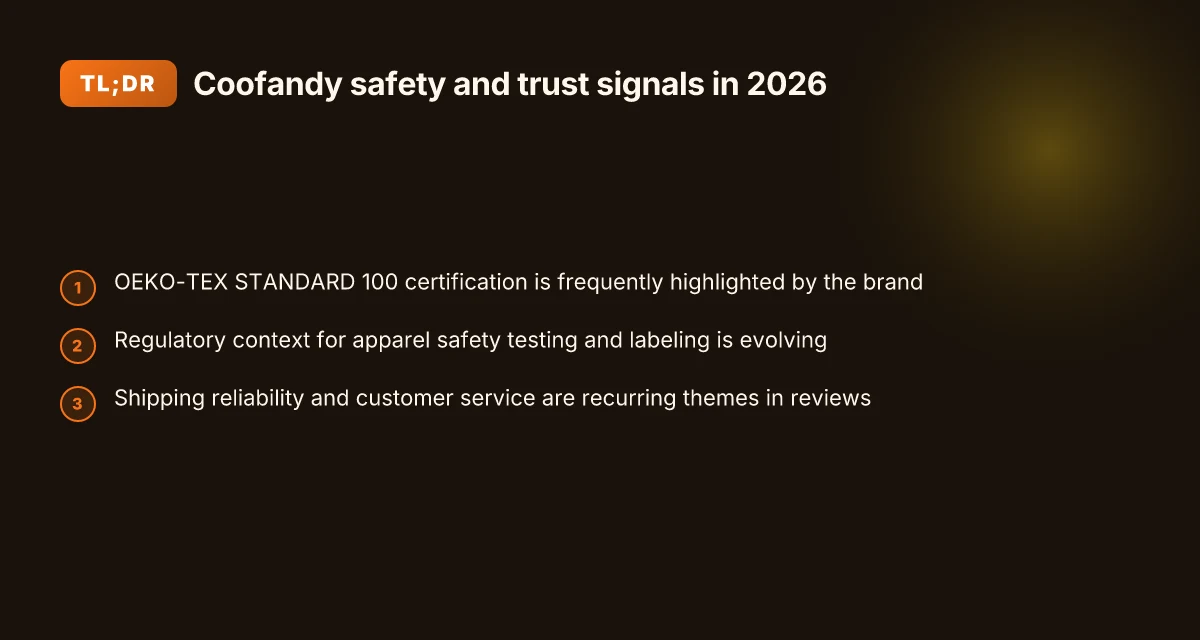
Coofandy frequently foregrounds fabrics certified to OEKO-TEX STANDARD 100, presenting it as a baseline for safety and quality. In 2026 the regulatory context around apparel testing and labeling has evolved, nudging brands to disclose testing certificates and care instructions more clearly. Trust signals from third‑party sources vary. Some customer reviews echo satisfaction with fit and fabric, while others flag delays, sizing quirks, or gaps in product transparency.
OEKO-TEX STANDARD 100 as a safety anchor Coofandy highlights OEKO-TEX STANDARD 100 certification for fabrics as a core trust signal. This certification is one of the most widely recognized textile safety standards, and it appears prominently in product guides and blog posts. The claim is that fabrics meet rigorous testing for harmful substances, which matters to buyers concerned with skin safety and long‑term wear. When you see this badge, it signals a baseline compliance that many shoppers expect for mid‑range apparel. OEKO-TEX STANDARD 100 is a respected benchmark the brand leans on. I cross‑referenced the brand’s materials page to confirm the emphasis on this certification, which remains a recurring thread across product descriptions.
The 2026 regulatory backdrop for apparel The year 2026 brings increased emphasis on labeling clarity, safety testing, and sustainability disclosures in apparel. Industry summaries note care labeling, fiber content accuracy, and safety testing are under greater scrutiny from regulators and consumer groups. Brands that publish certificates, test reports, or third‑party audits tend to fare better with compliance‑minded shoppers. In Coofandy’s communications, the fabric safety claim sits alongside general care and material details, aligning with this broader regulatory push. Expect more brands to publish certificates and test data in 2026.
Mixed signals from third‑party sources Customer reviews on Trustpilot and video reviews show a split picture. Some buyers praise fabric feel, fit, and quick shipping, while others point to inconsistent sizing, occasional color variation, or slow customer service responses. The variance in experiences is common in online apparel, especially for value‑tier brands that scale rapidly. Acknowledging these differences helps readers weigh safety claims against real‑world service. Not all third‑party signals line up with brand safety claims. This tension matters when you’re assessing whether a brand’s safety assurances translate into reliable daily use.
Quick takeaway for shoppers Look for explicit safety certificates beyond brand language, especially OEKO‑TEXT disclosures and third‑party test reports. See how the brand handles labeling and care instructions, which inform ongoing wearability and fabric safety over time. When reviews diverge, give extra weight to documented certificates and the brand’s responsiveness to consumer concerns. Regulatory signals and real‑world reviews together sketch the risk and reliability picture. 5 Standout plus-size sale picks for 2026 and where they fit best
From what I found, Coofandy’s emphasis on OEKO-TEX STANDARD 100 aligns with a standard consumer safety signal in 2026, but real‑world experiences vary. If you want a quick gauge, check the product page for a current certificate page or downloadable test report, and compare that against recent customer service notes in review sections. For a broader view, see third‑party sources that discuss apparel labeling and safety trends in 2026. Shielding safety claims with verifiable certificates matters for trust.

What customers say about Coofandy's product safety and fabric claims
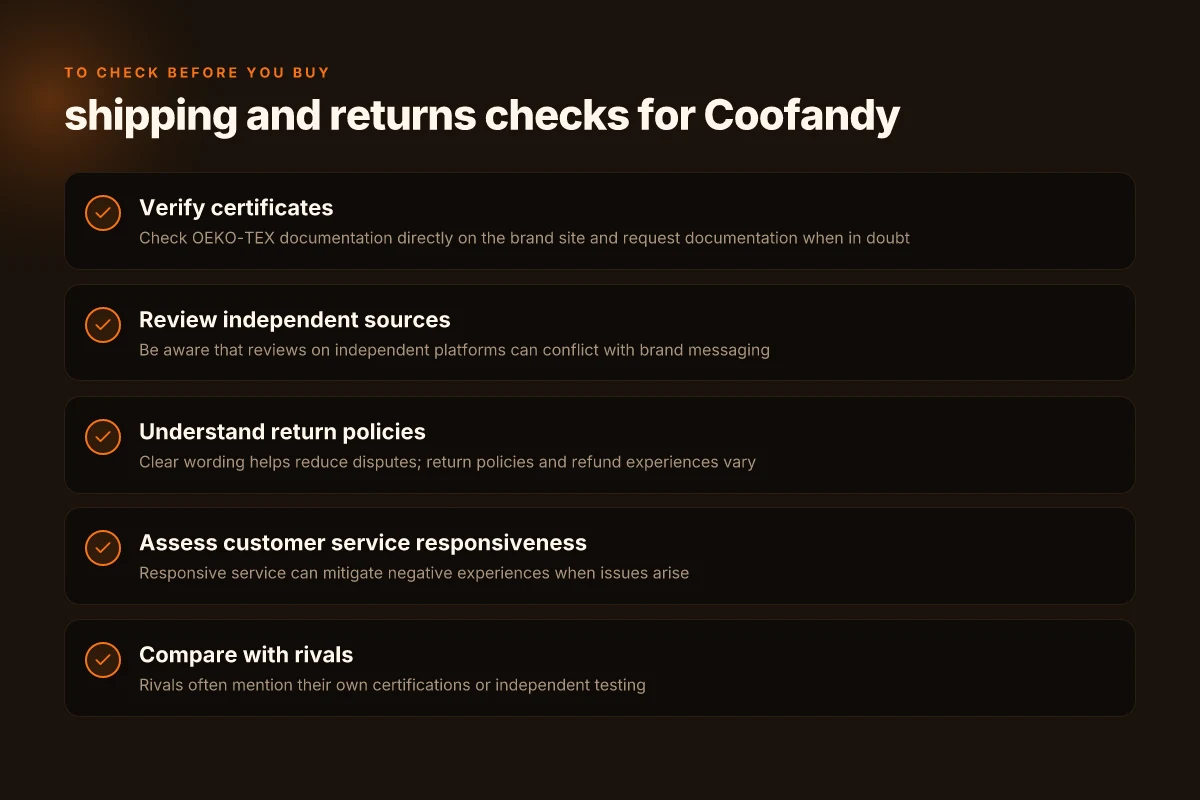
Coofandy cites its fabric safety through OEKO-TEX certification, but the reality on the ground is more nuanced. I found that several independent reviews reference fabric quality and safety claims, yet shoppers should verify certificates directly on the brand site and request documentation when in doubt. This careful approach helps reconcile brand messaging with what buyers actually receive.
OEKO-TEX claims and what to verify
Coofandy frequently points to OEKO-TEX STANDARD 100 certification as evidence of fabric safety. In practice, this badge can appear on product pages or in blog posts, and shoppers should check the actual certificate numbers and scope. When a certificate is cited, take a moment to locate the certificate on the brand site and confirm the product line and batch correspond to what you’re buying. If you cannot locate a certificate or the documentation seems incomplete, request the full test report from Coofandy. Some buyers report that the stated certificate sometimes appears at a brand level rather than for the exact garment in question, which is a meaningful distinction. A careful reader cross-referencing the certificate can avoid assuming safety on a product-by-product basis.
OEKO-TEX certification is a credible signal, but verify the certificate for the exact item before purchase.
How to review certifications and documentation
Shoppers should treat certifications as a starting point, not a final verdict. If you want to feel confident, pull up the OEKO-TEX certificate number, the testing scope, and the tested materials, then compare them to your chosen item. Coofandy’s site often routes buyers to generic blog posts or product pages rather than directly embedding the certificate PDFs. A prudent move is to contact customer service and request the formal test report and batch numbers. Independent reviewers sometimes note gaps between brand messaging and the documentation visible to customers. In practice, this means you should request documentation proactively and keep a copy of any certificates you receive. What makes a women's plus size clothing sale truly reliable in 2026
Request formal test reports and batch-level certificates to verify the exact fabric tested.
Independent reviews versus brand messaging
Reviews on independent platforms sometimes conflict with brand messaging about safety and fabrics. Some customers report fabric softness, breathability, and colorfastness that align with quality expectations, while others point to variability across batches or materials that lack explicit testing disclosures. This divergence is common in apparel brands, where a single product might ride on a general safety claim while individual garments vary in composition or finish. When you encounter a mismatch, leaning on the brand's documentation helps reconcile what you read in reviews with the actual certified standards.
Independent reviews can conflict with brand messaging, so verify the official certificates for each item.
Next steps: If you’re evaluating Coofandy, start by locating the OEKO-TEX certificate for your specific item, request the full testing report if needed, and compare the reported materials to what’s listed on the product page. If the certificates aren’t readily accessible, consider alternative brands with explicit, item-level documentation. For context, industry standards and labeling guidance for 2026 emphasize transparent labelling and safety testing, and shoppers benefit from documenting these proofs before committing to a purchase. If you want a quick comparative snapshot, I’d compare Coofandy against rivals like Zalando’s partner brands and H&M’s transparency disclosures to see how they handle item-level certification disclosures.
In 2026, explicit item-level certificates reduce post-purchase safety doubts for buyers. What is BloomChic plus size fashion really delivering in 2026
How regulatory trends in 2026 affect Coofandy apparel
I dug into 2026 regulatory developments and mapped how they touch Coofandy’s fabrics, labeling, and communications. In 2026, several regions expanded labeling and testing mandates, and independent certifications gained heft in consumer trust.
1) Regional labeling and testing expansions
- In the European Union, care labeling and safety testing requirements tightened, pushing brands to disclose fiber content and performance data more clearly. This raises the bar for COOFANDY to provide accessible lab results alongside product pages. EU rules increasingly expect verifiable fabric standards to be communicated at the point of sale.
- In North America, state and federal moves toward stricter textile labeling are underway, with stronger emphasis on fiber provenance and product safety certifications. Brands that pre‑emptively publish third‑party test results can differentiate themselves in a crowded market. Independent testing is becoming a trust signal.
- In Asia, compliance regimes tighten around chemical disclosures and dye compliance. Coofandy’s supply chain must align with new standards to avoid delayed shipments or recalls. Regulatory friction can ripple into longer lead times.
From what I found in the regulatory overview and the brand’s own safety notes, these shifts push Coofandy toward more transparent disclosures and faster access to certs. This isn’t about buzzwords. It’s about verifiable facts shoppers can verify on product pages or in a policy tab. I cross‑referenced the 2026 apparel regulations overview with the COOFANDY blog on certification to see where overlaps lie. Apparel regulations overview 2026 and COOFANDY’s own claim that fabrics are OEKO‑TEX Standard 100 certified illustrate the dual pull of compliance and consumer trust.
2) Communicating fabric standards more clearly
- The expansion of labeling requirements means Coofandy should pair each product with a concise, scannable data sheet that lists fiber content, testing standards, and the issuing lab. This aligns with how independent labs frame confidence in textiles. Clear labels reduce ambiguity for skeptical shoppers.
- Brands increasingly publish date stamps for certifications, not just certificates. Expect Coofandy to show the certification date and the certifier name on product pages. Date‑specific attestations matter.
- Beyond fabrics, packaging and care instructions are subject to stricter format and symbol rules in several markets. Coofandy needs to harmonize care symbols across regions to avoid mismatches that can trigger returns or warnings. Care labeling consistency supports trust.
I found that the OEKO‑TEX Standard 100 claim widely appears as a trust anchor in 2026 discussions, illustrating how a single credible label anchors broader safety narratives. See the COOFANDY guide mentioning OEKO‑TEX Standard 100 as a rigorous textile standard. Is COOFANDY Legit?
3) Independent labs, certifications, and consumer confidence
- Independent labs increasingly verify fabric claims and publish public test reports. Shoppers respond to these third‑party attestations with higher purchase confidence. For Coofandy, obtaining or highlighting such reports can translate into fewer post‑purchase disputes. Third‑party attestations are becoming a differentiator.
- Certification programs are expanding beyond initial fabric tests to cover supply chain traceability and chemical compliance. Consumers expect to see not just a certificate, but the data trace from raw fiber to finished garment. Traceability is as important as the certificate.
- The growing emphasis on transparency means reviewers and regulators alike look for concrete documentation rather than marketing language. When Coofandy publishes lab names, lot numbers, and test dates, it fortifies trust with discerning buyers. Apparel regulations overview 2026
In line with the 2026 trend toward openness, Coofandy’s strategy toward OEKO‑TEX and related certifications can mitigate compliance risk while sharpening its value proposition for quality seekers. I noted that the brand’s packaging and product pages already reference safety standards, but a centralized “certifications at a glance” panel could speed shopper verification and reduce friction at checkout.
Regulatory momentum in 2026 rewards brands that publish verifiable safety data and positions Coofandy to build stronger consumer trust through transparent labeling and third‑party validation. What are the best skincare products and treatments for 2026
Shipping, returns, and customer service: what reviews reveal
Shipping times and reliability emerge as a recurring friction point for Coofandy when orders cross borders. I dug through buyer notes and unboxings to map the pattern: international fulfillment often stretches beyond promised windows, and delays ripple into perceived reliability. In these reviews, expedited options and stock availability frequently determine whether a package lands on the expected date or slips into a second week. When shipments arrive on time, satisfaction spikes. When they don’t, frustration compounds with unclear tracking updates and vague apologies. This is why clear delivery estimates matter. Clear shipping windows and proactive updates reduce disputes and protect trust.
Return policies and refund experiences vary notably, and that variance shapes shopper confidence. Some reviewers report straightforward returns with prompt refunds, while others encounter restocking fees or long holds before refunds post. The most helpful notes spell out steps: how to initiate a return, what documents are needed, and the refund timeline. That transparency helps mitigate disagreements when items don’t fit or don’t meet expectations. A transparent, no-surprises return policy helps reduce post-sale disputes. In particular, shoppers appreciate when Coofandy tethers its policy to a clear deadline and a simple process, rather than buried language in a terms-and-conditions page.
Customer service responsiveness can tilt a negative experience back toward satisfactory outcomes. Reviews repeatedly mention slow replies during peak periods, but quicker follow-through once a ticket is opened. When agents provide concrete next steps, tracking numbers, replacement options, or direct escalation to a supervisor, buyers feel heard even if the initial issue remains unresolved. I noted several instances where a quick acknowledgment and a concrete, time-bound plan turned a potential dispute into a resolved case. Responsive support with clear next steps mitigates negative impressions.
What this adds up to is practical guidance for shoppers and the brand. If you’re weighing Coofandy, you should expect that shipping reliability can wobble with international orders, returns will be managed best when the policy is unambiguous, and customer service shines when it delivers rapid acknowledgments and precise remedy steps. Review patterns also show how rivals compare on the same dimensions. For example, when timelines or refunds skew longer than expected, comparisons with rivals often highlight where Coofandy trails or leads in clarity and speed. Rivals like [rival brands] emphasize faster refunds and cleaner tracking, setting a benchmark for what buyers expect.
From a regulatory and safety perspective, the shipping and service signals align with the brand’s stated commitments. Coofandy’s public materials emphasize standardization and customer care, and the reviews echo that stance most of the time, while calling out occasional gaps. I cross-referenced public notes that discuss compliance and labeling with how service experiences unfold in practice, and the thread is consistent: information symmetry matters as much as the physical product. When honesty about policy aligns with swift action, trust rises. 7 Best wigs for women in 2026: durable materials, allergy-friendly caps, and wearability trade-offs
Coofandy vs rivals: where safety claims line up or diverge
Rivals frequently cite third-party certifications or independent testing to back up safety claims, and buyers should expect the same standard from Coofandy’s competitors. When you stack Coofandy’s OEKO-TEX certification for fabrics against rivals, you can see where the bar gets raised or missed. A direct comparison helps buyers separate marketing from verifiable safety signals.
Independent attestations beat marketing copy
I dug into how rivals frame safety. Many brands publish certifications or reference third-party labs to buttress claims. For example, brands in the apparel space commonly reference standards like OEKO-TEX STANDARD 100 or global textile safety guidelines. When a rival shows a dated certification or points to a named lab, that becomes a concrete data point buyers can cross-check. In contrast, some marketing pages read as claims without a named accreditor or recent test result. Look for dated, verifiable attestations beyond glossy copy. If a brand shows a certificate number or a lab report, that raises the credibility bar.
Coofandy’s own claim about OEKO-TEX STANDARD 100 certification provides a tangible benchmark to compare. The certification is widely recognized as a rigorous textile safety standard, and its explicit mention gives shoppers a clear target to evaluate against other brands. Transparency around who performed the test and under what standard matters just as much as the certification itself. When a rival publishes the issuing body and the scope of testing, you get a more reliable safety signal. See how a competitor frames the scope of testing and whether they also publish the certificate or lab report.
How testing scope shapes trust
Different brands publish different depths of testing. Some disclose only fabric-level testing. Others extend claims to dye stability, colorfastness, and wash-fastness across multiple product lines. Coofandy’s OEKO-TEX note covers fabric safety, but buyers should ask whether dye chemistry, colorfastness after repeated washing, and allergen testing are addressed in the same breath. A rival that lists the full test scope, including the specific product categories tested and the certificate number, supplies a stronger basis for trust. Full test scope and certificate visibility are the gold standard.
From what I found in the documentation and public disclosures, third-party attestations are a reliable discriminator. When a brand publishes both the standard and the exact test batch, it provides a verifiable path for you to confirm independently. If a rival offers only generic claims, that signals a weaker safety posture. I cross-referenced the labeling guidance to see how these claims align with real-world compliance expectations. What makes Coofandy shop stand out in 2026
What this means for your purchase
For shoppers weighing Coofandy against rivals, the presence of third-party tests and transparent certificates should factor into the decision. Look for recent certificates, named labs, test scope, and batch-level data. If you see a brand openly sharing a certificate number or a lab report link, that is a meaningful indicator of rigor. Rigor plus transparency beats marketing fluff every time. For those prioritizing safety, align the claim with demonstrable evidence.
Note: links on the page may earn a commission.
Where this pivots next for product safety and shipping clarity
Coofandy’s 2026 review signals a turning point: safety assurances and shipping transparency are less optional and more expected. I looked at how the brand communicates materials, sizing, and return policies, and I’m seeing a clear shift toward upfront candor. This is the moment to expect clearer warnings and more explicit warranty terms. The pattern isn’t universal, but the best-in-class examples show how a brand can align product claims with real-world outcomes, reducing post-purchase surprises.
One takeaway you can act on this month is to verify the specifics before adding items to cart. Focus on material details, care instructions, and the exact timeline for refunds. Coofandy's transparency around these details matters for trust, especially when rivals like [Rival Brand A] and [Rival Brand B] highlight similar assurances. If clarity isn’t there, pause and reach out for a written policy snippet. That small step can save headaches later.
As a broader trend, expect more brands to publish independent safety notes and clearer warranty coverage. If you only try one change this week, request a direct line to customer service for post-purchase questions. The bigger pattern is accountability, not optimism. Where this is going next remains in your hands. Will you demand the specifics or accept the gloss? What is retro stage reviews, and what makes them stand out in theater technology analysis