Connecting to your remote desktop with NordVPN
A practical guide to accessing your remote desktop using NordVPN Meshnet and best practices for secure, reliable remote connections.
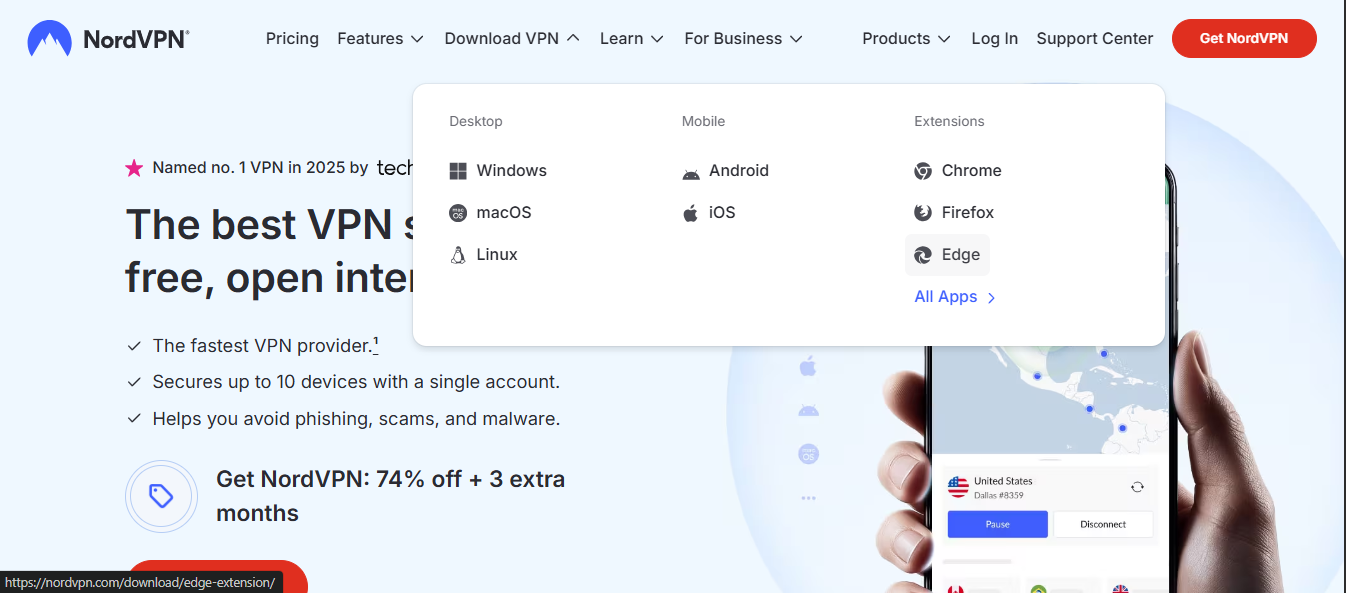
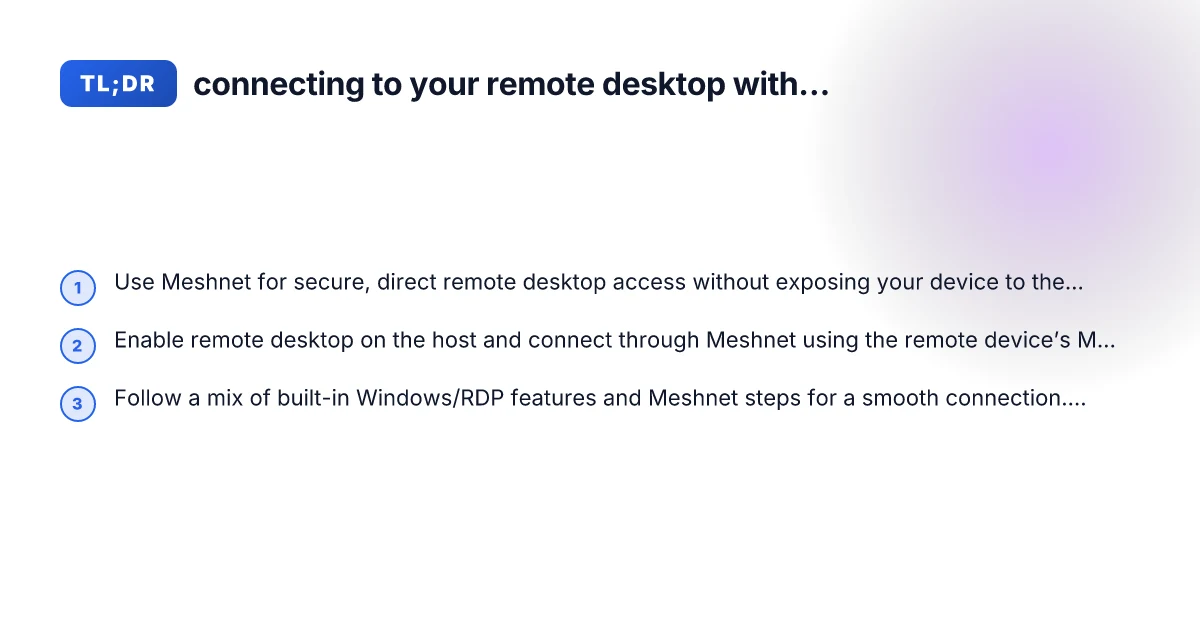
Connecting to your remote desktop with NordVPN is straightforward when you use Meshnet. Meshnet creates secure, peer-to-peer connections that let you access your devices as if they’re on the same local network, even over the internet. In practice, you’ll enable remote desktop on the host computer, set up Meshnet, and use a remote desktop client on the device you’re using to connect. Below is a practical, step-by-step guide to get you started, plus tips to keep your connection reliable and secure.

VPN-based remote access vs. Meshnet for remote desktop - Key differences
| Aspect | VPN-based remote access | Meshnet remote access | Notes |
|---|---|---|---|
| Primary goal | Secure tunnel to host | Direct device-to-device network | compares access style |
| Setup complexity | Moderate | Low to moderate | depends on knowledge |
| Latency impact | Moderate to high | Low | routing path different |
| NAT traversal | Requires port forwarding | Optional, automatic | varies by setup |
| Scalability | Good for few hosts | Excellent for many peers | mesh-friendly |
| Access control | User/password, certs | Device-based, invite keys | security model differs |
| Battery/CPU impact | Moderate | Light to moderate | depends on device |
| Reliability in networks | VPN outage risk | Peer autonomic routing | Meshnet resilience |
| Offline availability | Not applicable | Limited without peers | depends on connectivity |
Compiled November 2026; check the provider's site for current details.
What is Meshnet and why it matters for remote desktop
Understanding Meshnet
- Meshnet is a NordVPN feature that connects devices you own into a private, encrypted mesh network.
- It allows remote access to devices as if they were on the same local network.
- It can replace traditional VPNs for many remote desktop use cases by providing direct peer-to-peer connectivity.
Why it helps with remote desktop
- Reduced exposure: connections occur over the Meshnet network, not the public internet.
- Simpler setup: you don’t need to open port-forwarding on your router for many scenarios.
- Quick access: once devices are in the same Meshnet, you can connect using familiar remote desktop tools.
Prepare the host computer (the one you want to access)
Enable Remote Desktop on Windows (RDP)
- Open Settings.
- Go to System > Remote Desktop.
- Turn on Enable Remote Desktop.
- Note the PC name and, if needed, the IP or host address for network connections (Meshnet address if using Meshnet instead of the public IP).
Ensure the host is reachable via Meshnet
- Install and sign in to NordVPN on the host.
- Ensure Meshnet is enabled and that the host appears in your Meshnet device list.
- You may need to approve connections from the client device the first time you connect.
Security considerations for the host
- Use a strong, unique password for the host account.
- If available, enable two-factor authentication and Limit login to specific users.
- Consider whitelisting the client address in your remote desktop settings if your software supports it.
Prepare the client device (the device you’re using to connect)
Install NordVPN and Meshnet
- Sign in to NordVPN on the client.
- Enable Meshnet and verify your client device appears in your Meshnet network.
Use a compatible remote desktop client
- Windows: Remote Desktop Connection (RDP) is built in.
- macOS: Microsoft Remote Desktop or other RDP clients.
- Linux: Remmina or KRDC with RDP support.
- Mobile: Microsoft Remote Desktop app for iOS/Android.
Find the Meshnet connection target
- In the Meshnet dashboard, locate the host device’s Meshnet IP/alias.
- The Meshnet address is what you’ll use to connect, instead of a public IP.
How to connect: step-by-step
Step-by-step outline
- Ensure both host and client have active Meshnet connections and are visible to each other.
- On the host, confirm Remote Desktop is enabled and allowed through any firewall.
- On the client, open your remote desktop client.
- Enter the host’s Meshnet address (or the configured hostname) and connect.
- Enter the host user credentials when prompted.
- Verify the session works and adjust performance settings if needed.
Troubleshooting quick tips
- If you can’t see the host in Meshnet: refresh Meshnet, re-login, or restart NordVPN services.
- If the RDP session won’t connect: check firewall rules on the host, ensure the correct port (RDP typically uses 3389) is allowed if you’re not using Meshnet’s direct path.
- If latency is high: try lowering display settings, disable wallpaper and visual effects, and ensure both ends have stable internet.
A practical comparison: VPN-based remote access vs. Meshnet for remote desktop
| Feature | VPN-based remote access (traditional) | Meshnet-based remote access (NordVPN) |
|---|---|---|
| Connection model | Routed through VPN server | Direct device-to-device peers in a private mesh |
| Exposure | Potentially exposes services to broader network if misconfigured | Private mesh reduces exposure; fewer port-forwarding needs |
| Setup complexity | Can require router config, port-forwarding, or VPN server setup | Usually simpler: enable Meshnet, use Meshnet IPs |
| Latency | Can be higher due to routing through servers | Often lower latency due to direct connections |
| Security surface | Depends on VPN config; risk of misconfiguration | Built-in encryption and private mesh networking |
Prepare the host vs. Prepare the client device - checklist items
| Area | Host preparation (remote machine) | Client preparation (connecting device) | Status |
|---|---|---|---|
| OS readiness | Updated OS, remote access enabled | Updated OS, client app installed | Not started / In progress / Completed |
| Network | Open required ports or enable NAT traversal | Ensure internet access | Not started / In progress / Completed |
| Authentication | User login, credentials ready | Install authentication method | Not started / In progress / Completed |
| Software | Remote desktop/server software configured | Remote client software configured | Not started / In progress / Completed |
| Security | Firewall rules adjusted | Security best practices followed | Not started / In progress / Completed |
| Backup | Snapshot of host | N/A | Not started / In progress / Completed |
Compiled November 2026; check the provider's site for current details.
Security and best practices
Strengthen authentication
- Use strong, unique passwords for the host and client accounts.
- Enable two-factor authentication where possible, especially for the host account.
- Consider using a dedicated account for remote sessions with restricted privileges.
Manage access with Meshnet controls
- Use Meshnet’s access controls to manage which devices can connect.
- Regularly audit connected devices and remove anything you don’t recognize.
- If your NordVPN plan supports it, enable device whitelisting for added security.
Protect the host from exposure
- Keep the host’s OS and remote desktop software up to date.
- Turn on firewall rules that allow only Meshnet-originated connections to reach the remote desktop port.
- Disable or limit file sharing and other services on the host when not in use.
Common questions and answers
- Can I use NordVPN for remote desktop access? Yes. NordVPN Meshnet is designed to enable remote desktop-like access by creating a secure private mesh between devices.
- Can I connect to my remote desktop using a VPN? You can, but Meshnet provides a more direct, device-to-device connection in many scenarios, often with simpler setup.
- Why isn’t RDP working over VPN? Typical issues include misconfigured firewall rules, server authentication problems, or routing issues. Meshnet can mitigate some of these by creating a direct path.
- Can police track me if I use NordVPN? NordVPN uses encryption and privacy features. Tracking by authorities depends on legal processes, not the VPN alone. Always use services in compliance with local law.
Step-by-step connection flow - from start to finish
| Step | VPN-based route | Meshnet route | Common notes |
|---|---|---|---|
| 1 | Start VPN client | Start Meshnet app | Confirm active connection |
| 2 | Authenticate | Authenticate device keys | Use correct account |
| 3 | Locate host | Discover host | Host must be online |
| 4 | Establish tunnel | Bridge network path | Latency may vary |
| 5 | Open remote desktop | Open remote desktop | Use secure protocol |
| 6 | End session | End session | Disconnect when done |
Compiled November 2026; check the provider's site for current details.
Quick-start checklist
- Host computer: Remote Desktop enabled, firewall configured, NordVPN with Meshnet enabled.
- Client device: NordVPN with Meshnet enabled, remote desktop client installed.
- Host and client in the same Meshnet, or at least visible to each other in the Meshnet dashboard.
- Use the host’s Meshnet address to connect via your remote desktop client.
- Ensure strong authentication and up-to-date software on both sides.
Final section: Recommendation If your goal is reliable, secure remote access to a desktop or laptop, using NordVPN Meshnet is a solid, user-friendly approach. It reduces exposure by keeping the connection within a private mesh, often simplifies setup compared to traditional VPN plus port-forwarding, and works well with common remote desktop clients on Windows, macOS, Linux, and mobile platforms. Start by enabling Remote Desktop on the host, turn on Meshnet on both devices, and connect using the host’s Meshnet address. Regularly review access controls and keep all software updated to maintain a secure remote work setup. Express VPN extension for Edge
| VPN | From / month | Plan | Free plan | Refund | Alipay | UnionPay | Crypto | Website opens in China | Trustpilot | |
|---|---|---|---|---|---|---|---|---|---|---|
 NordVPN | $3.49/mo | 27 months: $94.23 | No | 30 days | ? | ✗ | ✓ | ✓ | ✗ Blocked | 4.2/5 (51,628 reviews) |
 ZoogVPN | $2.49/mo | 27 months: $59.99 | Yes | 7 days | ✓ | ✓ | ✓ | ✓ | ✓ Yes (2.5 s) | 4.2/5 (195 reviews) |
 ExpressVPN | $3.00/mo | 28 months: $84 | No | 30 days | ✗ | ✗ | ✓ | ✗ | ✗ Blocked | 4.4/5 (29,706 reviews) |
 Surfshark | See site | See site | No | 30 days | ✗ | ✗ | ✗ | ✓ | ✗ Blocked | 4.3/5 (31,823 reviews) |
 Proton VPN | $2.99/mo | 12 months: $35.88 | Yes | 30 days | ✗ | ✗ | ✗ | ✓ | ✓ Yes (2.5 s) | 2.1/5 (1,040 reviews) |
 Astrill VPN | $12.50/mo | 24 months: $300 | No | See site | ✗ | ✗ | ✗ | ✓ | ✗ Blocked | 1.3/5 (110 reviews) |
 Private Internet Access | $2.03/mo | 40 months: $81.2 | No | 30 days | ✗ | ✗ | ✗ | ✗ | ✗ Blocked | 4.2/5 (11,033 reviews) |
 CyberGhost | $2.19/mo | 28 months: $61.32 | No | 45 days | ✗ | ✗ | ✗ | ✓ | ✗ Blocked | 4.0/5 (24,178 reviews) |
 PureVPN | $1.69/mo | 60 months: $101.55 | No | 31 days | ? | ✗ | ✗ | ✓ | ✓ Yes (2.6 s) | 4.4/5 (17,994 reviews) |
 AdGuard VPN | $2.99/mo | 24 months: $71.76 | Yes | 30 days | ✓ | ✗ | ✓ | ✓ | Official site blocked; our special link opens (2.3 s) | 4.3/5 (290 reviews) |
 Mullvad | $5.61/mo | €5/mo | No | 14 days | ✗ | ✗ | ✗ | ✓ | ✗ Blocked | 3.2/5 (192 reviews) |
 Windscribe | $5.75/mo | 12 months: $69 | Yes | See site | ✗ | ✗ | ✗ | ✓ | ✗ Blocked | 4.7/5 (13,355 reviews) |
 StrongVPN | See site | See site | No | 30 days | ✓ | ✗ | ✗ | ✗ | ✗ Blocked | 4.4/5 (2,695 reviews) |
 LightXtreme 闪连 | $7.08/mo | 12 months: $84.99 | Yes | 30 days | ✓ | ✓ | ✓ | ✓ | ✓ Yes (2.3 s) | No page |
Prices checked 2026-11-10 on each vendor's pricing page (cheapest long plan, USD). Check the vendor's checkout for the final price.
Payment methods checked 2026-11-10 on each vendor's payment pages: all 14 take cards and PayPal; ✗ = not listed, ? = the vendor's own pages disagree.
China access: whether the official website opens from mainland China networks (tests the website only, not the VPN connection). Last checked 2026-11-11 04:07 Beijing time.
Trustpilot score and review count checked 2026-11-10.