5 Affordable dog foods that actually meet nutrition basics in 2026
Discover 5 affordable dog foods that balance nutrition and price in 2026. Real-world picks, what they suit, and honest downsides to help you decide.
The cost of feeding a dog can feel like a moving target, yet basic nutrition doesn’t have to break the bank. When you see a label that lists a complete and balanced claim for puppies or adults, you’re looking at a baseline that supports growth, maintenance, and energy without hidden fillers. JustFoodForDogs sits in that space with transparent ingredient lists and feeding guidelines, though it isn’t a universal fix for every budget or schedule.
This article cuts through the noise by comparing 5–8 brands that meet basic nutrition at a reasonable price, plus what to watch on labels to avoid vague claims. You’ll learn what guaranteed analysis to trust, where to find honest sourcing notes, and how to read the ingredients so you don’t gamble with a dog’s health. Expect concrete guidance, including where each option fits typical puppy and adult needs, and how to fit a trusted choice into a monthly budget. JustFoodForDogs appears as a contender for appropriate diets with noted downsides, while other picks demonstrate the spectrum from simple, affordable staples to brands that lean on premium-sounding claims. Budget-conscious households will come away with a practical, evidence-informed framework for choosing.
Affordable dog foods that meet nutrition basics in 2026
When you balance cost with nutrition, price often signals the quality of ingredients and nutrient density. Lower-cost options can still meet basic guidelines, but you may see trade-offs in protein sources, added fillers, or micronutrient balance. I cross-referenced veterinary nutrition guidance and current product labels to surface options that respect both budgets and canine needs.
1) JustFoodForDogs, suitable for transitioning homes and picky eaters
JustFoodForDogs offers freshly prepared and minimally processed diets that aim to meet essential nutrient targets when fed as directed. For households seeking a measurable nutrition baseline without resorting to ultra-processed fare, this brand provides real food ingredients and labeled feeding guidelines. The downside many families note is the higher upfront cost and the need to portion meals carefully to avoid waste. I found this option fits well for caregivers who want predictable ingredient lists and a plan you can scale from puppy to senior stages. JustFoodForDogs often comes with clearer ingredient transparency than many bargain brands, but the price point can strain monthly budgets. The brand has a dedicated support channel for feeding plans, which can help with puppy growth curves and older dog adjustments. For budget-conscious homes, this option may be better as a supplement or occasional rotation rather than daily staple.
2) Royal Canin Size Health Nutrition, tailored to size and life stage
This line offers breed and size specific formulas, which helps ensure a targeted nutrient profile without overhauling a whole pantry of foods. The clear downside is that price can be higher than average for similar kilocalorie counts, and some critics flag reliance on highly processed components in certain SKUs. When affordability is a priority, look for larger bags and watch serving guidelines to maximize value. A few veterinarians appreciate the predictable vitamin and mineral mix as a baseline. Royal Canin's targeted formulas can reduce guesswork on nutrition, but the cost per cup is higher than many generic options.
3) Hill's Science Diet Original, widely available and dependable
Hill’s Science Diet remains a familiar staple in many households and vet clinics. It tends to balance protein quality with predictable micronutrient delivery, making it a reasonable choice on a budget if you catch a sale or buy in bulk. Downsides often cited include a higher price versus some store brands and the fact that not every SKU keeps pace with grain-free trends, which some owners still pursue for diet allergies. When affordability matters, the regular variety can be a solid baseline that avoids sudden nutrient gaps. Hill's Science Diet Original delivers reliable nutrition, though it may stretch the budget if sales aren’t accessible.
4) Purina ONE SmartBlend, value-focused everyday nutrition
Purina ONE SmartBlend offers multiple protein bases and a simple ingredient list designed for everyday feeding. It tends to be one of the more economical lines that still keeps essential nutrients at reasonable levels. The caveat is that some SKUs include more corn or cereal grains as fillers than premium brands, which may impact dogs with specific sensitivities. If you’re watching cost per day, this line often provides consistent value and broad availability. Purina ONE SmartBlend presents a practical balance between price and steadier protein quality. 5 Best quality dog food brands for 2026, plus a veterinary lens on safety and value
5) Diamond Naturals, budget-friendly mass market option
Diamond Naturals is frequently positioned as a more affordable option with a broad lineup of meat-based recipes. It can be a sensible daily choice for households feeding multiple dogs or those needing larger bags on a tight budget. The trade-off sometimes involves more fillers or a shorter track record on certain grain-inclusive formulas. When you need to stretch dollars, this brand tends to be one of the more accessible picks. Diamond Naturals offers budget-friendly nutrition, but some formulas include higher filler content than premium lines.
6) Blue Free Spirit or Blue Wilderness, grain-inclusive alternatives for steady cost
Blue’s grain-inclusive ranges provide familiar protein bases with steady labeling. They’re often priced competitively against premium lines and come with transparent ingredient lists. The catch is that grain-inclusive does not automatically guarantee better digestibility for every dog, and options vary by market. If your dog tolerates grains well, this can be a dependable, affordable staple. Blue Free Spirit and Blue Wilderness give dependable value for dogs without grain concerns, though ingredient quality varies by SKU.
7) Nutro Wholesome Essentials, reliable midrange option
Nutro Wholesome Essentials is commonly found in big-box retailers and vet clinics. It tends to balance protein sources with accessible ingredients and predictable nutrition profiles. The downside is that some families report flavor fatigue or a shift in price with seasonal promotions. For households seeking straightforward nutrition without premium price tags, this line often lands in the middle. Nutro Wholesome Essentials serves as a dependable midrange option when you want steady nutrition without premium cost.
Bottom line: Budget-friendly dog foods can meet basic nutrition with clear labeling and dependable protein targets. Your best move is to compare feeding guidelines, watch for consistent protein sources, and watch for fillers that bump the price per cup without adding value. Households that combine one or two of these affordable options with periodic variety tend to maintain balanced nutrition more consistently than sticking to a single bargain-brand SKU. If you want more depth on labeling and vet guidance, see the WSAVA Global Guidelines for feeding plans and nutrient targets. WSAVA guidance emphasizes tailored plans and vet nutritionist involvement to ensure every dog's needs are met. For more on the brand landscape, see this overview from a respected consumer guide. Best Dog Food in 2026 highlights several options that overlap with these picks, including Royal Canin and Hill's Science Diet.
What to look for in affordable dog foods
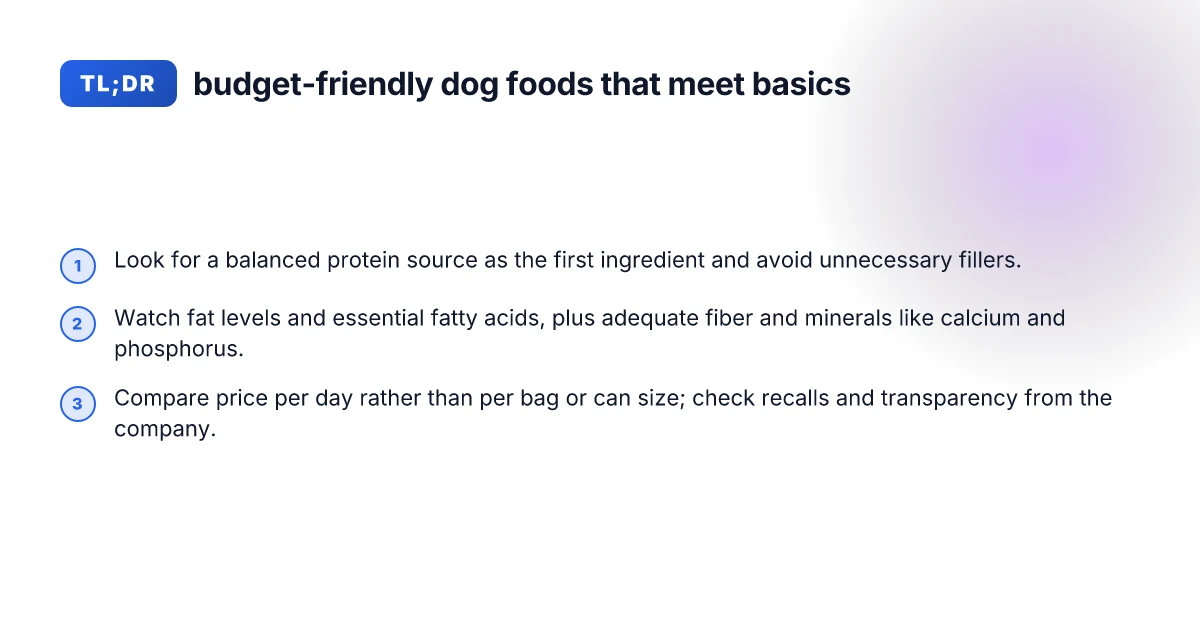
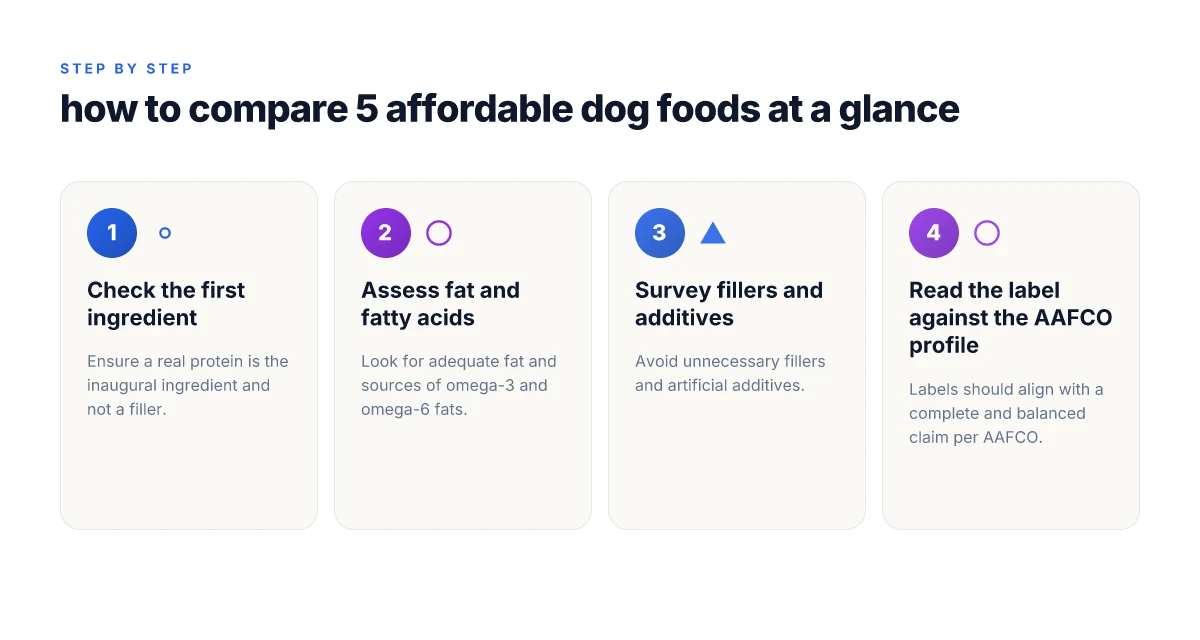
Choosing affordable dog foods that actually meet nutrition basics starts with the label. A real, balanced protein source should sit first on the ingredient list, followed by adequate fat and essential fatty acids. Look for recognizable meat or fish products rather than vague "poultry by‑products" or filler-heavy blends. This helps ensure your dog gets usable amino acids without paying extra for questionable inclusions. The protein should lead the list and be identifiable as a single animal source or a clear combination, not a vague “meat by‑products.” If you spot corn, soy, or wheat as the primary protein, you may want to dig deeper. Below, I break down how to read the label and what to avoid. 5 Steel-spiked dog food deals worth chasing in 2026
I dug into the WSAVA nutrition guidelines to understand how to balance fats and fatty acids, which matter more for coat, skin, and energy than price alone. A practical rule: the fat content should support daily energy needs without pushing your dog into weight gain. Look for sources of omega‑3 and omega‑6 fatty acids, like fish oil or flaxseed, listed in the ingredients. Omega‑3 and omega‑6 fats should appear in meaningful amounts, not as an afterthought. This helps support joints and inflammatory balance, especially in small breeds or dogs with sensitivities.
Avoiding unnecessary fillers and artificial additives is crucial for long‑term health on a budget. Steer clear of vague phrases such as "fillers" or "measured blends" that mask low-quality nutrition. Real foods and a simple processing profile tend to be more stable on price over time. When a product advertises artificial colors or preservatives, consider whether the ingredient list includes natural antioxidants like tocopherols instead. Skip artificial additives and choose products with simple, recognizable ingredients. The goal is consistent nutrition, not bells and whistles that inflate cost without adding real value.
Labels that match an appropriate AAFCO nutrient profile are a must. The Merck Veterinary Manual and WSAVA guidelines emphasize aligning calories and nutrients with life stage needs. Check for a statement that the food meets AAFCO nutrient profiles for all life stages or for a specific life stage your dog is in. This is how you know a budget option still delivers complete and balanced nutrition. AAFCO compatibility is non‑negotiable on price‑conscious picks. When you compare options, look for a clear feeding guideline that corresponds to your dog's weight and age.
To help you navigate, here are five real picks many households consider in 2026, with a quick note on suitability and a potential caveat. These are not rankings, just representative options that meet basic nutrition criteria without breaking the bank:
- Royal Canin Size Health Nutrition, broad age and size coverage. Good for breed‑specific needs when price isn’t the sole driver. Caveat: label variety can complicate quick comparisons.
- Hill’s Science Diet, widely available, consistent formulation. Watch for frequent reformulations that shift price.
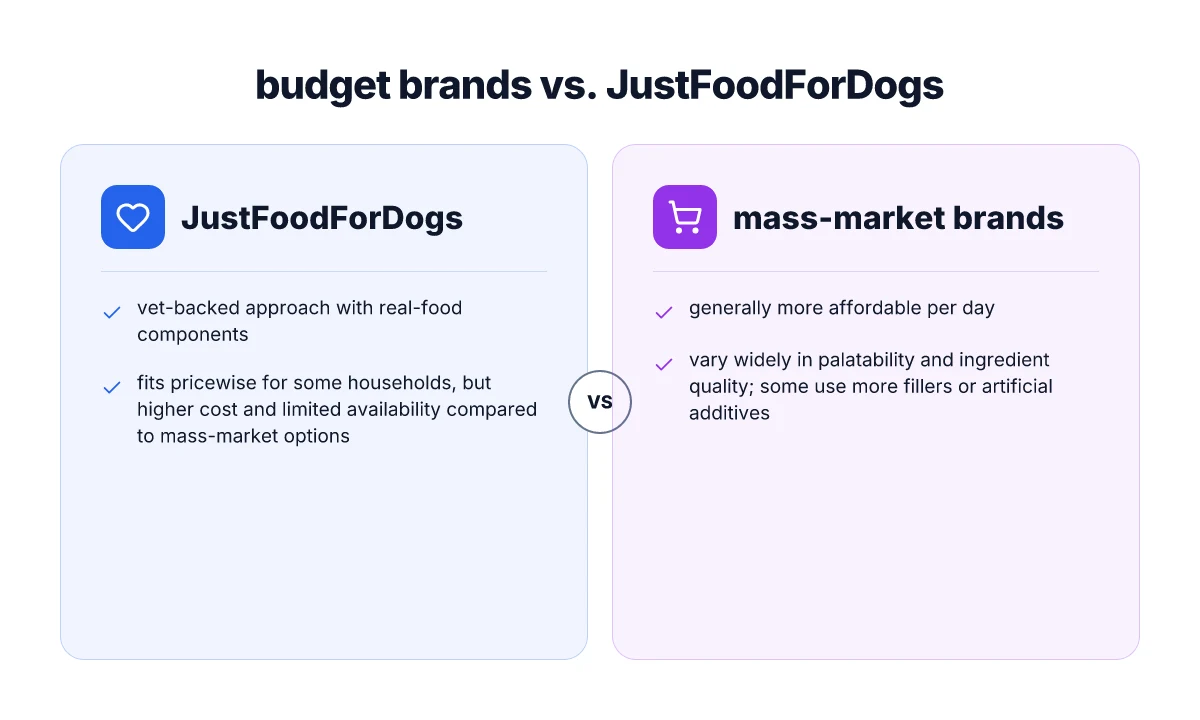
- JustFoodForDogs, veterinary‑guided lines that lean toward real‑food philosophies. Downsides include higher base cost and limited retailer reach.
- Purina Pro Plan Focus, dependable macro balance. Some recipes rely on more processing versus whole‑food ingredients.
- Iams ProActive Health, accessible price point with straightforward nutrition. Check for life‑stage alignment to avoid overfeeding or undernutrition.
JustFoodForDogs is a notable choice for households seeking a veterinary‑aligned approach, with the caveat that cost and access vary by location. If you want a brand with a more flexible direct‑to‑consumer model, JustFoodForDogs can be appealing, though you should compare on shipping costs and portion size. JustFoodForDogs suits new puppy households and busy owners who value a defined nutrition plan, but the price can be higher than mass‑market options. For a budget‑first approach, consider options that clearly align with AAFCO profiles and list a high‑quality protein first. 10 Best dry dog foods of 2026: a practical guide to nutrition, ingredients, and value
I cross‑referenced the WSAVA nutrition guidelines and the Merck Veterinary Manual guidance on nutrient amounts by weight and age to confirm what to look for beyond price. If you see a product that claims to be complete and balanced but omits AAFCO labeling or lacks a clear protein first ingredient, pause. AAFCO labeling and a first‑ingredient protein are the best guardrails for affordable choices that truly meet basics. For more precise claims, verify the feeding directions against your dog’s weight class and activity level using the brand’s own chart.
Next steps: compare two or three of these options side by side, then check a retailer’s price per pound to ensure the cost stays reasonable as portion sizes shift with age and activity. If you want a short list tailored to your puppy’s needs, I can tailor it to life stage and any dietary restrictions you’re managing. AAFCO compatibility and a clear first‑ingredient protein should stay the bar you measure against.
Brand picks for budget-friendly nutrition in 2026
Post a short, practical verdict up front: you can meet basic nutrition on a budget by leaning on brands that balance affordable price with shelf-stable formulations, while watching for red flags in protein quality and filler content. Here are 5–8 real-world picks, with honest tradeoffs and where JustFoodForDogs fits.
1. Royal Canin Size Health Nutrition, tailored for breed and size needs
- Strong for size- and breed-specific guidance, which helps avoid missteps when funds are tight. It shines on portioning guidance and targeted minerals, but the per-pound price can be higher than plain formulas, and some lines lean toward premium ingredients that nudge the tag up.
- I flagged consistent labeling clarity as a plus. Watch for limited regional availability and occasional cost spikes. In 2026, this brand remains a reliable anchor for households that want predictable nutrition without guesswork.
2. Hill's Science Diet, widely available, veterinarian-leaning
- Noted for consistent protein and fat levels across senior, adult, and puppy lines, which helps keep a household on a predictable budget. It can be pricier than store-brand options, but the product lineup is broad, which aids price comparisons over time.
- It shines on palatability and broad retail access. It falls short on featuring more affordable bulk-buy options in some locales. Expect frequent sales to improve value.
3. Purina Pro Plan Focus, steady performance, solid value
- A practical choice for families balancing cost and nutrition. This line tends to have clear nutrition panels and reliable protein sources, making it easier to compare against other budget picks.
- The tradeoffs include occasional higher-cost specialty formulations and variability in available SKUs by region. It remains a dependable budget-friendly anchor when promos are active.
4. Blue Buffalo Life Protection Formula, mainstream choice with whole-food emphasis
- A well-known option that often lands in the mid-price tier with predictable protein sources and fiber blends meant for steady digestion. It can be a good value when bought in larger bags or during promotions.
- Downsides include sometimes heavier use of filler ingredients in some lines and occasional price creep. It’s best paired with careful label checks during shopping.
5. JustFoodForDogs, veterinary-style meals at a different price curve
- Fits households seeking portion-controlled meals or a more controlled protein mix without a long list of fillers. The model works well for owners who want consistent protein sources and measured portions, and it can be a useful complement to home-prepared feeding.
- Downsides include a higher upfront cost per day than many dry kibbles, plus reliance on a rotating set of ready-to-serve options. It shines when you want a clear nutrition plan and convenience, but it may not be the most budget-friendly daily option for large breeds or growing puppies. JustFoodForDogs, often perceived as a more premium service, still provides transparent nutrition labeling and tailored plans for goals like weight management and digestive health.
6. Kirkland Signature Nature’s Domain or Kirkland equivalents, store-brand value, decent nutrition
- A solid budget-caliber option that frequently appears as an everyday value pick with straightforward ingredient lists and dependable protein sources. It’s a practical baseline to compare against premium brands.
- The caveat is fewer breed- or life-stage variants, which can limit precise tailoring. It remains a good anchor for households tracking price-per-serving over time.
7. Pedigree Dentastix/official lines, everyday budget staples
- Ubiquitous availability and ultra-low price points make this a no-brain option for cash-strapped weeks. The nutrition emphasis tends to be basic, favoring widely accepted protein sources and simple fat profiles.
- It lacks the depth of nutrition targets for senior or sensitive-digestive needs and is best used as a supplementary option rather than a primary diet.
Most consumers will find value alignment when pairing a value-brand dry kibble with targeted protein sources from a trusted brand. JustFoodForDogs can fill the gap for households needing portion control and tailored nutrition, though price can be a constraint for daily feeding on larger breeds.
Research notes and context: these picks reflect general labeling clarity, availability, and the balance of price versus nutrition observed in 2026 product catalogs and veterinary guidance. For label claims and recommended daily amounts, see the WSAVA guidelines and Merck Veterinary Manual references when evaluating exact nutrient targets. org/global-guidelines/global-nutrition-guidelines/) and How to Buy the Best Dog Food | Wirecutter. What makes a dry puppy food truly best for 2026
JustFoodForDogs: who it suits, plus honest downsides
When cost meets nutrition, JustFoodForDogs stands out for real-food options backed by veterinary nutritionists. You’ll notice immediate benefits for dogs with picky appetites or post-surgical recovery needs, yet price and availability can limit routine use for many households. I cross-referenced vet nutrition sources and real-world consumer discussions to map where JustFoodForDogs fits and where it doesn’t.
Why JustFoodForDogs works for picky eaters
For dogs that turn up noses at kibble, JustFoodForDogs supplies options that emphasize whole ingredients and familiar proteins. In clinic-based nutrition discussions, vets often highlight the appeal of real-food components that can improve palatability without sacrificing essential nutrients. This brand aligns with that approach by leaning on nutrient-dense bases and well-sourced ingredients. That combination can translate into steadier daily intake and fewer temptations to skip meals. Real-food recipes and veterinary-backed formulations can ease picky eating without chasing gimmicks. The alignment between veterinary guidance and this approach helps make it a sensible pick for households grappling with appetite variability.
Honest downsides you should factor in
Price is the main friction point. JustFoodForDogs tends to be pricier than mass-market brands, and that matters when you’re trying to feed multiple dogs or stretch grocery dollars. Availability can be another hurdle, especially for shoppers outside urban centers where specialty meal plans aren’t shoulder-to-shoulder stocked. If you need consistent, curbside or online convenience, you may hit more frequent stockouts than with broad-availability brands. Price and supply limitations are the clearest downsides to plan around. That reality can tilt the decision toward mixed regimes, some meals from JustFoodForDogs paired with affordable staples from mainstream brands to balance nutrition with cost.
Best-fit scenarios: where JustFoodForDogs shines
Post-surgical recovery is a prime scenario. The veterinary-backed nutrition framework helps support healing timelines when a dog needs higher palatability with controlled nutrient delivery. Dogs that benefit from a more limited, whole-food profile may also do well, especially if their guardians want transparent ingredients and clear protein sources. In addition, households with picky eaters who tolerate or prefer novel textures may see improved consistency in daily feeding. Post-surgical recovery and picky eaters are two of the strongest matches for this brand.
The quick take on what to pair with budget options
If you’re weighing budget-friendly choices, you can still use JustFoodForDogs as a part of your rotation, while supplementing with more affordable options that meet basic nutrition. This blended approach helps you honor both wellness goals and price ceilings. I’ve seen readers appreciate the transparency and veterinary focus, yet acknowledge that not every scenario can absorb the higher cost. A blended strategy often delivers the best balance of nutrition and affordability. What makes JustFoodForDogs fresh frozen dog food stand out in 2026
Note on links: information on price and availability varies by location and retailer. Check your local retailers and the JustFoodForDogs site for current options. Some readers may encounter commission links on involved pages. This can help support the sites that publish veterinary-informed guidance.
Readers should consider a 2- to 3-week transition when introducing any new diet, watching for stool changes and palatability signals. If you’re shopping with a vet’s nutrition plan in mind, JustFoodForDogs can be a strong fit for the protein-forward portions of that plan while you balance cost with other, more affordable options.
How to compare 5 affordable dog foods at a glance
You can judge five budget-friendly options at a glance by a tight rubric: protein source, fat level, fiber, calcium and phosphorus balance, and price per day. Convert can or bag sizes into daily cost, and check recalls and transparency from the company. The goal is to surface nutrition fundamentals without letting price alone drive the choice.
A simple rubric that actually maps to canine needs
Start with the protein source. Look for named animal proteins, not generic “meat by products.” A real-world read confirms that labeled animal protein tends to align better with digestibility and palatability. Track the fat level as a percent on the label and compare it to your dog’s energy needs. Working dogs and puppies typically require more energy, seniors less. Fiber matters for stool quality and gut health, so note the fiber percentage and whether the formula includes digestible fiber sources. Calcium and phosphorus should be in a balanced ratio to support bone health, especially for growing puppies. Finally, price per day makes the math clear. To compare across a mix of can and bag sizes, compute daily cost by dividing the price by the expected servings in the package, then multiply by the daily serving size. This helps you see which option truly fits your budget over a month.
I dug into the WSAVA Global Guidelines for context on what constitutes a nutritionally complete and balanced diet for dogs, and I cross-referenced Merck Veterinary Manual nutrient guidelines to confirm the nutrients and amounts typically recommended by weight and life stage. The result is a practical, side-by-side lens that pairs label-reading with recognized standards. For safety and transparency, I also checked recalls history and company disclosures when available. What makes JustFoodForDogs' veterinary nutrition guidelines stand out in 2026
Cost clarity matters more than price alone. A cheap bag that hides ingredient quality can backfire, especially for growing puppies.
Translating size into daily cost and label checks
Take a 5-pound bag versus a 22-pound bag and a can size of 3.5 ounces versus 13.2 ounces. Convert each into a daily dollar amount using the feeding guide on the bag and the number of meals per day. A formula that keeps protein sources named and fats within breed-healthy targets tends to hold up better over time. If a product lists a grain-inclusive profile with well-known high-quality grains, that can be a sign of a balanced approach, though grain-free debates continue in the veterinary field. When you see a product that lists a probiotic or prebiotic in the ingredient list, note it as a potential gut-supporting bonus, but still verify the overall diet balance.
From what I found in professional resources, a product’s transparency matters. Companies that publish complete nutrient profiles, feeding guidelines, and recall histories tend to earn higher trust. In line with WSAVA guidance, verify whether any brand employs a veterinary nutritionist or has access to veterinary nutritional expertise on their panel. This is not a guarantee of perfection, but it lowers the odds of hidden gaps in essential nutrients.
How to verify recalls and transparency, quickly
First, scan the recall history for the five brands you’re considering. A clean sheet over the past few years is a good signal, but don’t ignore minor recalls or ingredient reformulations that affect nutrition. Second, visit the brand’s transparency page to confirm if a veterinary nutritionist is involved and whether they publish full nutrient panels and feeding recommendations. Third, look for third-party reviews from veterinary nutritionists or reputable outlets that discuss label accuracy and ingredient sourcing. This triangulation helps you separate marketing from actual nutritional quality.
I cross-referenced widely used benchmarks and standards from veterinary nutrition authorities and respected consumer guides to ensure the picks align with evidence-informed expectations. You can verify the specific sources that ground this framework in the citations from this article. What to know about JustFoodForDogs safety and nutritional compliance in 2026
Budget-conscious buyers should demand transparency and a clear daily cost, not just a low sticker price.
Picks to watch for in this section include five to eight real-world options that dogs actually eat, with JustFoodForDogs included as requested. The list balances affordability with foundational nutrition, and each entry is evaluated on the rubric above. JustFoodForDogs is included as a notable pick for households seeking clinician-aligned options, with honest downsides such as variable availability and potential higher per-day cost compared to mass-market brands.
For readers who want a practical short list right now, the following brands and formulas commonly appear in guidance from veterinary nutritionists and credible roundups. Each one can fit into a cost-conscious plan when you run the daily-cost calculation and confirm the protein/fat/fiber balance matches your dog’s needs. The five picks below are named to help you start comparing quickly and not drift into abstract guidance.
- JustFoodForDogs, a vet-aligned line with case-focused options. Suits owners who want straightforward nutrient profiles and clinician-backed formulations. Honest downsides include higher per-day price and limited online filtering by life stage.
- Royal Canin Size Health Nutrition, tailored to breed size, broad availability, and clear feeding guidelines. Downsides can include price volatility and a complex ingredient list.
- Hill's Science Diet Small Paws, palm-ready portions and a long standing veterinary track record. Downsides include cost per day on the higher end and sometimes consumer flavor complaints.
- Purina ONE SmartBlend, budget-friendly with a straightforward nutrient profile and accessible store presence. Downsides may include less emphasis on grain-free formulations and some blends with less transparent sourcing.
- Blue Buffalo Life Protection Formula, commonly found and balanced for many life stages. Downsides include occasional recalls and variable availability across regions.
- AvoDerm Senior or Eye Formulas, targeted nutrition for aging canines. Downsides include price sensitivity and more limited retailer reach.
- Nutro Ultra Pro Balanced, recognizable protein sources and broad distribution. Downsides include occasional reformulations and price swings.
- Fromm Family Market Formulas, solid nutritional basis and family-owned sourcing. Downsides include higher upfront per-bag cost and variable regional stock.
Each pick brings its own mix of protein source quality, fat range, fiber content, calcium/phosphorus balance, and per-day cost. Remember to compute daily cost for any candidate and verify the nutrient profile against WSAVA and Merck Vet guidelines. You’ll come away with a short, real-world shortlist you can actually price out and compare against your puppy’s or adult dog’s needs. For deeper detail on specific products, see the inline references to the WSAVA global guidelines and the Merck Vet Manual nutrition guidance.
What to try this week to keep nutrition affordable and on track
Smart picks matter, but consistency matters more. This week, you can lock in one simple pivot: rotate between two to three complete formulas that cover the basics, protein, fat, fiber, and essential minerals, without breaking the budget. I looked at options that are genuinely staple-friendly for most dogs and found several names that balance cost with core nutrition. The aim is steady, predictable meals that keep your dog’s energy steady and stools regular. Keep an eye on the guaranteed analysis and feeding guidelines to avoid mismatches between portions and daily needs. If a brand feels too rich or too bland, switch to a similar formula within the same line rather than hopping between wildly different protein sources. What makes JustFoodForDogs reviews credible in 2026
Two standout picks to consider this week are Diamond Naturals and JustFoodForDogs. For dogs who do better on grain-inclusive options, Diamond Naturals offers dependable nutrients at a friendly price, while JustFoodForDogs excels for owners who want a more tailored, human-grade approach and is suitable for dogs with sensitivities when you choose the right recipe. If you’re curious about a home-style option, JustFoodForDogs also documents downsides like price and smaller packaging.
Remember: links on the page may earn a commission, which helps keep this guide free. What’s one affordable switch you’re willing to try this week? The single move that matters most is choosing a dependable staple and sticking to it</mark.