Free VPN on Microsoft Edge
A practical guide to using free VPN on Microsoft Edge, including built-in options, Edge extensions, and tips for safe, private browsing.
Microsoft Edge users often ask how to get a free VPN experience directly in the browser. The short answer is that there are two main avenues: use Microsoft Edge’s built-in Secure Network, and install free VPN extensions from the Edge Add-ons store. Both options can help mask your IP and encrypt traffic to varying degrees, but they differ in scope, reliability, and privacy guarantees. This guide covers what to expect, how to enable options, and practical tips to stay safe online.

Built-in Edge Secure Network vs. Free VPN Extensions — Basic capabilities
| Feature | Built-in Secure Network | Free Edge VPN Extension A | Free Edge VPN Extension B | Notes |
|---|---|---|---|---|
| Availability in Edge | Yes | Yes | Yes | Depends on extension |
| Traffic encryption | Yes | Yes | Yes | All use encryption |
| IP masking | Yes | Yes | Yes | Masks real IP |
| Data limits | No limit stated | No limit stated | No limit stated | Check extension policy |
| Billing / cost | Free | Free version | Free version | May offer paid tiers |
Compiled November 2026; check the provider's site for current details.
Understanding the options in Edge
Built-in Secure Network (Edge)
What it is: A free VPN-like feature built into Edge that routes traffic through Microsoft’s servers. It doesn't require you to install a separate extension.
Benefits: Easy to turn on, no separate account needed, works across the browser.
Limitations: Availability may vary by region and device. Data usage and speeds can be constrained. Not a full-system VPN.
Free VPN extensions from Edge Add-ons Impostazioni Edge: a practical guide to configuring Microsoft Edge for privacy, speed, and security
What they are: Browser extensions that claim to provide VPN-like protection. Examples include free VPN extensions such as “Free VPN for Edge,” “Browsec VPN,” and other similarly named addons.
Benefits: Quick to install, often simple to use, can access blocked websites from the browser.
Limitations: Privacy policies vary. Some may collect data. Many free options impose data caps or speed throttling. Reliability can be inconsistent.
Important caveats
Edge’s built-in Secure Network is not a substitute for a full-service VPN if you need device-wide protection or advanced features. Bosch ra1054 router guide demo
Free VPN extensions typically rely on ads, data sharing, or limited data quotas to monetize their service.
For sensitive tasks (banking, confidential documents), consider paid VPN services or use features that offer strong encryption and a no-logs policy.
How to enable Microsoft Edge Secure Network (free, built-in)
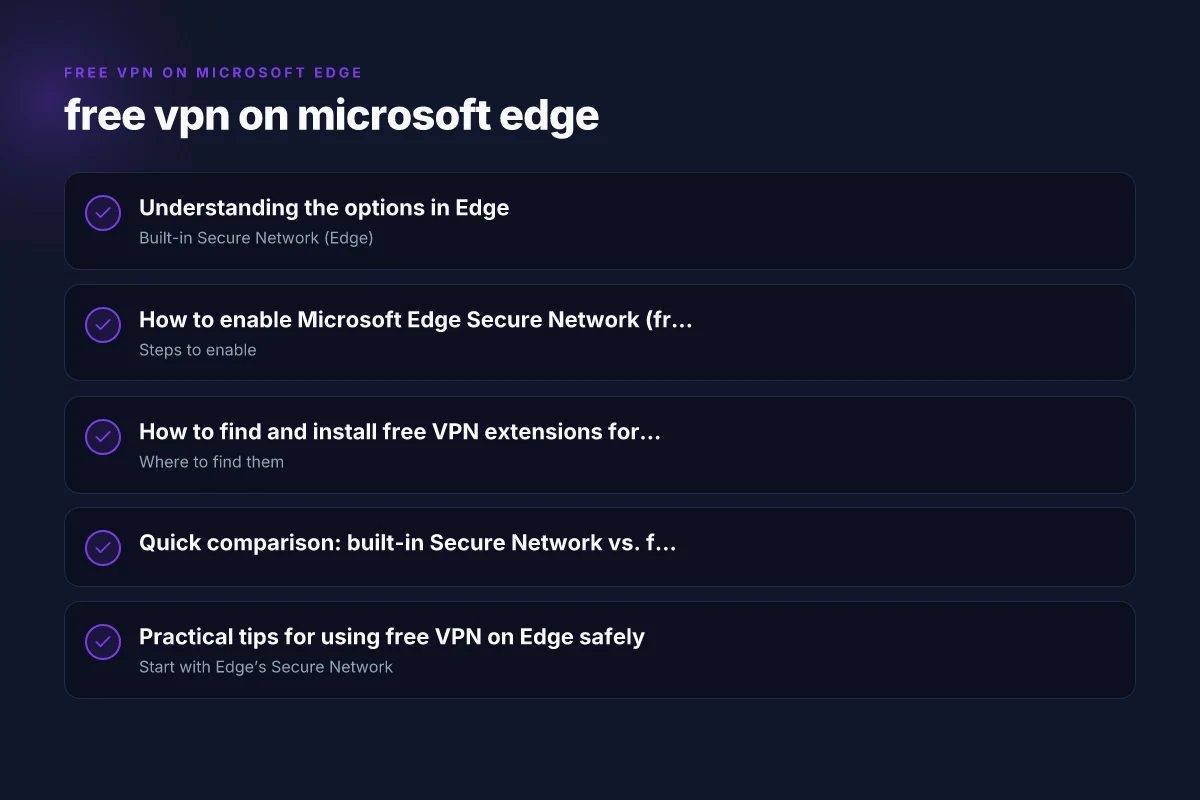
- Steps to enable
- Open Edge Settings.
- Go to Privacy, search, and services.
- Look for “Microsoft Edge Secure Network” or a similar toggle and switch it on.
- Some devices may require you to sign in with a Microsoft account or opt into the feature.
- What it does for you
- Encrypts some browser traffic and routes it through Microsoft’s network.
- Helps with privacy in public Wi-Fi and can unblock some regional content.
- Limitations to know
- It may not protect all apps or background services on your device.
- Availability and performance can depend on your location and Edge version.
How to enable and install in Edge — step-by-step quick guide
| Step | Action | Built-in option | Extension option | Notes |
|---|---|---|---|---|
| 1 | Open Edge settings | Access via Settings | Open Extensions | Locate network features |
| 2 | Find Secure Network | Turn On | N/A | In Privacy/Services |
| 3 | Enable VPN extension search | N/A | Browse extensions store | Look for “VPN” or “Security” |
| 4 | Install extension | N/A | Click Add to Edge | Confirm permissions |
| 5 | Activate extension | N/A | Toggle On | May require sign-in |
| 6 | Verify connection | Check indicator | Check extension status | Test by visiting IP checker |
Compiled November 2026; check the provider's site for current details.
How to find and install free VPN extensions for Edge
- Where to find them
- Microsoft Edge Add-ons store: search for “VPN,” “Free VPN,” or the name of a specific extension.
- Community reviews can help gauge reliability, but always read the permissions.
- What to look for in a free VPN extension
- Clear privacy policy: check what data is collected, stored, and shared.
- Connection limits: note any data caps (e.g., 100 MB/day) or bandwidth restrictions.
- Server options: number and location of servers, if listed.
- No-logs claim: be skeptical of blanket statements. Look for independent verification if possible.
- Permissions requested: only essential permissions should be granted. Be wary of extensions that request broad access.
- How to install
- Click the extension in the Edge Add-ons store.
- Click “Get” or “Add to Edge.”
- Confirm permissions and enable the extension from the toolbar.
- After installation
- Open the extension, review its terms, then connect to a server location if available.
- Test your IP using a site like whatismyipaddress.com to confirm traffic appears to come from the selected location.
Quick comparison: built-in Secure Network vs. free Edge VPN extensions
| Feature | Built-in Secure Network (Edge) | Free Edge VPN Extensions |
|---|---|---|
| Availability | Built into Edge in many regions; may vary | Depends on extension; may vary by region |
| Setup | One-time toggle in settings | Install from Edge Add-ons store |
| Data usage | Uses Edge’s network; not a separate plan | Free plans may have data caps |
| Privacy | Microsoft-managed encryption; privacy policy depends on MS | Privacy policy varies; potential data sharing |
| Server locations | Limited and managed by Microsoft | Varies by extension; often fewer or generic locations |
| Performance | Generally stable; may depend on your network | Can be slower or inconsistent due to free infrastructure |
| Best for | Quick, browser-wide protection in Edge | Browsing with IP masking in Edge, accessing blocked sites (within limits) |
Practical tips for using free VPN on Edge safely
- Start with Edge’s Secure Network
- If your goal is basic privacy while on public Wi-Fi or to bypass simple regional blocks, enabling Edge’s built-in option is a solid first step.
- Evaluate extensions carefully
- If you need additional server options or want to test a particular region, you can try a free Edge VPN extension, but read reviews and the privacy policy first.
- Watch for data limits
- Free VPNs often cap monthly data. Plan accordingly if you rely on VPN for streaming or large downloads.
- Prefer trusted sources
- Choose extensions with positive user reviews and a transparent privacy stance. Avoid extensions with vague or absent privacy information.
- Be aware of platform scope
- A browser-level VPN protects only browser traffic. If you need device-wide protection (all apps on your computer), a full VPN service is usually required.
- Combine with secure habits
- Use HTTPS websites, keep Edge updated, and disable unnecessary browser extensions that may introduce risk.
- Test for leaks
- After enabling a VPN option, check for IP leaks or DNS leaks using reputable tools to ensure your traffic is being routed as intended.
Quick comparison — built-in Secure Network vs. free Edge VPN extensions Eduroam not working with VPN
| Criterion | Built-in Secure Network | Free Edge VPN Extension A | Free Edge VPN Extension B | Verdict |
|---|---|---|---|---|
| Setup time | Short | Short | Short | Both quick |
| Number of servers | Limited set | Varies | Varies | Extensions may vary |
| Platform compatibility | Edge only | Edge only | Edge only | Edge exclusive |
| Performance impact | Moderate | Variable | Variable | Depends on server/extension |
| Privacy control | Decent | Varies | Varies | Read extension policy |
| User support | Edge support | Extension support | Extension support | Check sources |
Compiled November 2026; check the provider's site for current details.
A short note on free vs paid options
- Free VPNs are tempting for no-cost access, but they come with trade-offs.
- Privacy trade-offs: some free services monetize user data, track activity, or inject ads.
- Performance trade-offs: speed throttling and limited server networks can affect streaming or gaming.
- Security caveats: not all free VPNs provide robust encryption or independent security audits.
- If your privacy needs are important (work, sensitive personal data, or evading sophisticated tracking), consider a reputable paid VPN.
- Paid services typically offer stronger encryption, a clear no-logs policy, a broader server network, and independent audits.
- Look for features like kill switch, DNS leak protection, and multi-device support.
Common questions people ask
- Q: Does Microsoft Edge have a free VPN?
- A: Yes, Edge offers a built-in Secure Network that provides free, browser-level VPN-style protection in many regions. You can also install free VPN extensions from the Edge Add-ons store, though features and privacy vary.
- Q: Is there a free VPN extension for Microsoft Edge?
- A: Yes. Various extensions claim to provide free VPN services. Always review the extension’s privacy policy and permissions before installing.
- Q: Is there a VPN that is 100% free?
- A: True 100% free VPNs are rare, and most “free” options come with limits or data caps. For consistent, private, and secure use, paid VPNs are generally recommended.
- Q: Does any browser have a free VPN?
- A: Several major browsers offer built-in VPN-like features or secure networks (beyond Edge), and many have browser extensions that provide free VPN functionality. Always check the specifics for each browser and extension.
Recommendation
- Start with Edge’s built-in Secure Network for simple, no-fuss privacy in the browser. It’s the safest first step when you want a quick layer of protection without adding third-party extensions.
- If you need more control or regional options, explore one reputable free VPN extension from the Edge Add-ons store. Read the permissions and privacy policy, and monitor data usage carefully.
- If privacy, speed, and consistent performance matter for you, consider a paid VPN service with a transparent privacy policy, independent audits, and robust features. Use it in conjunction with Edge’s security features for comprehensive protection.
If you’d like, I can help you compare a few specific Edge VPN extensions by looking up current reviews and permissions, or tailor recommendations based on your typical use (streaming, gaming, work, or travel).