Entry level pay scale philippines

A comprehensive look at what fresh graduates can expect for entry level pay in the Philippines, plus factors that shape salaries and practical tips.
Introduction Breaking into the job market in the Philippines comes with a mix of optimism and practicality. For many fresh graduates, the big question is: what is the entry level pay scale? The reality is nuanced. Some sectors offer modest starting salaries. Others provide higher openings for rapid growth, especially in fields like technology, business process outsourcing (BPO), and data-related roles. This article pulls together commonly cited ranges, factors that influence starting pay, and practical tips to maximize your first salary and early career earning trajectory.

What is the typical starting pay for fresh graduates?
The starting salary for fresh graduates in the Philippines varies widely by industry, location, and company size. Based on widely cited benchmarks and employer-reported ranges, you’ll often see:
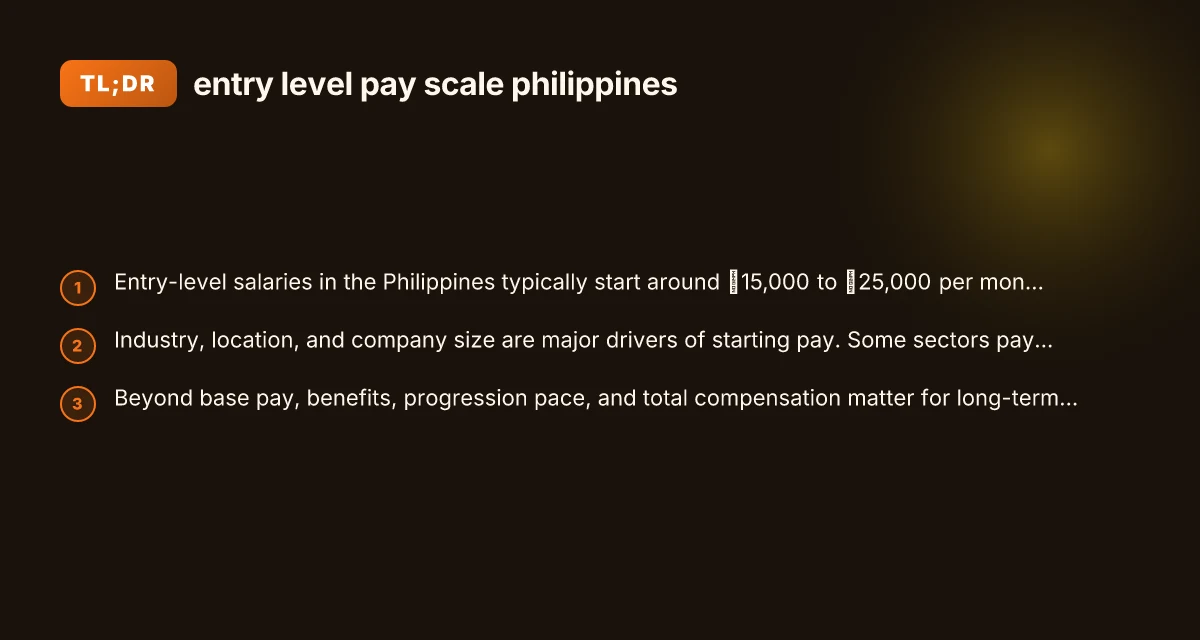
- Common entry-level ranges: roughly ₱15,000 to ₱25,000 per month for many fresh grads.
- Higher ranges: some technology-related roles, specialized support, or roles in Metro Manila and other major cities can start higher, often ₱25,000 to ₱35,000 or more for certain positions.
- Lower ranges: some sectors, especially in smaller towns or non-technical roles, may start closer to ₱12,000 to ₱15,000.
Industry and location are the two biggest levers. The same role can pay very differently depending on whether you’re in Manila, Cebu, Davao, or provincial areas, and depending on whether the employer is a multinational, a local enterprise, or a government entity.
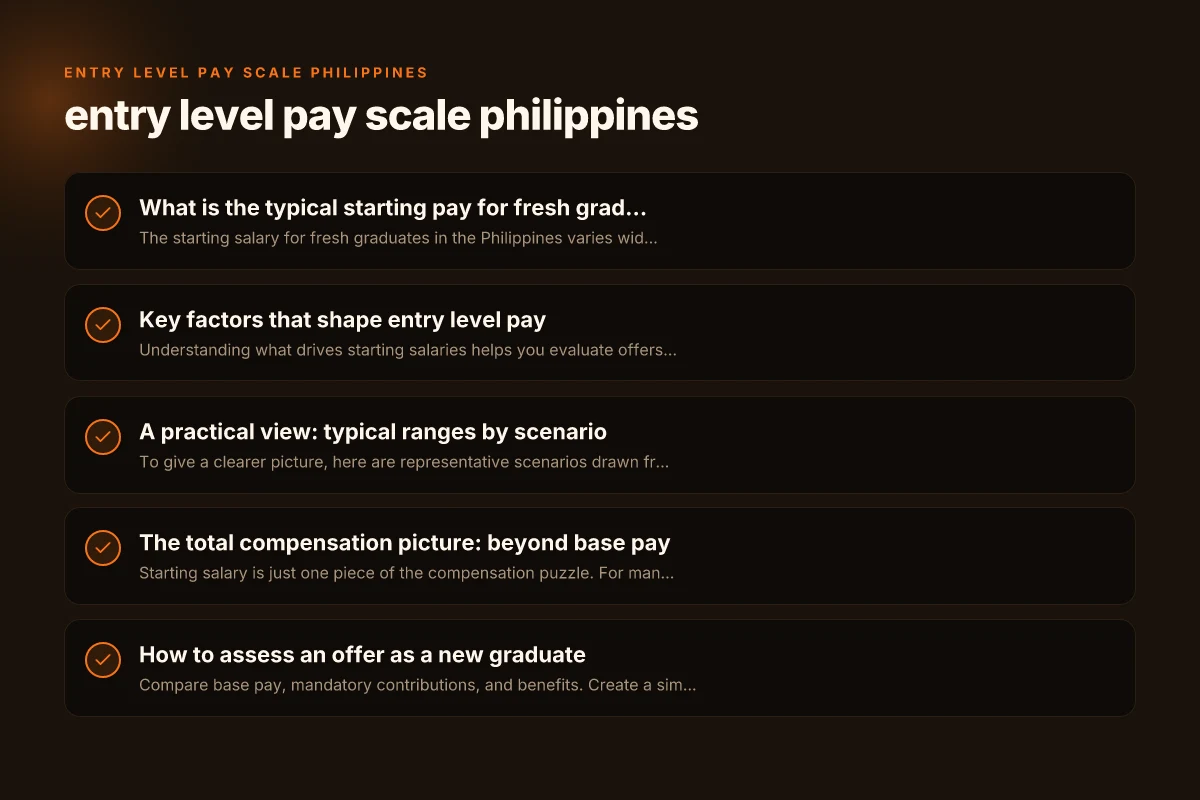
Key factors that shape entry level pay
Understanding what drives starting salaries helps you evaluate offers and target roles that fit your financial goals.
Industry
- High-demand fields often pay more at entry: technology, IT-enabled services, software development, data analytics, finance and accounting support, and certain engineering roles.
- Sectors like retail, hospitality, and basic administrative roles tend to have lower starting pay ranges, though some employers offer rapid progression or higher non-salary benefits.
Location
- Metro Manila and major economic hubs (e.g., Cavite, Laguna, Cebu City) generally offer higher starting salaries to reflect the cost of living and competition for talent.
- Rural or smaller provincial areas may have lower base pay, but some employers compensate with strong benefits, training programs, or flexible work arrangements.
Company type and size
- Multinational companies, global shared service centers, and tech startups with funding often offer more competitive entry-level packages and clear career ladders.
- Government agencies, public institutions, and local small-to-medium enterprises (SMEs) may offer more modest starting pay but can provide stability and formalized progression.
Role and skill prerequisites
- Roles that require technical skills, certifications, or programming languages (e.g., entry-level software development, data entry with analytics, IT support with security basics) tend to pay higher starting salaries.
- Roles requiring only basic administrative tasks or customer service without in-demand specializations tend to cluster in the lower end of the range, though some employers add performance-based increments or rotation programs.
Economic conditions and market demand
- Economic cycles, inflation, and hiring demand influence starting salaries year by year. When labor markets tighten, some employers increase entry-level pay to attract fresh graduates. In softer markets, offers may be more conservative.
A practical view: typical ranges by scenario
To give a clearer picture, here are representative scenarios drawn from common market data points. Note that exact offers vary by employer and metro area.
- Fresh graduate, non-technical role in non-metropolitan areas: ₱12,000–₱18,000
- Fresh graduate, non-technical role in Metro Manila or major cities: ₱15,000–₱25,000
- Fresh graduate with basic technical skills or certifications (e.g., IT helpdesk, basic data entry with Excel): ₱18,000–₱28,000
- Fresh graduate in software development or data-related roles (entry-level engineer, junior developer, data analyst): ₱25,000–₱40,000
- Higher-end entry packages (large tech firms, multinational BPOs, specialized roles): ₱30,000–₱50,000+, depending on market demand and benefits
Table: approximate starting pay by sector (illustrative) Why your iPhone VPN keeps connecting
| Sector | Typical starting range (per month) | Notes |
|---|---|---|
| IT/software development (entry) | ₱25,000–₱40,000 | With basic to moderate skills; growth potential high |
| Data analytics / data entry with analytics | ₱18,000–₱28,000 | Depends on required tooling knowledge |
| BPO / shared services (general) | ₱18,000–₱28,000 | Varies by campaign and client |
| Finance & accounting support (entry) | ₱20,000–₱30,000 | Depending on certification and tasks |
| Engineering (entry) | ₱20,000–₱30,000 | Mechanical/electrical roles vary by company |
| Non-technical admin / customer service | ₱12,000–₱20,000 | Often the starting floor in smaller markets |
These ranges reflect common patterns rather than universal rules. Always compare multiple offers, consider the full compensation package, and weigh long-term growth alongside starting pay.
The total compensation picture: beyond base pay
Starting salary is just one piece of the compensation puzzle. For many early-career professionals, the total package matters more for longer-term earning potential and quality of life.
- Benefits and allowances:
- SSS, PhilHealth, Pag-IBIG contributions
- Health insurance, life insurance
- Transportation allowance, meal allowances, or internet stipends
- Bonuses and incentives:
- Performance-based bonuses, signing bonuses, or year-end incentives
- Learning and development:
- Training budgets, access to certifications, paid courses, mentorship
- Clear path for role progression and salary reviews
- Work-life balance:
- Flexible work arrangements, paid time off, remote or hybrid options
- Career trajectory:
- Companies with transparent promotion tracks often offer salary increases tied to performance, tenure, and skill acquisition
Comparing two offers isn’t just about which one pays more now. It’s about which one accelerates your career and earns you more over the next 2–5 years.
How to assess an offer as a new graduate
- Compare base pay, mandatory contributions, and benefits. Create a simple total compensation estimate.
- Ask about growth: frequency of performance reviews, expected timeline for promotions, and typical salary brackets for next roles.
- Check for required costs you’ll shoulder: training fees, software licenses, or relocation costs.
- Consider the learning value: what on-the-job skills you’ll gain, exposure to tools, and access to certifications.
- Research the company’s stability and market position. A solid employer with a strong training culture can yield higher long-term earnings.
Practical steps to maximize entry-level earnings
- Build in-demand skills: programming basics, data literacy, digital tools, or industry-specific certifications can push you into higher-paying entry roles.
- Target growth industries: technology, data, analytics, and finance usually offer higher starting pay and faster career ladders.
- Location strategy: if possible, be open to opportunities in Metro Manila or other major hubs where salaries tend to be higher, but weigh cost of living.
- Leverage internships and projects: show proven outcomes in your resume or portfolio to command higher offers.
- Negotiate thoughtfully: ask about salary ranges for your role in the market, present a data-backed case for your value, and consider total compensation rather than base pay alone.
Real-world considerations and common questions
- Q: How much is the entry-level salary in the Philippines?
- Answer: It typically ranges from about ₱12,000 to ₱40,000 depending on sector, location, and role, with common fresh graduate ranges around ₱15,000 to ₱25,000 in many non-technical roles.
- Q: Is ₱30,000 a good entry-level salary?
- Answer: It can be solid for entry-level in certain sectors and locations, especially if accompanied by strong growth opportunities, benefits, and training. In high-demand fields, higher starting offers are not unusual.
- Q: Is 25k a good starting salary?
- Answer: It can be a good starting point for common roles in many markets, particularly outside Metro Manila or in non-technical fields. The overall package and career trajectory matter a lot.
- Q: How quickly can I expect a raise after starting?
- Answer: Many companies review performance annually, with typical salary adjustments ranging from 5% to 15%, but this depends on company policy, performance, and market conditions.
Conclusion and recommendations For a fresh graduate in the Philippines, the entry level pay scale is a mix of plausible ranges driven by sector, location, and company type. The most important thing is to align your first role with clear learning goals and a realistic growth path. If you can land a role in a high-growth field or a company known for strong training and advancement, the long-term payoff can far outweigh a slightly higher starting number in a less dynamic environment. Build your skills, research the market, and approach offers with a view toward development and compound earnings over the first few years. Why your apps are refusing to work with your VPN
If you’re actively job-hunting, create a short list of target industries you’re excited about, identify 3–5 entry-level roles that match your skills, and gather data on typical starting pay in those niches for your city. Use that information to negotiate confidently and pick the opportunity that offers the strongest foundation for your career journey.